LED Traffic Cone vs Reflective Cone: Safety, Visibility & Real-World Use
Traffic cones are widely used in road safety, construction zones, and traffic control applications. The two most common types are reflective traffic cones and LED traffic cone lighting systems, which differ significantly in visibility performance and safety effectiveness.
This article compares both types based on real-world usage scenarios, helping users choose the right solution for different traffic environments.LED traffic cone lighting systems are an increasingly important part of modern traffic safety equipment used in construction zones, roadside emergencies, and traffic control operations.
Traffic Cone Lighting System Overview
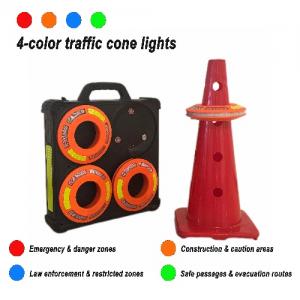
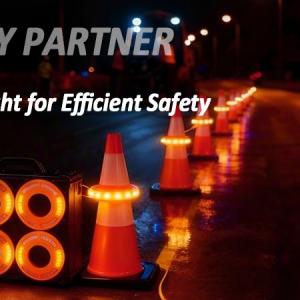
LED traffic cone lights are part of a broader traffic cone lighting system designed to improve visibility, guide vehicles, and enhance road safety in temporary or high-risk environments.
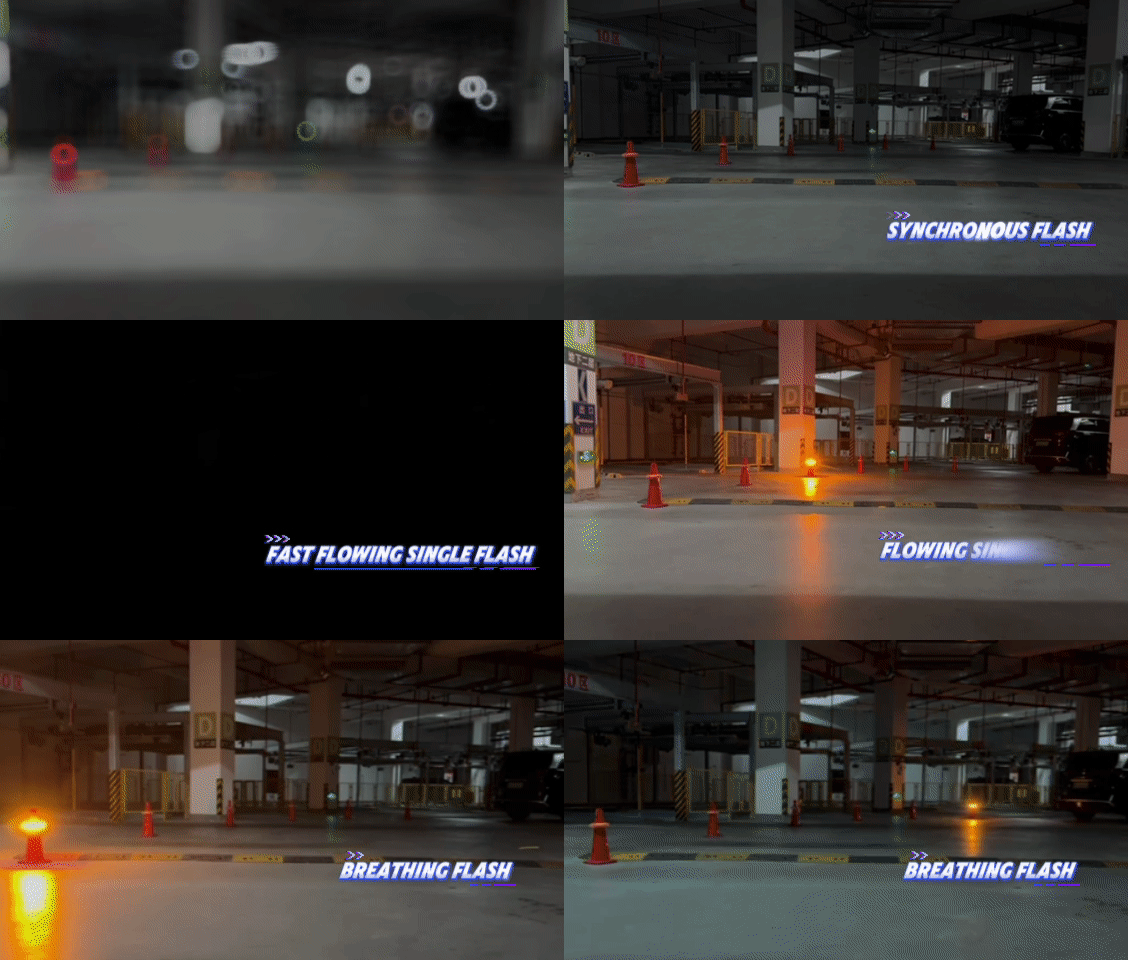
Unlike passive reflective cones, these systems provide active illumination and can be deployed in synchronized or sequential modes.
What Is a Traffic Cone Lighting System?
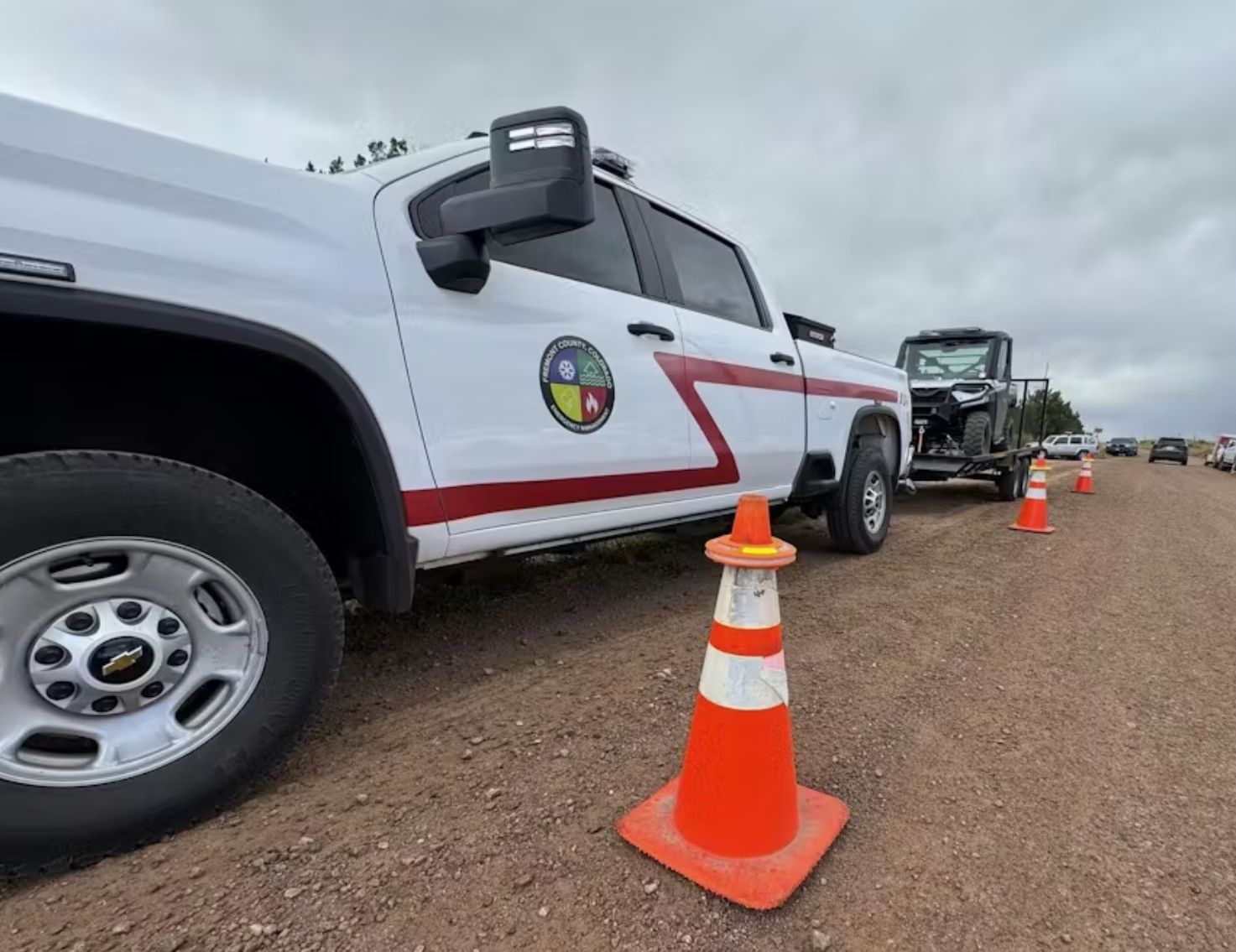
A traffic cone lighting system refers to a set of LED-based warning devices designed to be mounted on or around traffic cones to provide active illumination for road safety applications.
These systems are commonly used in environments where passive reflective cones are not sufficient to ensure visibility and driver awareness.
LED traffic cone lighting systems are widely adopted in modern traffic safety operations where active illumination is required for improved visibility and driver response.
LED Traffic Cone vs Reflective Traffic Cone: Key Differences in Visibility & Safety
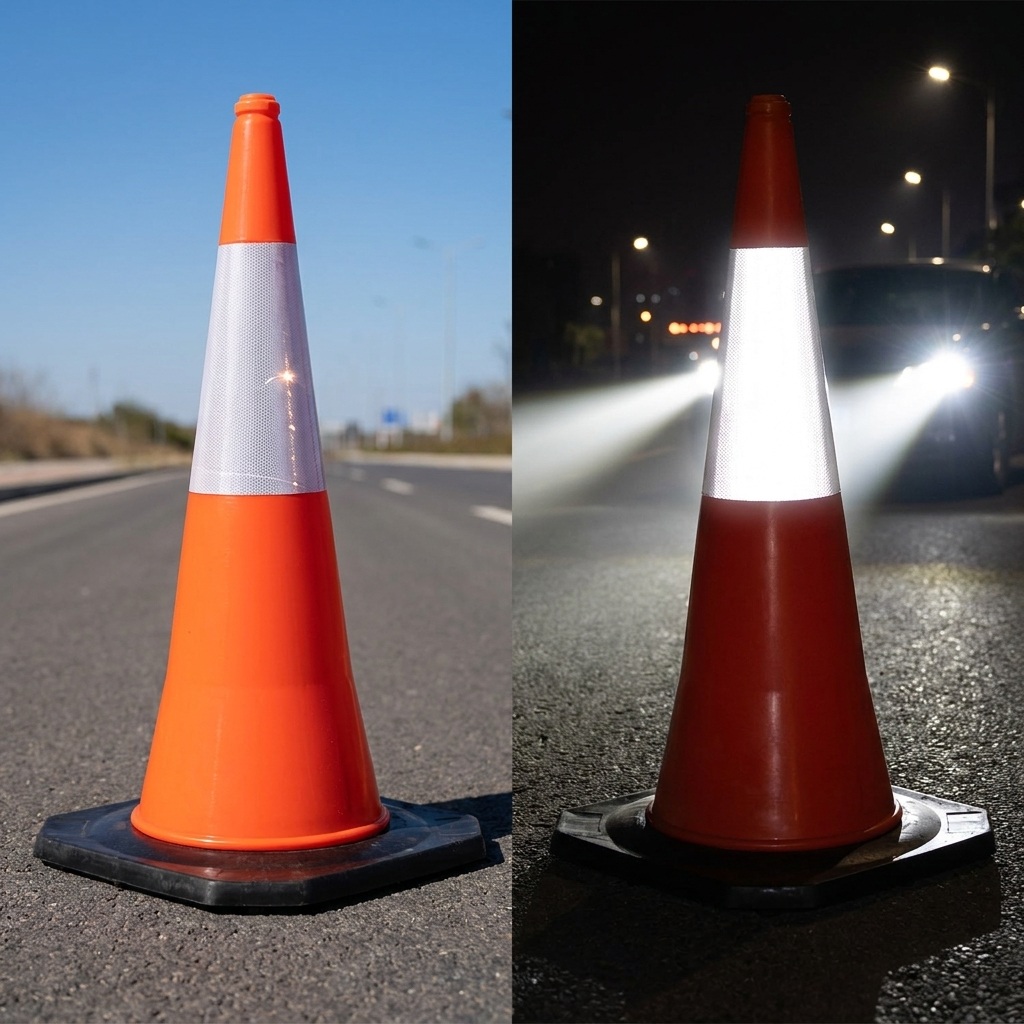
What is a Reflective Traffic Cone?
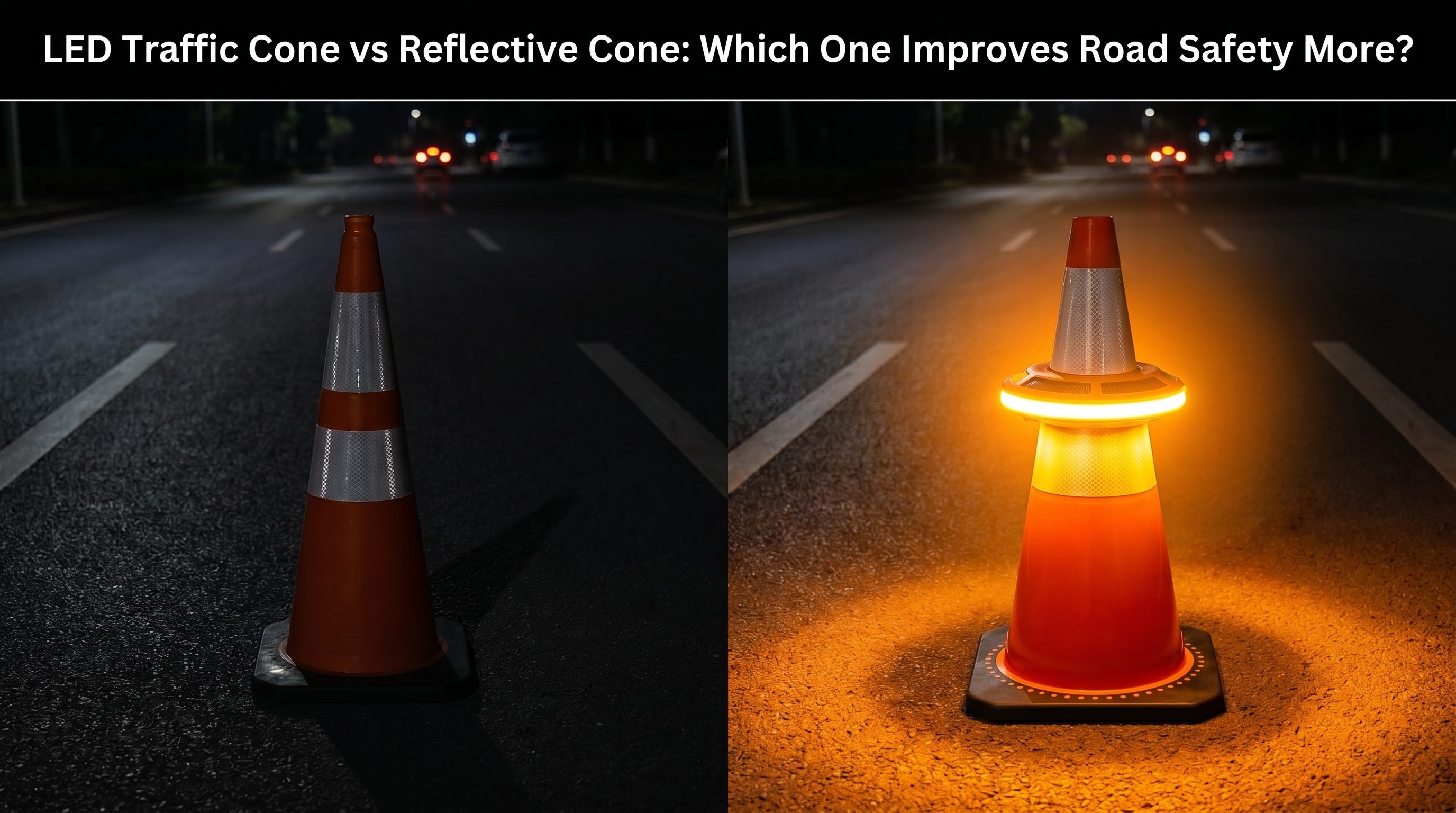
A reflective traffic cone uses retroreflective collars that return light back toward the source (vehicle headlights). Its effectiveness depends on external illumination and viewing geometry.
Key characteristics:
- Passive visibility (requires headlights)
- Performance depends on distance, angle, and ambient light
- Common in daytime or lower-risk zones
What is an LED Traffic Cone Light?
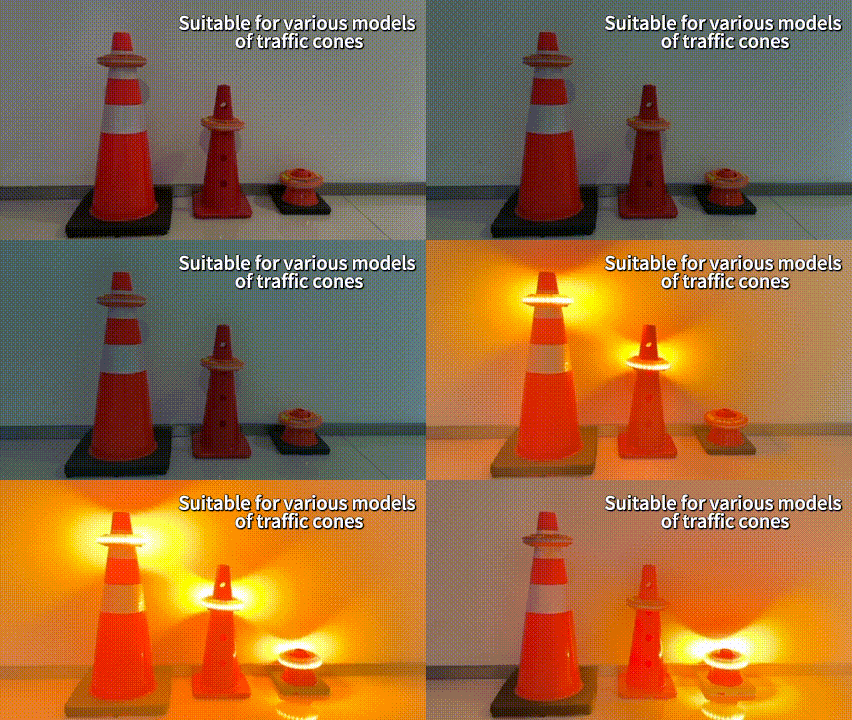
An LED traffic cone uses integrated lighting or cone-mounted LED devices to emit light actively, improving detection without relying solely on headlights.
Common forms include:
- Traffic cone lights (top-mounted / ring lights)
- Rechargeable cone warning lights
- Sequential or flashing cone systems
Key characteristics:
- Active illumination (independent of external light)
- Can include flashing or sequential patterns
- Used in night operations and complex traffic environments
For professional applications, a traffic cone lighting system provides a more reliable and visible solution.
LED Traffic Cone vs Reflective Cone: Field-Based Comparison
1. Visibility Mechanism
-
Reflective Cone:
Depends on headlights striking the reflective surface at an effective angle. -
LED Traffic Cone:
Generates its own light, making it visible regardless of headlight alignment.
According to guidance referenced by the Federal Highway Administration, traffic control devices should remain clearly visible under expected roadway conditions, which can be challenging for purely reflective devices in low-light or complex environments.
Conclusion: LED systems provide more consistent visibility in varied conditions.
2. Driver Recognition & Reaction
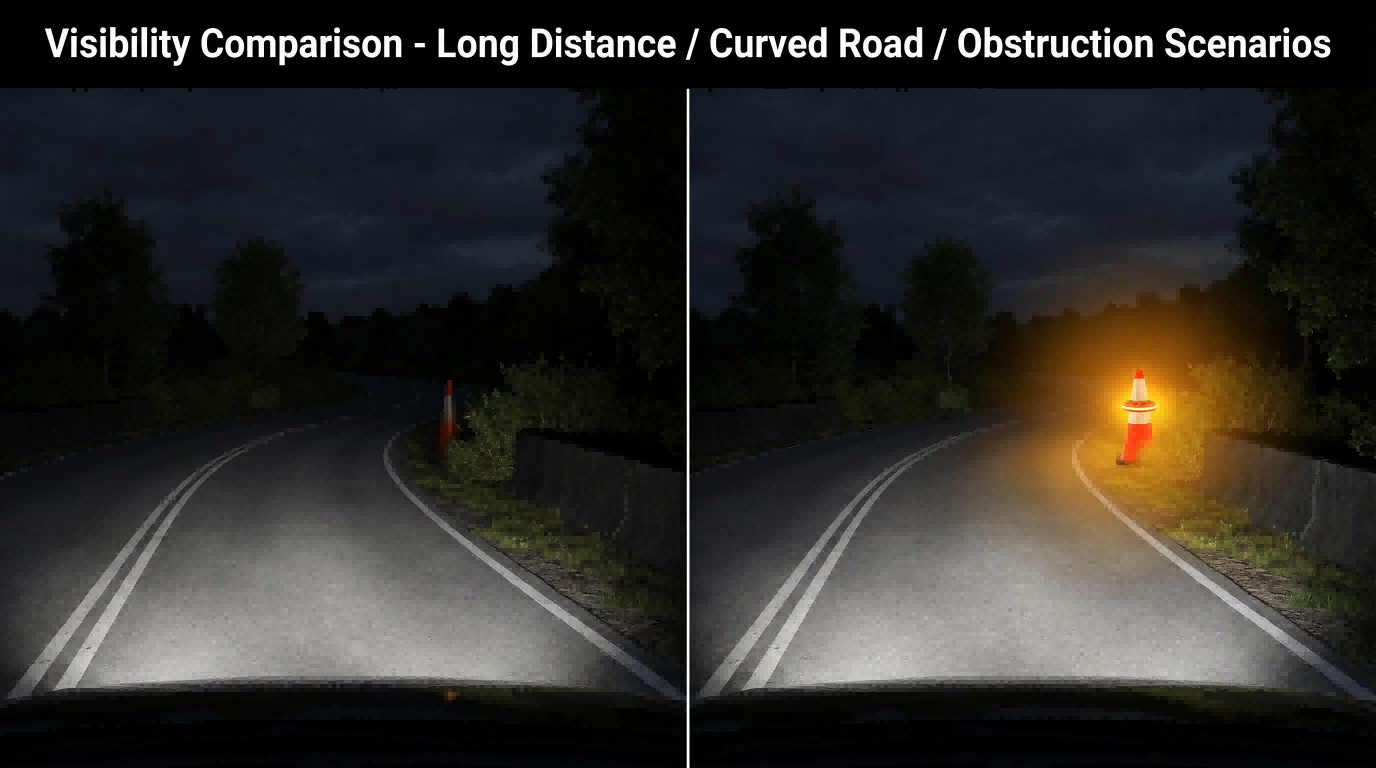
Driver safety depends on how early a hazard is recognized, not just whether it is visible.
-
Reflective cones may be noticed later if:
- Headlight coverage is limited
- Road curvature reduces visibility
- Background lighting is complex
-
LED traffic cone lights provide:
- Continuous illumination
- Flashing signals that attract attention
Safety practices referenced by Occupational Safety and Health Administration emphasize the importance of high-visibility warning devices in work zones.
Conclusion: Active lighting improves early detection and awareness.
3. Performance in Adverse Conditions
-
Reflective Cone:
Visibility may degrade in rain, fog, or glare conditions. -
LED Traffic Cone:
Remains visible due to active light emission, though brightness perception can still vary with environment.
Conclusion: LED systems are generally more reliable in reduced-visibility environments.
4. Functional Capability
-
Reflective Cone:
Static visual marker -
LED Traffic Cone:
Can provide:- Flashing warning signals
- Sequential guidance
- Dynamic traffic indication
This aligns with modern traffic control practices described in the Manual on Uniform Traffic Control Devices, where enhanced visibility devices are recommended for complex or temporary traffic control situations.
Conclusion: LED systems offer more advanced communication to drivers.
Which One Should You Use?
The choice depends on the application environment and safety requirements:
- Daytime, low-risk environments → Reflective cones are suitable
- Nighttime, high-speed or complex traffic → LED traffic cone lighting systems are strongly recommended
- Construction zones, roadside emergencies, and temporary traffic control → LED traffic cone systems provide significantly improved visibility and operational safety
For professional traffic management, a traffic cone lighting system is the preferred solution.
When Should You Use Each Type?
Reflective Traffic Cones:
- Daytime operations
- Low-speed environments
- Simple, short-duration setups
LED Traffic Cone Lights:
- Night construction zones
- Highway roadside emergencies
- Parking management in low light
- Situations requiring strong visual guidance
A complete traffic cone lighting system can significantly improve visibility and coordination in temporary traffic zones.
Why the Industry is Moving Toward Active Warning Systems
Modern road safety is shifting from passive reflection → active visibility.
Instead of relying only on external light sources, LED systems:
- Improve consistency of visibility
- Support faster recognition
- Enable coordinated signaling
This shift reflects broader safety practices in roadway and work-zone management.
For large-scale deployment, a rechargeable LED traffic cone lighting system provides a more efficient and coordinated safety solution.
Conclusion
Reflective cones remain suitable for basic daytime traffic marking and low-risk applications.
However, in professional road safety environments where visibility, reaction time, and operational coordination are critical, LED traffic cone lighting systems provide a more effective and reliable solution.
A traffic cone lighting system is widely used in construction zones, roadside emergencies, and large-scale traffic management operations where safety performance is essential.