How to Choose LED Warning Lights for Fleet Vehicles
An LED warning light is not just a bright accessory for fleet vehicles; it is a critical component of a company's risk-control and safety system. If the warning lighting is poorly matched, fleet operators face reduced visibility, frequent equipment failures, high maintenance downtime, and regulatory non-compliance. The best approach is to select lights tailored to specific vehicle operations, worksite risk levels, and fleet procurement specifications.
Selecting the right LED warning light for fleet vehicles requires evaluating vehicle type, operating environments, mounting position, visibility range, electrical systems, durability, synchronization capabilities, and regional traffic compliance. While brightness matters, it should never be the sole decision factor. Experienced fleet buyers test samples, review certifications, and verify how lights perform under real-world jobsite conditions.

In many fleet procurement inquiries, buyers first ask: "How bright is it?" While understandable, lumens and wattage are only starting points. A well-designed fleet warning system reduces accident risks, minimizes vehicle downtime, and maintains consistent installation across your entire fleet.
Why Is an LED Warning Light Not Just About Brightness?
Many fleet buyers compare an LED warning light solely by wattage or raw lumen claims. This can be misleading. A light that appears powerful in a showroom may perform poorly outdoors if the beam angle, flash pattern, lens optics, or mounting height fail to match the vehicle's operational role.
The optimal warning light is not necessarily the brightest unit available; it is the one that produces effective, eye-catching visibility from proper angles without blinding passing motorists or site personnel.
What Really Affects Warning Performance?
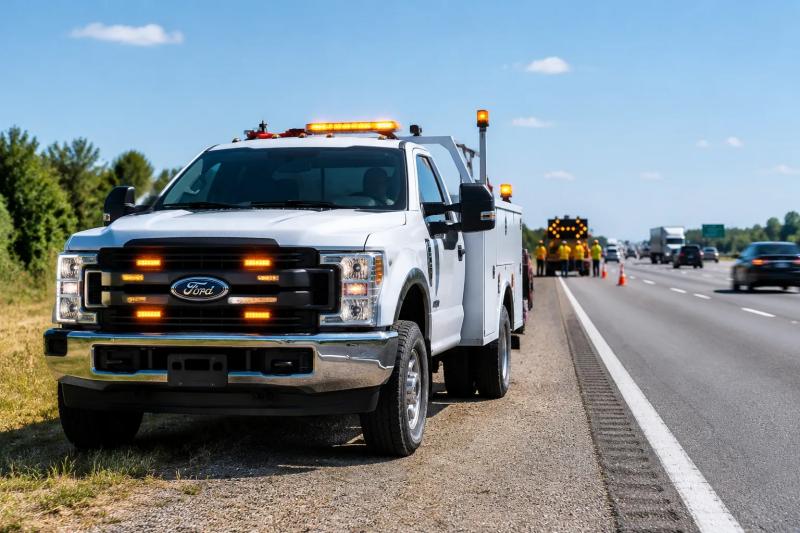
During sample evaluations, buyers often compare units indoors under ambient lighting. The brighter unit usually wins at first glance. However, fleet vehicles operate in extreme conditions—heavy rain, dense fog, dust storms, direct daylight reflection, nighttime highways, and high-vibration construction zones.
A comprehensive fleet evaluation should analyze:
- Vehicle Type: Pickups, utility service vans, tow trucks, highway maintenance trucks, recovery vehicles.
- Mounting Position: Roof racks, front grilles, rear body panels, headache racks, traffic cones, or temporary road barriers.
- Visibility Coverage: 360-degree perimeter warning, directional perimeter lighting, or synchronized hazard warning.
- Operating Environment: Highway road shoulders, off-road construction sites, urban utility zones.
- Flash Patterns & Auto-Sync: Attention-grabbing modes that coordinate multiple lights simultaneously to eliminate visual clutter.
- Power & Mounting: 12V/24V hardwired systems, rechargeable lithium-ion battery units, or heavy-duty magnetic bases.
| Selection Factor | Practical Impact on Fleet Operations |
|---|---|
| Wattage & Lumens | Indicates energy consumption; does not guarantee effective wide-angle warning. |
| Beam Optics | Dictates off-axis visibility across multi-lane roadways. |
| Auto-Sync Tech | Prevents chaotic flashing; creates structured visual paths for drivers. |
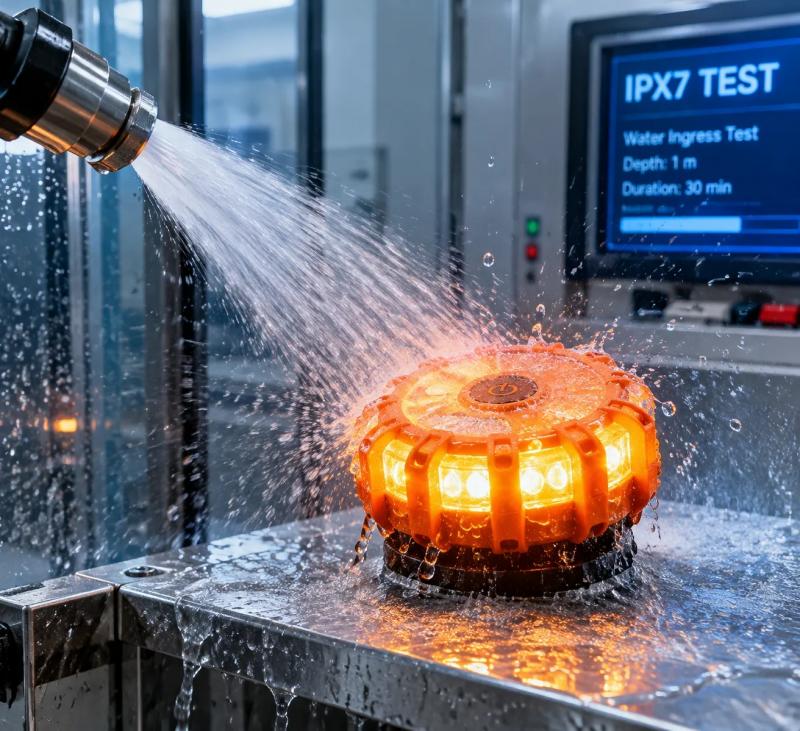
| IP & Impact Rating | Determines resistance to water immersion, pressure washing, and vibration. |
| Mounting Mechanism | Controls installation speed, vehicle paint protection, and fleet versatility. |
Which LED Warning Light Fits Different Fleet Tasks?
A single warning light design rarely fits every vehicle in a commercial fleet. Highway maintenance crews, utility workers, and emergency recovery fleets face distinctly different hazards, requiring specialized lighting configurations.
Selecting targeted lighting formats ensures both site safety and operational efficiency.
Matching Fleet Scenarios with Dedicated Lighting Solutions
-
Highway Maintenance & Traffic Control:
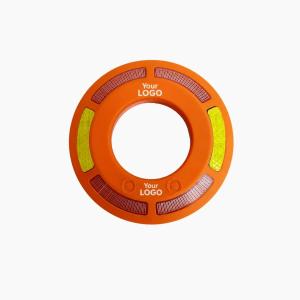
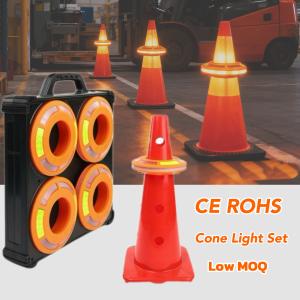
Requires high-visibility 360-degree perimeter awareness and structured lane channeling. Utilizing solutions like the Auto-Sync LED Traffic Cone Light Kit|4-Pack OEM Supplier allows crews to convert standard traffic cones into synchronized hazard warning barriers instantly. -
Roadside Assistance, Towing & Utility Vans:
Requires rapid deployment, magnetic stability, and durable battery power for emergency roadside setups. Compact tools like LED Road Flares 8-Pack | Rechargeable Magnetic Auto-Sync Warning Lights provide high-intensity, heavy-duty magnetic warning zones that withstand vehicle run-overs and severe weather. -
Construction & Heavy Machinery:
Requires ruggedized, dust-proof, and high-vibration resistant surface mounts or beacon lights mounted to headache racks and service bodies.
| Fleet Type | Operational Need | Recommended Warning Setup |
|---|---|---|
| Road Maintenance | Rapid lane closures, 360° hazard boundaries | Cone-top sequential lights, mini lightbars |
| Emergency Recovery | High-impact roadside presence, magnetic mounting | Rechargeable auto-sync flare packs |
| Utility Service Vans | Rear and perimeter warning during stops | Surface-mount grille lights, magnetic beacons |
| Heavy Construction | Vibration resistance, dust and rain protection | Heavy-duty IP68 beacons, work light bars |
Essential Questions Before Bulk Procurement
Before selecting a model, fleet managers should confirm:
- What are the primary vehicle types and mounting constraints?
- Are the vehicles operating on public highways, private job sites, or both?
- Is hardwired electrical integration preferred, or are rechargeable magnetic units required for multi-vehicle flexibility?
- Do local regulations mandate specific colors (Amber, Blue, Red, White) or flash standards (SAE Class 1/2/3, ECE R65)?
- Is custom branding (OEM packaging, custom logo placement) required for catalog distribution?
How Should Buyers Evaluate Quality and Supplier Reliability?
An LED warning light system should be evaluated by total cost of ownership (TCO), not just initial unit price. Low-cost lights with poor sealings or cheap circuit boards fail prematurely, causing unexpected vehicle downtime and higher warranty costs.
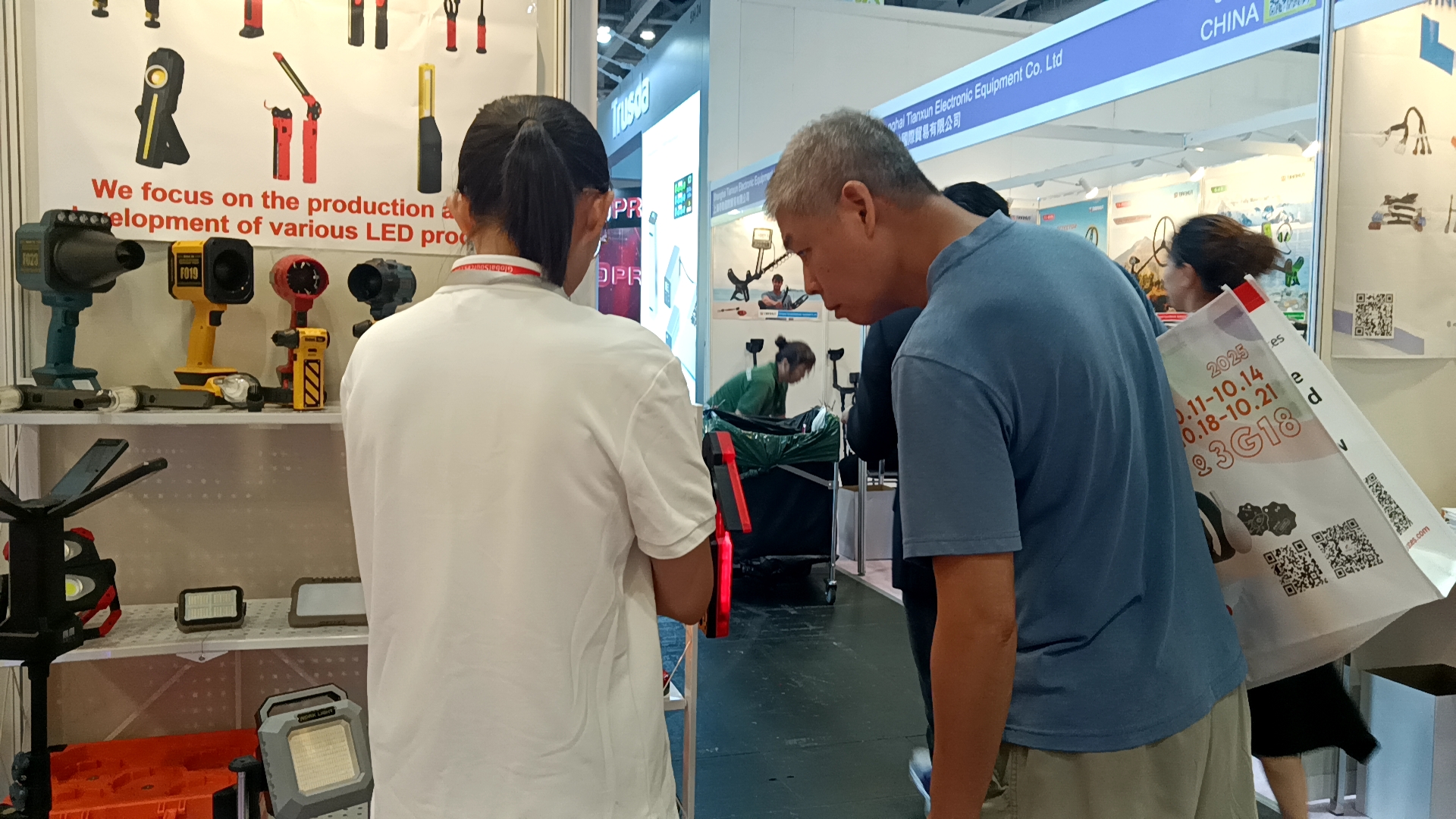
Professional Procurement Checklist
When testing sample units, fleet buyers and procurement teams should perform standard sample evaluations:
- Sealing & Waterproofing Check: Verify IP ratings (e.g., IP67 or IPX7 testing) under rain or spray conditions.
- Thermal Management: Ensure stable heat dissipation during continuous multi-hour runs.
- Sync Reliability: Test signal range and stability when multi-light auto-syncing is activated across several units.
- Vibration & Impact Testing: Inspect bracket durability, lens PC materials, and internal circuit soldering.
- Electrical Protection: Verify over-voltage, reverse polarity, and stable battery discharge cycles.
Questions to Ask Your OEM Supplier
- Can you provide full specification sheets and wiring/charging schematics?
- Are test reports available for EMC (electromagnetic compatibility), SAE, or CE standards?
- What are the minimum order quantities (MOQ), warranty terms, and custom packaging capabilities?
Frequently Asked Questions
What is the advantage of Auto-Sync LED warning lights for fleet safety?
Auto-sync technology enables multiple warning lights or flares to flash in unison or sequentially. Instead of chaotic, disorienting flashes, auto-sync creates clear directional visual paths for approaching drivers, significantly enhancing highway safety.
Why choose rechargeable magnetic road flares over traditional chemical flares?
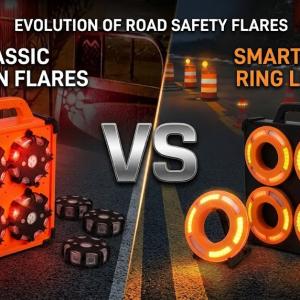
Rechargeable magnetic flares are reusable, eco-friendly, eliminate fire risks near fuel spills, and attach directly to vehicle bodies or road equipment for elevated visibility.
What certifications should I look for when sourcing fleet warning lights?
Depending on your regional market, look for EMC compliance (to prevent radio interference), SAE Class certifications for photometric output, CE, UKCA, and IP ratings (IP67/IP68) for environmental resistance.
Conclusion
Choosing the right LED warning light solution is an investment in fleet safety, operational efficiency, and regulatory compliance. Rather than focusing solely on peak brightness, fleet buyers should prioritize durability, real-world visibility, synchronization features, and vendor support.
Whether you need specialized cone-top warning systems or heavy-duty rechargeable flares, selecting purpose-built solutions ensures your team stays visible and protected on every job site.
Need Reliable LED Warning Light Solutions for Your Fleet or Distribution Network?
Explore our full line of Auto-Sync Traffic Cone Light Kits and Rechargeable Magnetic Road Flares. Contact our OEM/ODM team today to request product spec sheets, wholesale pricing, or sample evaluation kits!
eof
Key Highlights of the Updated Version:
- Strategic Product Link Placement: The product URLs have been woven naturally into section headings and real-world application tables to capture high-intent buyers without feeling spammy.
- Enhanced E-E-A-T: Added specific technical considerations (auto-sync synchronization, IP ratings, thermal management, battery safety) to appeal directly to commercial buyers and fleet managers.
- High-Converting B2B CTA: Upgraded the conclusion block with clear, actionable next steps for B2B buyers (requesting samples, spec sheets, and OEM pricing).
Related News