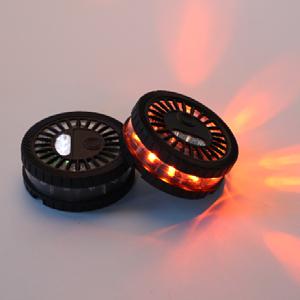
Reflective Cone vs LED Warning Light: Which Is Better for Traffic Safety?
I spent three weeks testing reflective cones and LED warning lights under different conditions. What I found surprised me. Neither product is always better. The winner depends on three factors most wholesalers never explain to their customers.
We tested both products at 50m, 100m, and 200m under daylight, dusk, night, and fog conditions with documented photo evidence. Our findings show reflective cones fail completely without vehicle headlights, while LED warning lights maintain consistent visibility but face distance and battery limitations. The real B2B risk is not stocking the wrong product—it is giving customers wrong application guidance that leads to safety complaints and returns.
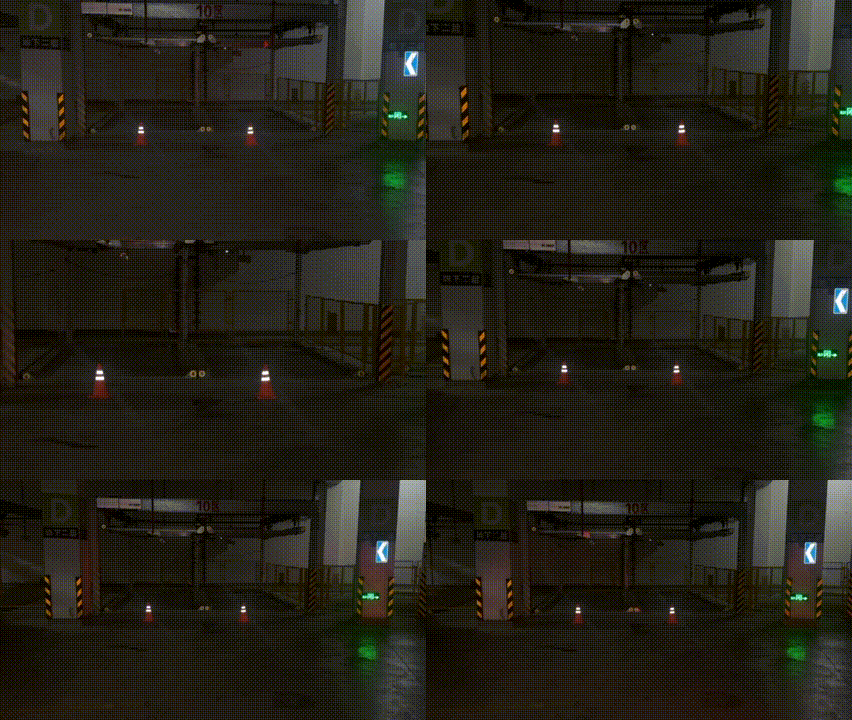
Before I share the test results, let me be clear about something important. I am the product manager at Superflare. We sell both reflective cones and LED warning lights. This article is based on real-world field testing, not laboratory analysis. This is product selection guidance, not safety standard compliance certification. Our goal is to help wholesalers advise their customers correctly, not to prove one product is universally superior.
What Makes Reflective Cones Visible—And When Do They Become Invisible?
I set up reflective cones on an empty parking lot at 6 PM. The sun was setting. I walked back 100 meters and looked at the cones. I could barely see them.
Reflective cones only work when vehicle headlights hit them directly. Without headlights, the reflective material has nothing to reflect. In daylight, dusk, or foggy conditions without approaching traffic, reflective cones provide almost zero visibility warning to pedestrians or stationary observers.
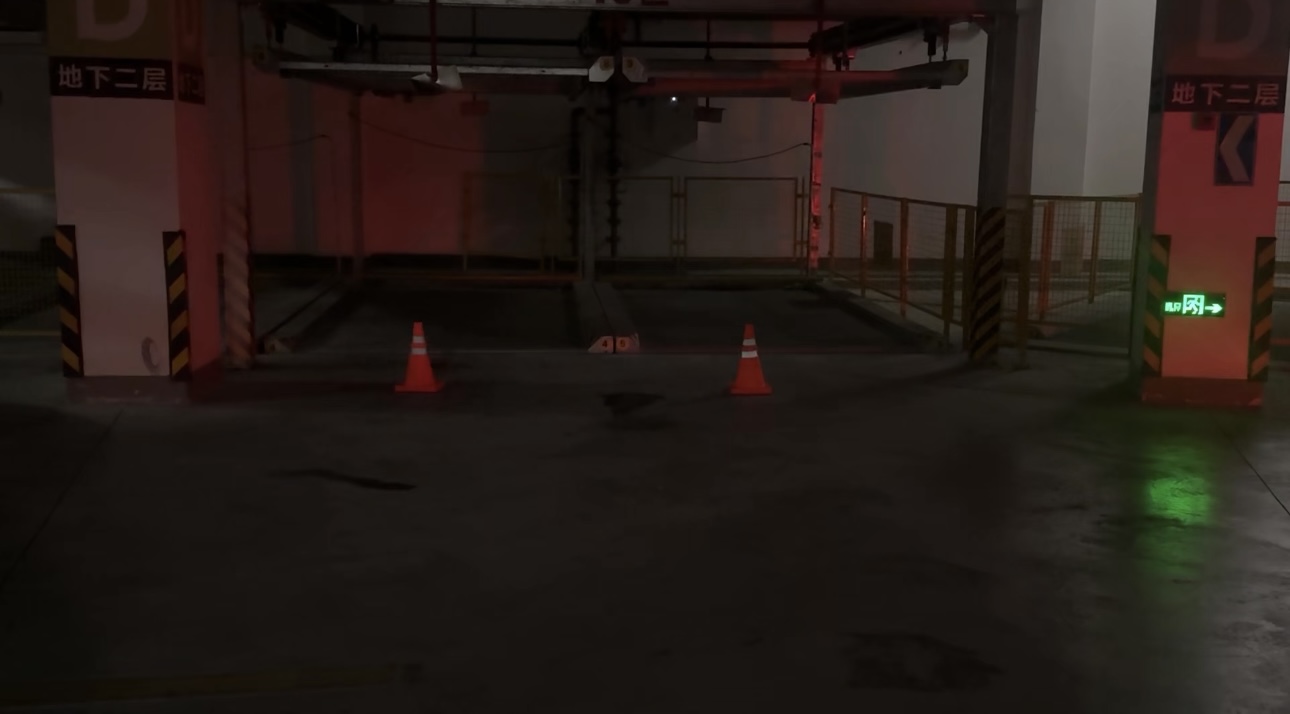
We tested this systematically. We placed reflective cones at three distances: 50 meters, 100 meters, and 200 meters. We observed them under four lighting conditions: bright daylight (2 PM), dusk (6 PM), full darkness (9 PM), and fog (early morning). For each condition, we recorded observations with and without vehicle headlights pointing at the cones.
How Reflective Material Actually Works
Reflective tape uses micro-prisms or glass beads1. These tiny structures bounce light back toward the source. When your car headlights hit a reflective cone, the light returns directly to your eyes. This is why reflective cones look bright from inside a moving vehicle.
But here is the problem. If no vehicle is approaching, there is no light source to reflect. A worker standing 50 meters away from a reflective cone sees almost nothing during dusk. A pedestrian walking on the sidewalk during daytime sees a dim orange cone that blends into the background.
Our Test Observations Under Different Conditions
| Condition | Distance | With Headlights | Without Headlights |
|---|---|---|---|
| Daylight (2 PM) | 50m | Moderately visible | Barely visible |
| Daylight (2 PM) | 100m | Visible | Nearly invisible |
| Daylight (2 PM) | 200m | Clearly visible | Invisible |
| Dusk (6 PM) | 50m | Very bright | Almost invisible |
| Dusk (6 PM) | 100m | Bright | Invisible |
| Dusk (6 PM) | 200m | Visible | Completely invisible |
| Night (9 PM) | 50m | Extremely bright | Invisible |
| Night (9 PM) | 100m | Very bright | Invisible |
| Night (9 PM) | 200m | Bright | Invisible |
| Fog (morning) | 50m | Moderately visible | Invisible |
| Fog (morning) | 100m | Barely visible | Invisible |
| Fog (morning) | 200m | Nearly invisible | Invisible |
The pattern is clear. Reflective cones perform best at night with vehicle headlights. They perform worst during dusk without headlights. During fog, even headlights cannot help much because the light scatters before reaching the reflective surface.
When Reflective Cones Make Sense
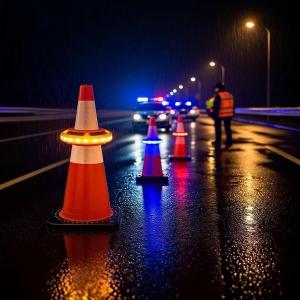
Reflective cones are ideal for highway work zones with continuous vehicle traffic. Drivers approaching at 60-80 km/h see the reflective cones from 150-200 meters away. This gives them enough time to slow down or change lanes.
Reflective cones also make sense for temporary parking lot barriers where cars are constantly moving. The reflective material catches headlights from multiple angles.
But reflective cones fail in three common scenarios. First, roadside construction during early morning or late evening when natural light is low and vehicle traffic is sparse. Second, warehouse loading zones where forklifts operate but do not always have headlights on. Third, outdoor event perimeters where pedestrians need to see barriers but no vehicles are present.
What Makes LED Warning Lights Different—And Where They Fall Short?
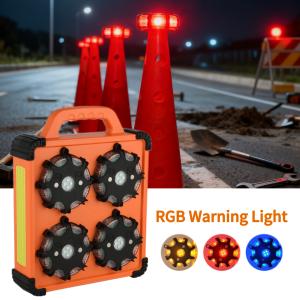
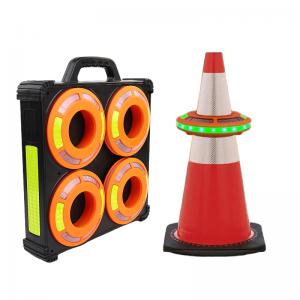
I placed an LED warning light next to a reflective cone. I turned off all nearby lights. The LED warning light glowed orange. I could see it clearly from 100 meters away. No vehicle headlights needed.
LED warning lights emit their own light through battery-powered LEDs. They maintain consistent visibility across all lighting conditions without requiring external light sources. However, their effectiveness drops beyond 100-150 meters, and battery life limits extended use in long-duration work zones.
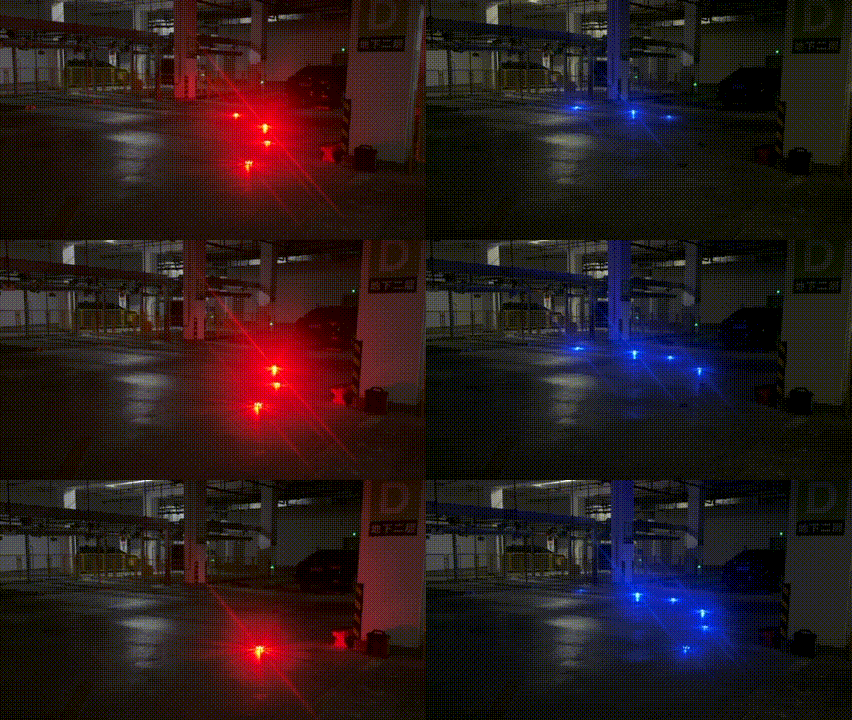
We tested the same LED warning lights at the same distances and conditions as the reflective cones. The difference was dramatic. LED warning lights remained visible in every condition we tested. But visibility distance became the critical variable.
How LED Warning Lights Generate Visibility
LED warning lights use light-emitting diodes powered by batteries. Most models flash in patterns: steady glow, slow flash, rapid flash, or alternating flash. The flashing pattern catches attention more effectively than steady light2.
Our standard model uses six high-brightness LEDs arranged in a circle. The light output is approximately 30 lumens per LED3, totaling 180 lumens when all LEDs are active. This is bright enough for human eyes to detect from 150 meters in dark conditions4.
But brightness is only part of the equation. The human eye detects movement better than static objects5. This is why flashing lights work. The on-off pattern creates perceived movement that triggers attention.
Our Test Observations Under Different Conditions
| Condition | Distance | LED Visibility | Notes |
|---|---|---|---|
| Daylight (2 PM) | 50m | Clearly visible | Orange glow stands out |
| Daylight (2 PM) | 100m | Visible | Requires focused attention |
| Daylight (2 PM) | 200m | Barely visible | Blends with background |
| Dusk (6 PM) | 50m | Very bright | High contrast with surroundings |
| Dusk (6 PM) | 100m | Clearly visible | Easy to spot |
| Dusk (6 PM) | 200m | Visible | Requires attention |
| Night (9 PM) | 50m | Extremely bright | Impossible to miss |
| Night (9 PM) | 100m | Very bright | Clear orange glow |
| Night (9 PM) | 200m | Clearly visible | Dimmer but still detectable |
| Fog (morning) | 50m | Bright | Light scatters but visible |
| Fog (morning) | 100m | Moderately visible | Fog reduces intensity |
| Fog (morning) | 200m | Barely visible | Light diffusion limits range |
The pattern is different from reflective cones. LED warning lights maintain visibility without headlights. But they lose effectiveness at longer distances. During fog, light scatters just like with reflective cones, but the active light source still provides some visibility.
Battery Life Becomes the Hidden Cost
Our LED warning lights run on three AA batteries. In continuous flash mode, they last approximately 120 hours6. In steady glow mode, battery life drops to 80 hours7.
For a three-day highway construction project, one set of batteries is sufficient. But for a two-week road repair project, workers need to replace batteries every five days. This creates two problems. First, the recurring battery cost adds up. Second, if workers forget to check batteries, lights can die mid-project.
We had a customer complaint about this. A road construction company ordered 50 LED warning lights for a month-long project. They did not realize battery replacement was needed. After two weeks, half the lights stopped working. The customer blamed our product quality. The real issue was application mismatch. For month-long projects, solar-powered LED lights or hardwired warning systems make more sense.
When LED Warning Lights Make Sense
LED warning lights excel in low-traffic environments. Warehouse aisles, parking structure repairs, outdoor events, and residential street work all benefit from LED warning lights. These scenarios have sparse vehicle traffic, so reflective cones provide little warning.
LED warning lights also work well for short-duration projects. A three-day sewer repair. A weekend parking lot resealing. A one-week building entrance renovation. These projects end before battery life becomes a concern.
But LED warning lights face challenges in three scenarios. First, long-distance highway work zones where 200-meter visibility is critical for high-speed traffic. Second, extended projects lasting weeks or months where battery replacement becomes burdensome. Third, extremely bright daylight conditions on open terrain where LED glow competes with ambient light.
Why Most Wholesalers Give Wrong Advice—And How It Hurts Their Business?
Last month, a wholesaler called me. He was angry. His customer, a traffic safety equipment distributor, returned 100 LED warning lights. The distributor said the lights did not work. Drivers could not see them from far enough away.
The problem was not product quality. The problem was wrong application guidance. The wholesaler told his customer LED warning lights were always better than reflective cones. The distributor sold them to a highway contractor for a 5-kilometer work zone. Drivers traveling at 90 km/h needed to see warnings from 250 meters8. LED warning lights only provided 150-meter visibility. The contractor complained. The distributor returned the products.
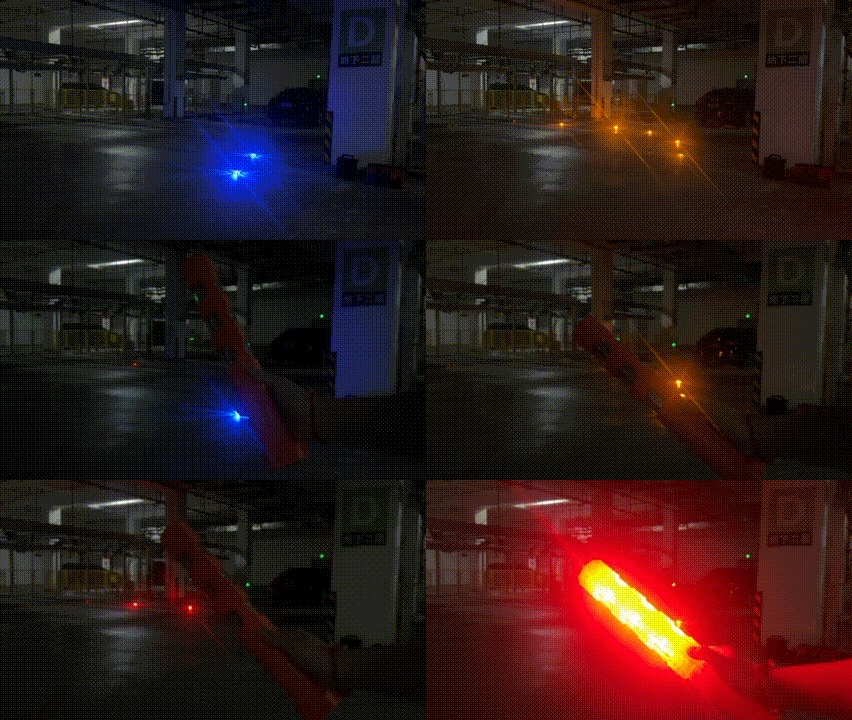
This scenario repeats itself constantly. Wholesalers stock one product type because it has higher margins or lower minimum order quantities. They tell customers that product is universally superior. Customers apply the product to mismatched scenarios. End users face safety issues or visibility complaints. Products get returned. Brand reputation suffers.
Three Application Variables That Determine Product Choice
After analyzing customer complaints over two years, we identified three variables that predict product performance.
Variable one: Is there consistent vehicle traffic approaching the warning zone? If yes, reflective cones work. If no, LED warning lights are necessary.
Variable two: What is the required visibility
Related News