How Cone-Top Warning Lights Fit Into a Complete Road Safety Lighting System
How Cone-Top Warning Lights Fit Into a Complete Lighting System
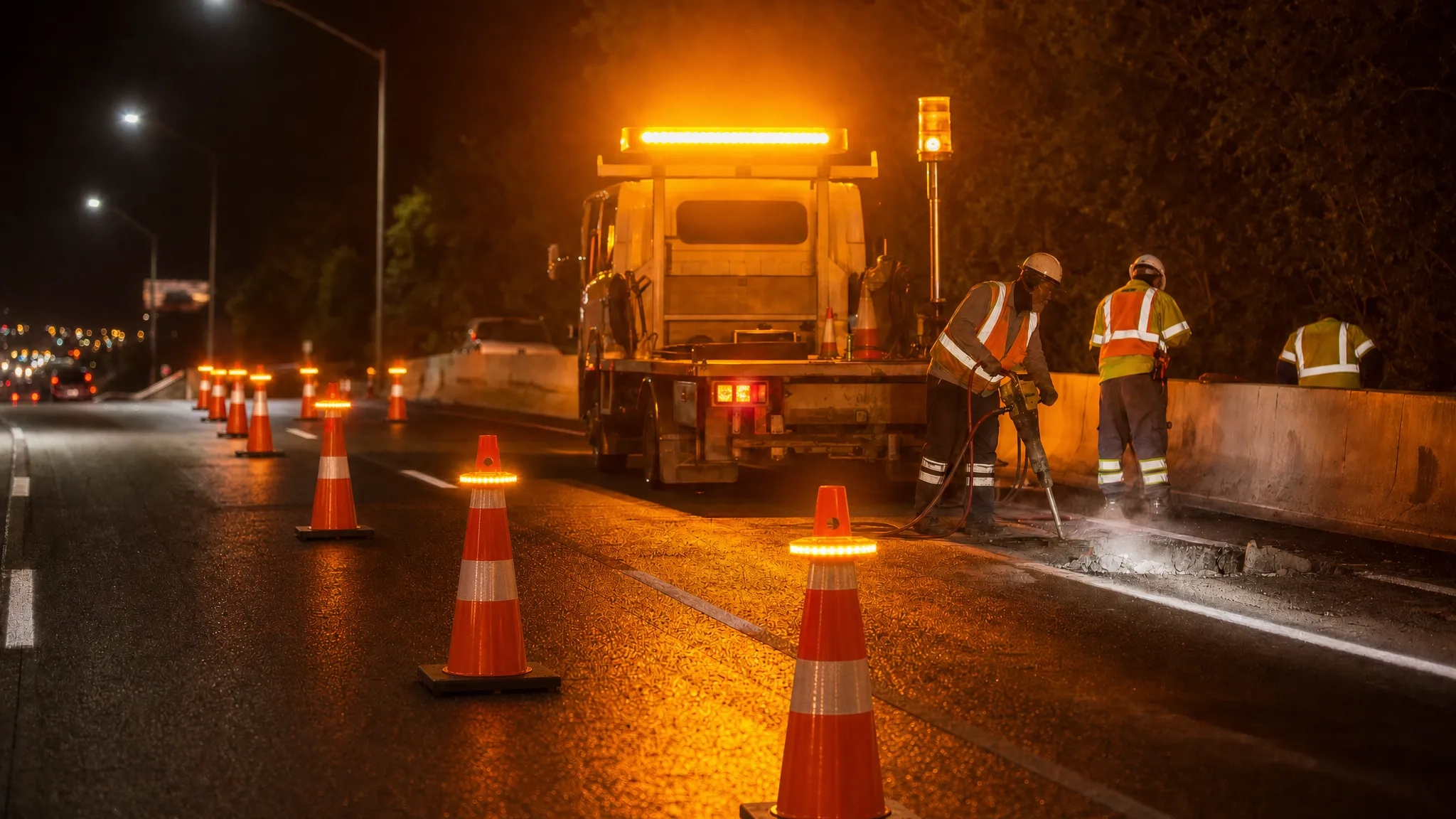
Cone-top warning lights are widely used in road construction, emergency response, utility maintenance, and traffic control applications. However, many buyers misunderstand their role.
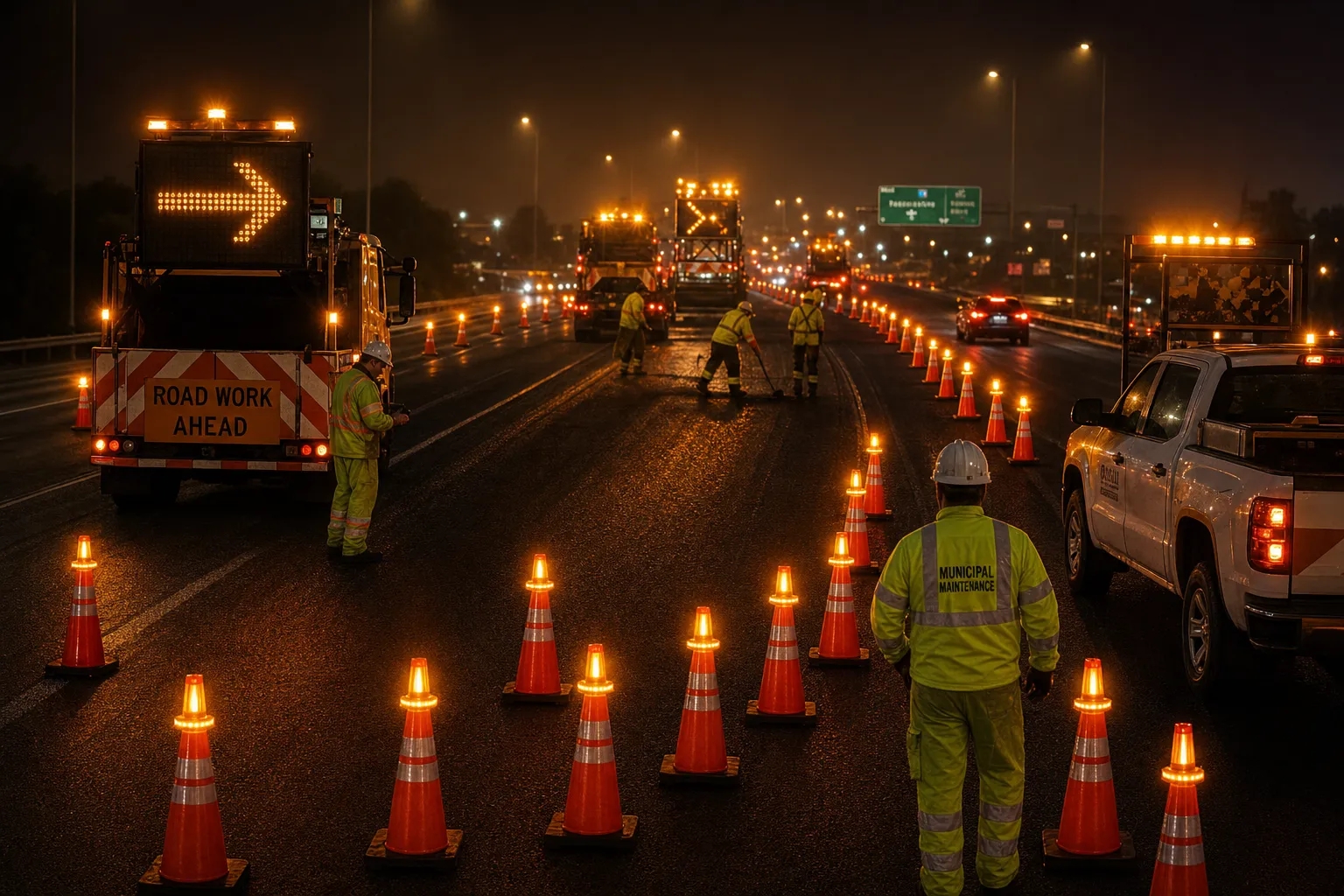
A traffic cone warning light is not designed to replace every warning device. Instead, it works as the final visibility layer in a complete warning lighting system.
A professional temporary traffic control setup normally combines:
- Long-range warning devices
- Mid-range guidance lights
- Close-range boundary marking lights
According to the Manual on Uniform Traffic Control Devices (MUTCD), effective temporary traffic control requires clear warning, guidance, and channelization throughout the work zone.
OSHA also emphasizes maintaining visible boundaries whenever workers are exposed to vehicle traffic.
For distributors, fleet operators, and OEM buyers, understanding this layered approach helps create safer and more efficient lighting solutions.
What Is a Complete Warning Lighting System?
A complete warning lighting system is built around different visibility zones.
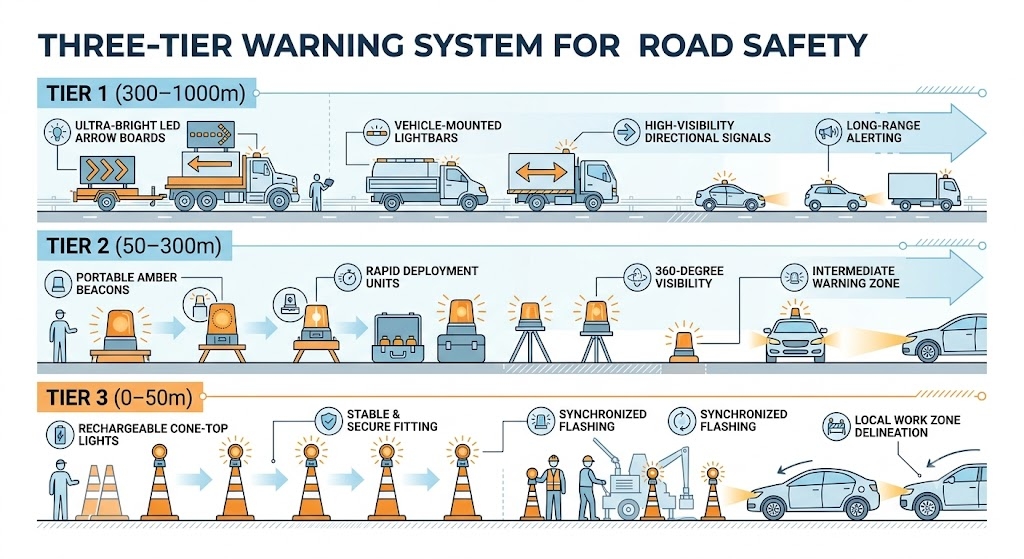
Tier 1: Long-Range Warning
Coverage: 300–1000+ meters
Typical products:
- LED lightbars
- Arrow boards
- High-mounted beacon lights
Purpose:
Alert drivers before they reach the work zone.
Tier 2: Mid-Range Guidance
Coverage: 50–300 meters
Typical products:
- Portable warning beacons
- Magnetic warning lights
- Emergency flashers
Purpose:
Guide drivers through transition areas and lane changes.
Tier 3: Close-Range Boundary Marking
Coverage: 0–50 meters
Typical products:
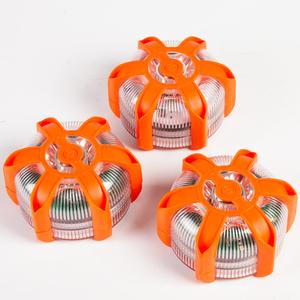
- Traffic cone warning lights
- Cone-top LED lights
- Rechargeable traffic cone lamps
Purpose:
Clearly define the physical edge of the work area.
This is where cone-top warning lights provide the greatest value.
Where Do Cone-Top Warning Lights Fit?
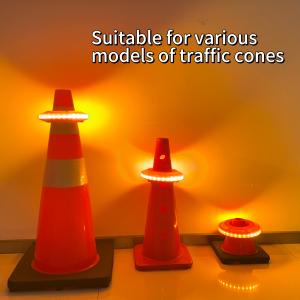
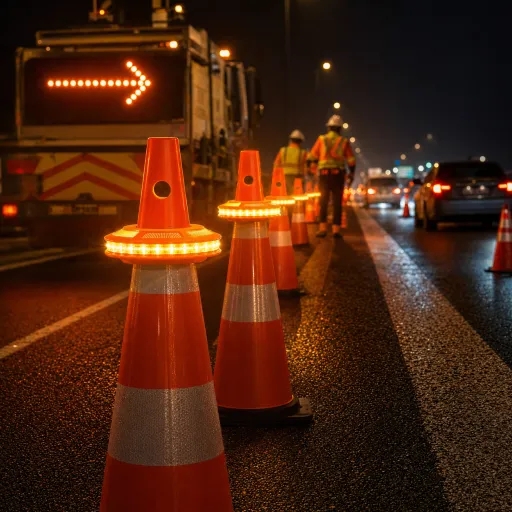
Cone-top warning lights are designed to improve visibility at the closest point between vehicles and the work zone.
They help:
- Highlight traffic cones
- Define lane closures
- Mark pedestrian areas
- Improve nighttime visibility
- Support temporary traffic control
Unlike vehicle-mounted lightbars, cone lights are not designed for long-distance warning.
Their role is to make the work-zone boundary clearly visible after drivers have already received advance warning.
Benefits of Rechargeable Cone-Top Warning Lights
1. Faster Deployment
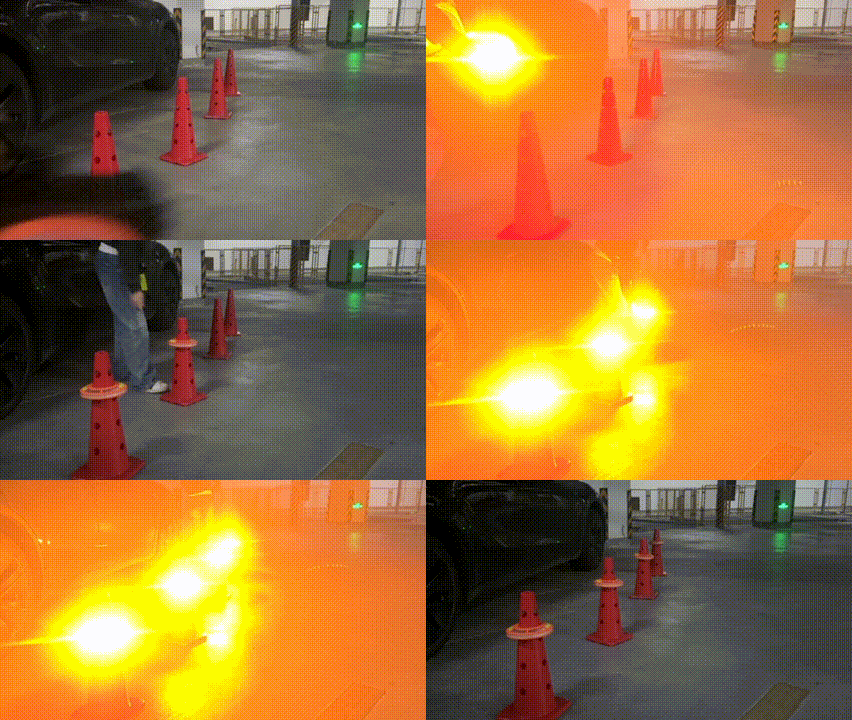
Cone-top lights attach directly to traffic cones, allowing workers to quickly set up warning zones.
For road crews managing multiple locations, faster deployment means:
- Less preparation time
- Improved work efficiency
- Easier equipment management
2. Lower Operating Cost
Compared with disposable battery models, rechargeable traffic cone lights reduce:
- Battery replacement
- Maintenance costs
- Equipment downtime
Professional rechargeable models commonly include:
- USB Type-C charging
- Lithium battery technology
- Multiple flash modes
- Waterproof housing
3. Better Fleet Management
For municipalities, contractors, and fleet operators, rechargeable systems simplify daily operations.
Benefits include:
- Unified charging process
- Reduced inventory management
- Reusable equipment
- Lower long-term cost
4. OEM Customization Options
Professional buyers often require customized solutions.
OEM options may include:
- Custom logo printing
- Private label packaging
- Flash pattern customization
- RF synchronization
- Battery upgrades
- IP67 waterproof design
These features allow distributors and brands to create differentiated traffic safety products.
How to Choose the Right Cone-Top Warning Light?
Choosing a traffic cone warning light is not only about brightness or price.
Professional buyers should evaluate the complete application, including deployment environment, traffic conditions, operating time, and compatibility with existing warning equipment.
1. Consider Your Deployment Size
The number of cone lights required depends on the project scale.
Typical applications:
| Application | Recommended Quantity |
|---|---|
| Small road maintenance | 10–20 units |
| Urban lane closure | 20–40 units |
| Highway maintenance | 40–80 units |
| Large temporary work zone | 80+ units |
Before ordering, buyers should consider the complete work-zone layout instead of only the number of cones being used.
2. Rechargeable vs Battery-Powered Cone Lights
For frequent professional use, rechargeable traffic cone lights are becoming the preferred choice.
Rechargeable Models
Advantages:
- Lower operating cost
- Faster maintenance
- USB Type-C charging
- Reusable battery system
- Better for fleet operations
Disposable Battery Models
Advantages:
- Lower initial purchase cost
- Suitable for occasional use
For contractors, municipalities, and rental companies that deploy equipment regularly, rechargeable models usually provide better long-term value.
3. Check Waterproof and Durability Requirements
Outdoor warning equipment must withstand changing weather conditions.
Professional buyers should check:
- Waterproof rating
- Impact resistance
- Battery protection
- Operating temperature range
For example, IP67-rated traffic cone warning lights provide strong protection against dust and temporary water exposure, making them suitable for demanding outdoor environments.
4. Verify Synchronization Features
For large projects, multiple flashing lights working randomly can reduce visual consistency.
Advanced warning systems may require:
- RF synchronization
- Sequential flashing
- Group control
- Custom flash patterns
These features are especially useful for:
- Highway projects
- Airport operations
- Large construction zones
- Emergency response applications
How Cone-Top Warning Lights Work With Other Safety Products
A complete warning system combines different products for different visibility requirements.
Typical configuration:
Long Distance
LED lightbars and arrow boards alert approaching drivers.
↓
Medium Distance
Portable beacon lights guide traffic movement.
↓
Close Distance
Rechargeable cone-top warning lights define the work-zone boundary.
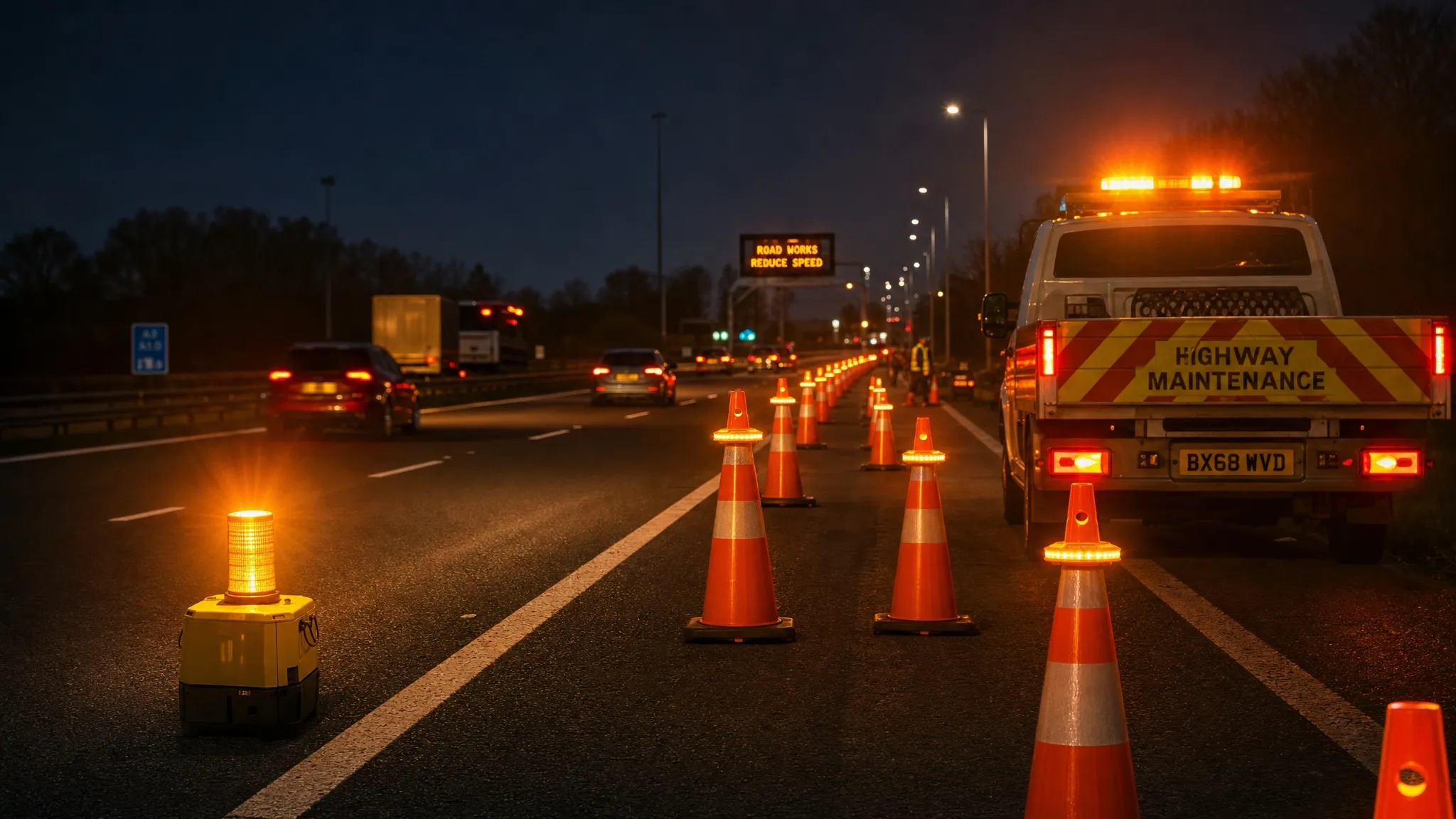
This layered approach improves driver recognition and helps workers create a clearer safety zone.
Real Application Example
A road maintenance supplier working with municipal contractors needed a reusable lighting solution for repeated nighttime projects.
Instead of using individual warning products separately, the customer combined:
- Vehicle warning lights
- Portable beacons
- Rechargeable cone-top warning lights
The complete system improved deployment efficiency and reduced battery replacement compared with traditional disposable solutions.
This type of integrated purchasing approach is increasingly common among professional safety equipment buyers.
Why Choose Superflare Rechargeable Traffic Cone Lights?
For distributors and OEM customers, product performance is only one part of the decision.
Superflare rechargeable traffic cone warning lights are designed for professional applications with features including:
- USB Type-C rechargeable design
- High visibility LED output
- Multiple flash modes
- Optional synchronized flashing
- IP-rated waterproof protection
- OEM customization support
- Private label packaging options
For more product details: