Common Traffic Safety Equipment Explained?
The spec maze wastes time and money. I work on the factory side. I translate specs into field choices that hold up under rain, fatigue, and audits.
Common traffic safety equipment includes warning lights, vehicle beacons, cones, barriers, speed control, and high‑visibility wear. Choose by visibility, compliance, deployment speed, and total lifecycle cost. Verify with quick field checks, not lumen numbers.
If you buy on habit, you pay twice. I did, early on. Stay with me. I will give you fast checks, clear trade‑offs, and ways to avoid rework.
Why does visibility beat raw lumens?
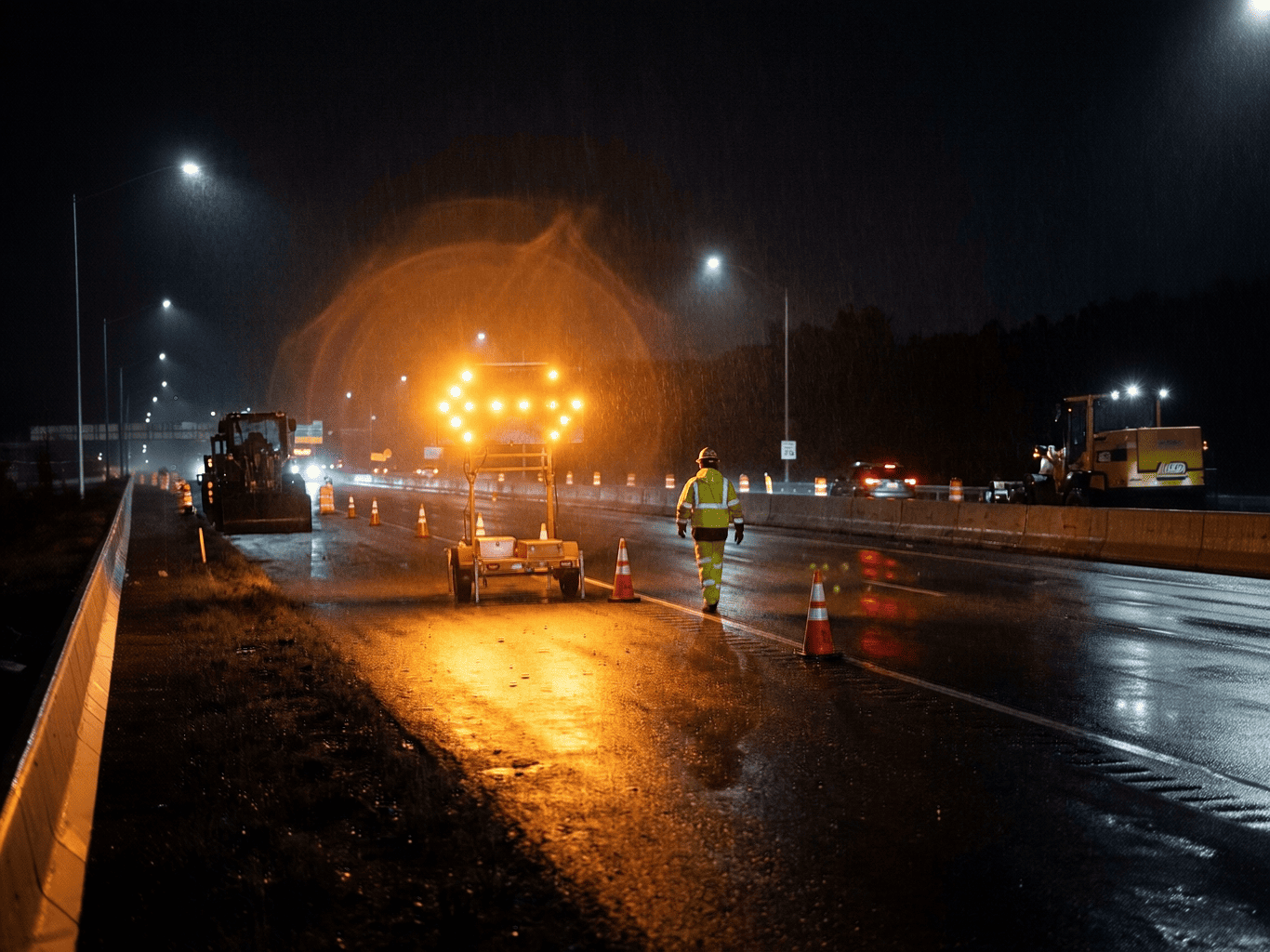
Bright is not always visible. I learned this on a night paving job. Drivers saw less with a narrow, high‑lumen beacon. A wider, calmer flash worked.
Visibility comes from beam spread, flash pattern, color, viewing angle, and contrast with background. For night roadworks, use wide 360° beacons with alternating flash; amber for work zones; ensure 300 m detection; verify by off‑axis walk‑test, not lumen specs.
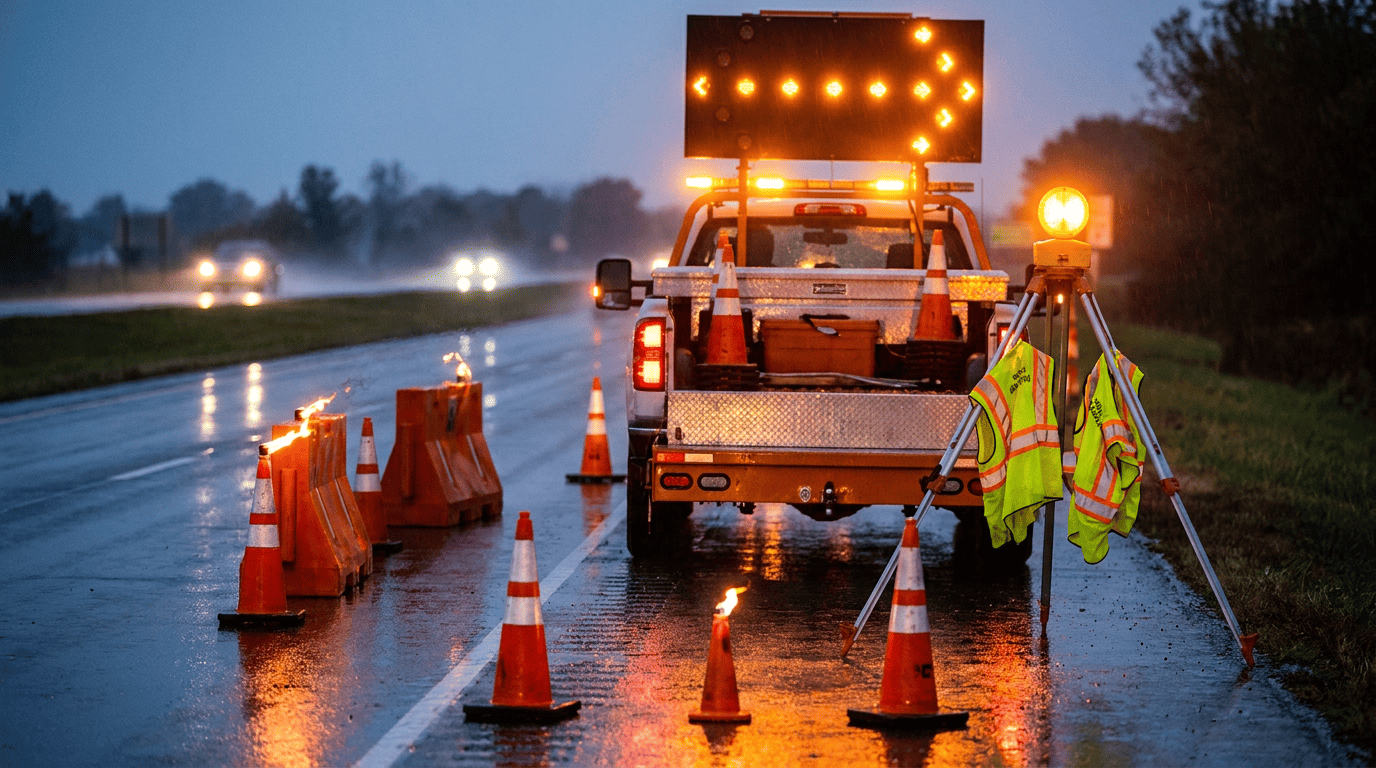
What makes a light “seen,” not just “bright”
- Beam and spread set how far off-axis drivers see the signal.
- Flash cadence sets attention without glare fatigue.
- Color and background contrast carry the message.
Quick scenario checks
- Night roadworks: Amber, 360°, 2–4 Hz alternating flash. Stand 300 m downroad. Walk 30–45° off-axis. If the beacon fades fast, pick a wider optic.
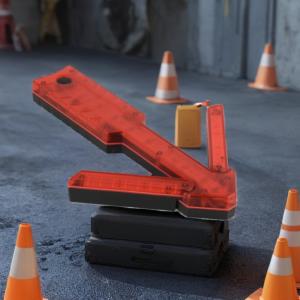
- Incident diversion: Sequential arrow or linked beacons. Aim for consistent spacing and clear progression. Avoid chaotic multi-patterns.
- Patrol vehicles: Compliant colors only. Wide front/rear spread. Dim mode for close quarters.
Personal gear pairing
- Use reflective vests with Class 2/3 tape as baseline.
- Add powered shoulder or arm lights for movement cues in rain or fog.
| Scene | Color | Pattern | Viewing Angle | Field Check |
|---|---|---|---|---|
| Night roadworks | Amber | 2–4 Hz alt flash | 360° | Off-axis walk at 30–45° |
| Diversion lane | Amber | Sequential | 180° front | 50 m progression test |
| Patrol vehicle | Region-legal | Cruise + flash | Wide front/rear | Approach from side |
I once swapped a 1800‑lumen narrow beacon for a 900‑lumen wide optic on a mill-and-fill. The lower‑lumen unit won. Crew reports and dashcam confirmed earlier detection and fewer brake spikes. It changed our spec before mass run.
What compliance checkpoints should come first?
Paperwork looks boring. It is a gate. I have seen shipments held. I now front-load checks, so teams avoid fines and delays.
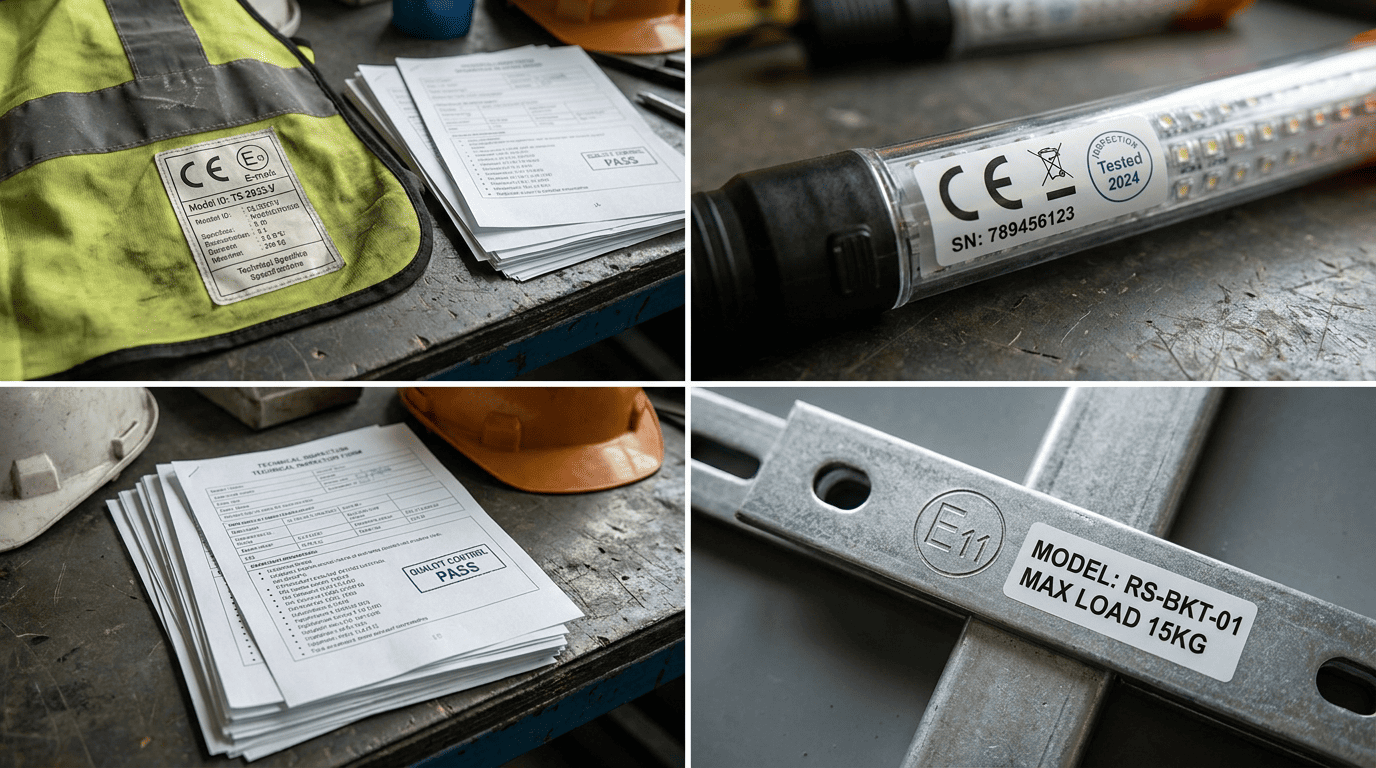
Ask for model-level markings and test reports that match your market. EU: CE/E-mark, EN signal-light references. North America: SAE/DOT/FMCSA cues. Japan: Radio Law for wireless links. Treat unbacked claims as risk. I offer guidance, not legal advice.
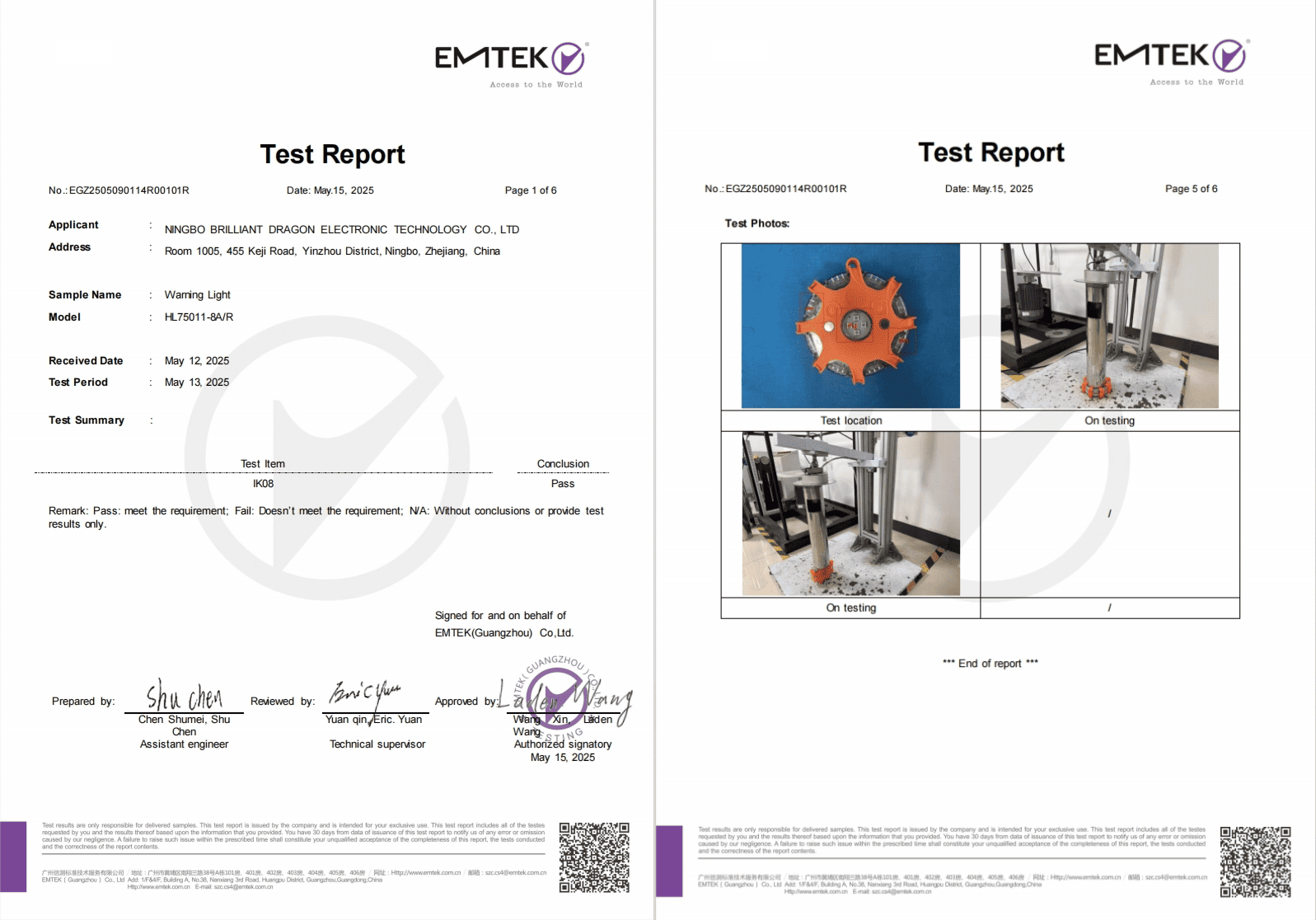
Model identification first
- Ensure each model has a unique ID on the label and in the report.
- Match firmware or pattern set to the report when it affects emissions or optics.
Documents to request
- EU: CE DoC, E-mark for vehicle-related lights, and EN standard references for signal lights at a high level.
- North America: SAE class references for beacons/lightbars; DOT/FMCSA cues when vehicle-mounted.
- Japan: Radio Law certificate for wireless or linked devices; model and frequency must match.
Quick screen before you trust
- Ask for full test lab name and report number. Check dates.
- Verify markings on samples match the report model.
- For RF-linked kits, check channel/frequency aligns with the certificate.
| Region | Common checkpoints | What to see on sample |
|---|---|---|
| EU | CE DoC, E-mark (if vehicle), EN references | CE mark, E mark code, model ID |
| North America | SAE class (e.g., J845), DOT/FMCSA cues | SAE class marking, model ID |
| Japan | Radio Law | Radio Law mark, channel/freq label |
Boundaries and limits
I am not giving legal advice. I share what to ask for. Some tests cover only samples under lab conditions. Model changes can void reports. Treat vague promises as a risk. Build compliance checks into the PO, not aftership. It saves months.
How do I deploy fast and maintain faster?
Crews lose minutes on mounts and switches. I did too. Each minute adds risk on a live road. Small design choices cut that.
Choose power and mounting for your duty cycle. For temporary jobs, use rechargeable kits with auto on/off and magnetic or multi-mount bases. For lane lines, use wireless-linked beacons. Fewer switch steps reduce errors and time.
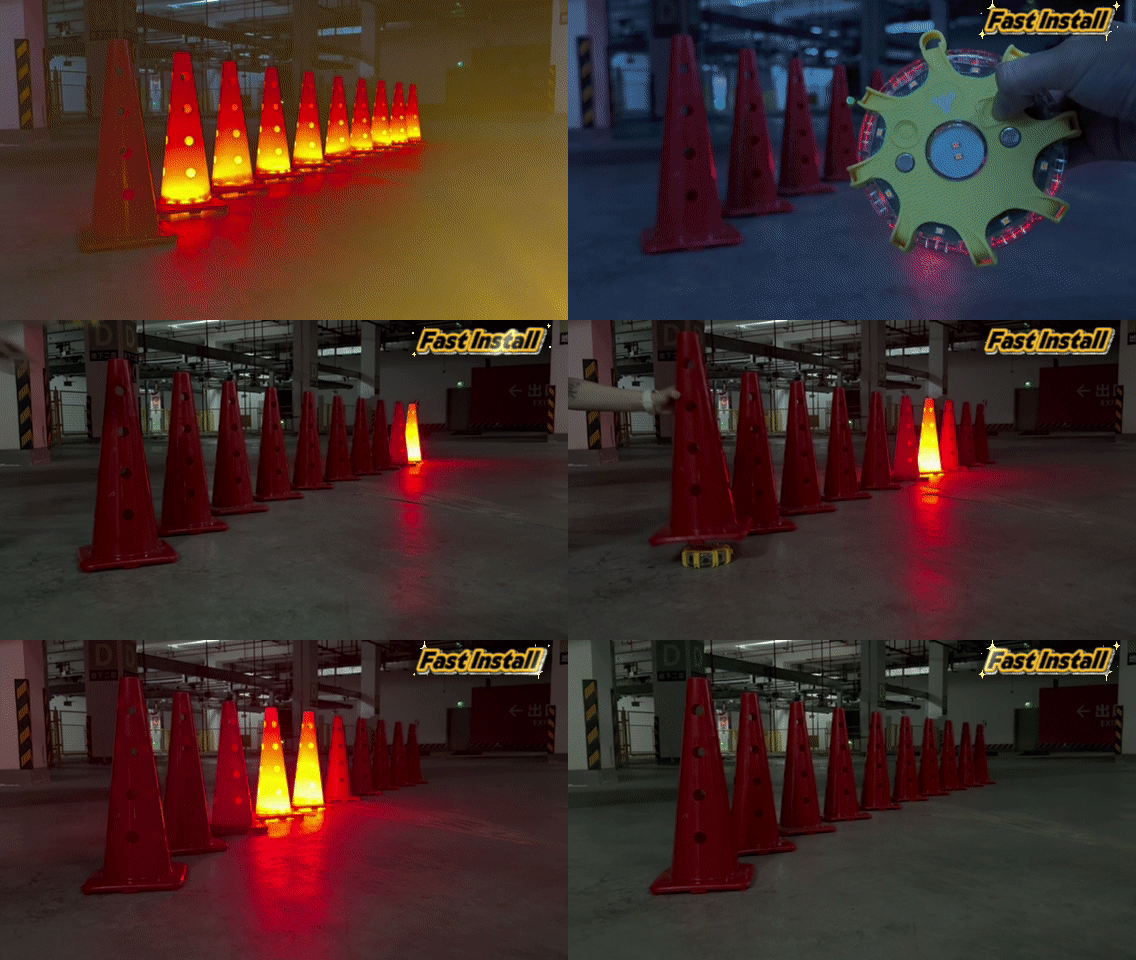
Power and mounts by job type
- One‑night closures: Rechargeable packs, high charge rate, shared case chargers.
- Multi‑day setups: Swappable battery trays or wired power.
- Mounts: Magnetic for steel, bolt/strap for cones and barriers, suction for smooth panels.
A field vignette
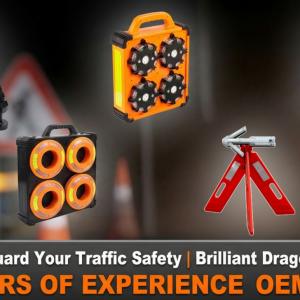
I shipped an eight‑unit beacon kit for rapid diversions. Each head linked hop‑to‑hop at up to 60 m line-of-sight. The set met Japan Radio Law for the wireless link. Auto on/off triggered when the unit left or returned to the case. The kit had magnetic backs and strap slots. We cut crew switch touches by 80%. Standard mounts meant fewer wrong placements. Setup time dropped by 6–8 minutes per closure. Fewer touches also reduced “one dead head” errors.
Simple selection map
| Duty cycle | Power | Mount | Time saver |
|---|---|---|---|
| Hours | Rechargeable | Magnetic | Auto on/off, case charging |
| Days | D-cells or trays | Strap/bolt | Hot swap trays |
| Weeks | Wired | Bolt | Central control |
Maintenance cues
- Use shared batteries across models when you can.
- Pick sealed charge ports with covers.
- Choose lenses you can replace on site.
One more note. Shuffle kits back to the case to force a visual count. I ask for foam cutouts. It sounds small. It saves returns and loss.
Why does total lifecycle cost beat unit price?
Unit price feels safe. It fooled me. Failures, spares, and labor eat budgets. I now cost by season, not by carton.
Consider impact resistance, ingress protection, replaceable parts, standard batteries, and repair channels. Include cones and barriers. Use a simple TCO: failure rate x replacement cost + labor minutes/asset + downtime risk.
What lab ratings mean (and do not)
- IK07 indicates an impact test at defined energy under lab setup. It does not cover every real strike angle. I tested sample batches only.
- IP ratings check dust and water under set conditions. Edge cases still exist. Heat and fuel can change outcomes.
Parts and spares matter
- Replaceable lenses and brackets cut waste.
- Standard AA, C, or D cells help in remote sites.
- Clear warranty and repair channels reduce downtime and hassle.
Beyond lights: cones, barriers, apparel
- Cone bases should resist tearing and hold shape. Retroreflective bands should stay bright after washing.
- Barriers should stack and clean easily. UV stability saves color and strength.
- High‑vis vests should keep tape adhesion after repeated washes.
| Cost driver | What to measure | Why it matters |
|---|---|---|
| Failures | % per season | Predicts spares needed |
| Replacement cost | Unit + freight | Real money out |
| Labor | Minutes/asset | Crew time is budget |
| Downtime | Risk score | Safety and penalties |
A simple TCO template
TCO per season = failure rate x replacement cost + labor minutes/asset x labor rate + downtime risk allowance. Track it for lights, cones, and barriers. I have seen a pricier beacon with IK07 lenses and replaceable gaskets save 30% over a season. Fewer failures, faster swaps, less crew time. The lab numbers matched field gains only because we designed the mounts and seals for the real job. Tests were on defined batches under specified conditions. I document that in each handoff.
Conclusion
Buy for visibility, compliance, speed, and season cost. Verify in the field. Ask for documents. Count minutes. Small design choices change outcomes on live roads.
For procurement decisions based on safety requirements, see our Complete LED Road Flare Sourcing Guide covering compliance, specs, and buyer profiles.