Wireless Sequential Warning Lights vs Cones: 5 Reasons Road Crews Are Upgrading Safety Systems
I talk to distributors and dealers every week who ask the same question: "My clients have been using reflective cones and single-lamp warning lights for years—why should I push them to upgrade to wireless sequential warning lights?" It's a fair concern, especially when end users are naturally skeptical about adding cost to equipment that "already works." But here's what we've learned from our dealer network: the gap between what cones do and what modern road crews actually need is getting harder to ignore, especially at night and in poor weather.
Wireless sequential warning lights solve a visibility problem that reflective cones and single-lamp units cannot address—they create directional recognition at distance through synchronized flashing patterns, which helps drivers identify hazard zones faster in low-light and adverse weather conditions, reducing the risk your clients face when recommending safety gear to end users who work on highways, construction sites, and emergency lanes.
If you're evaluating whether to add wireless sequential warning lights to your catalog, or if you're simply trying to explain the upgrade logic to a skeptical road crew manager, this article walks through five specific reasons—grounded in distributor feedback and real deployment scenarios—that justify the shift from passive reflective gear to active, synchronized warning systems.
Reason 1: Synchronized Flashing Creates Directional Recognition That Cones Cannot Provide?
One of the most common objections we hear from distributors is this: "My clients say cones are visible enough—why would they need flashing lights?" The issue isn't whether cones are visible when you're right next to them. The issue is whether a driver approaching at 70 mph in the dark can recognize the hazard zone as a directional pattern, not just scattered points of light.
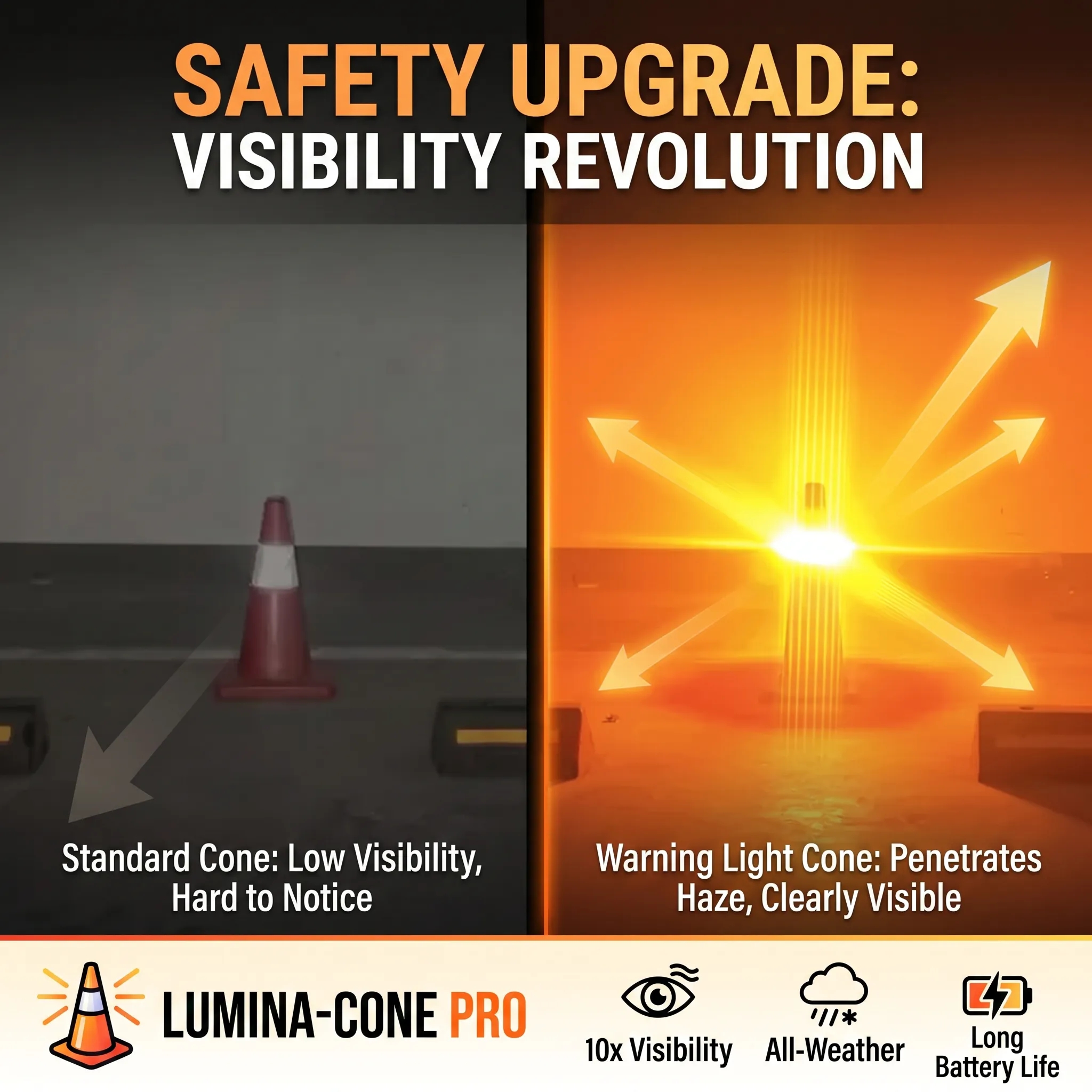
Reflective cones rely entirely on your headlights to illuminate them. In fog, rain, or at angles where headlights don't hit the cone directly, that reflectivity drops sharply. A single-lamp warning light improves this by emitting its own light, but without synchronization across multiple units, drivers see individual flashes—not a coherent pattern that signals "lane closure ahead" or "merge right."

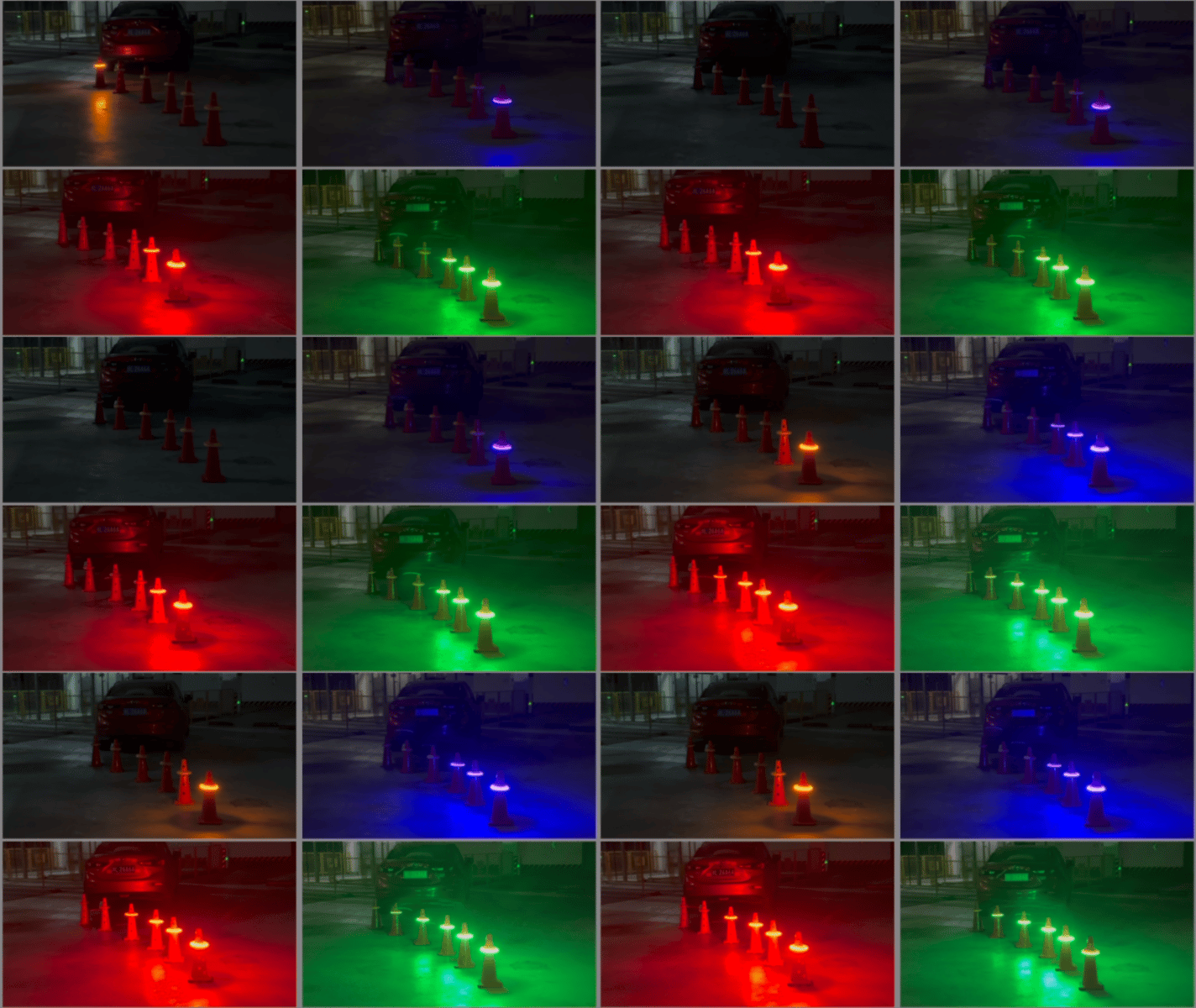
Wireless sequential warning lights change this by syncing the flash timing across all units in the deployment zone. When drivers see a row of lights flashing in sequence—left to right, or toward the direction they need to merge—they process the hazard faster. Our dealers who supply equipment to highway maintenance crews consistently report that this directional cueing reduces the time it takes for drivers to react, which is critical when work zones are set up quickly or in low-visibility conditions.
Here's a practical breakdown of how each option performs under different conditions:
| Condition | Reflective Cones | Single-Lamp Warning Lights | Wireless Sequential Warning Lights |
|---|---|---|---|
| Daylight, clear weather | Adequate visibility | High visibility | High visibility with directional cue |
| Night, clear weather | Depends on headlight angle | Good visibility, no pattern | Excellent visibility, clear direction |
| Fog or heavy rain | Poor visibility | Moderate visibility | Strong visibility with sync pattern |
| Distance recognition (500+ ft) | Very limited | Limited without pattern | Strong due to sequential movement |
| Driver reaction time | Slower, ambiguous | Faster, but no directional info | Fastest, clear merge/closure signal |
The upgrade isn't about making lights "brighter"—it's about making the hazard zone recognizable as a system, not just a collection of individual objects. Distributors who explain this to their clients find it easier to justify the cost, because the value isn't in the light itself—it's in the pattern the lights create together.
If your clients are working on multi-lane highways, emergency lane closures, or any scenario where driver confusion creates risk, the directional recognition advantage of wireless sequential systems becomes a decision variable that reflective cones and single-lamp units cannot satisfy. This is the first reason distributors tell us they feel confident recommending the upgrade.
Reason 2: Deployment Speed Matters When Your Clients Work in High-Risk Environments?
The second objection we hear is about ease of use. Distributors worry that wireless systems will be too complicated for road crews who are used to throwing cones out of a truck bed, or that end users will push back on anything that requires setup time. But here's what our dealers report from the field: deployment speed isn't about how fast you can place a single unit—it's about how fast you can create a functional warning system that's ready to protect the work zone.
Reflective cones are fast to place individually, but they require no coordination, which means there's no system-level check that the hazard zone is set up correctly. Single-lamp warning lights are slightly more involved—you need to turn each one on, check the battery, and position it—but again, there's no built-in verification that the units are working together as intended.
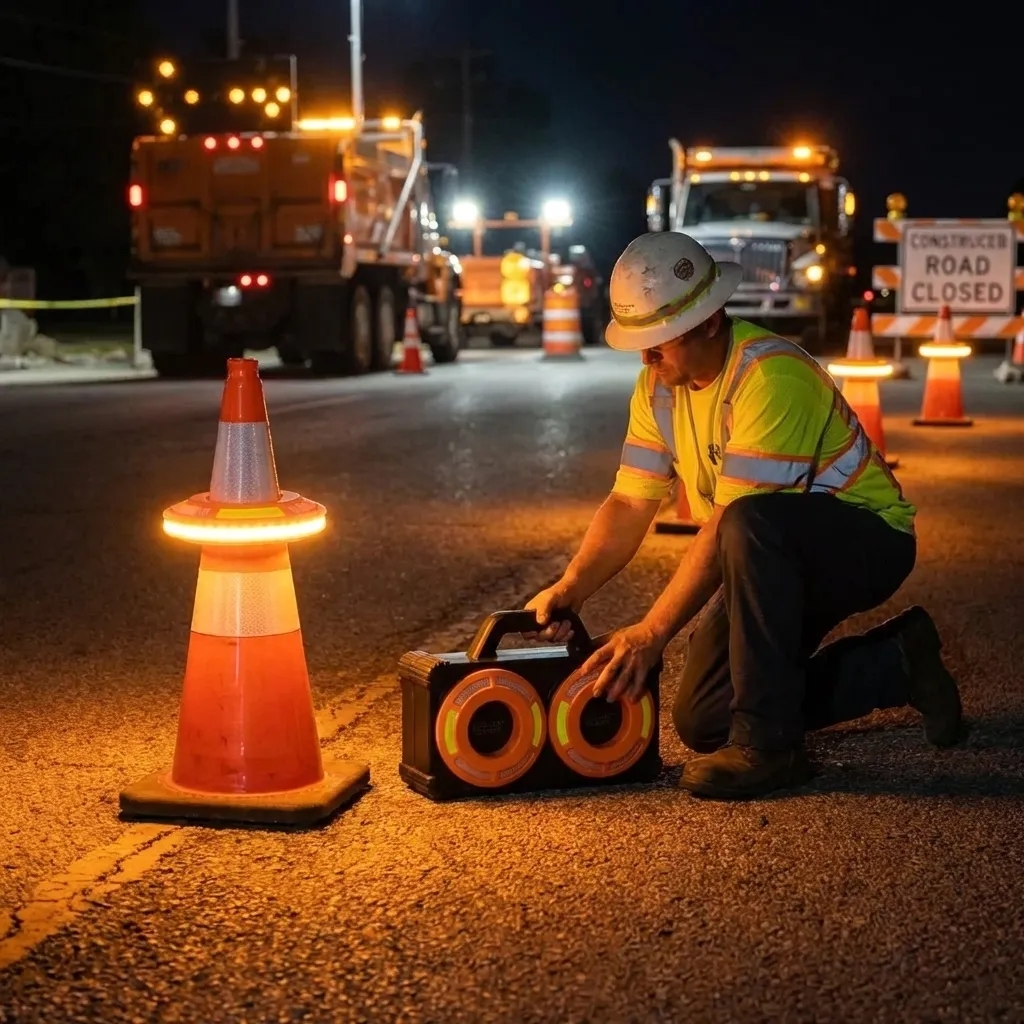
Wireless sequential warning lights are designed for rapid deployment as a system. Most models we work with allow crews to power on all units simultaneously using a remote trigger or master controller. Once the first unit is synced, the remaining lights automatically join the sequence—no manual pairing, no app required, no per-unit configuration. Our distributors who supply equipment to emergency responders and utility crews highlight this as a major advantage, because it means the system is operational in the same amount of time it would take to manually turn on individual single-lamp units—but with the added benefit of immediate pattern synchronization.
Here's a comparison of deployment steps for a typical 10-unit work zone setup:
| Task | Reflective Cones | Single-Lamp Warning Lights | Wireless Sequential Warning Lights |
|---|---|---|---|
| Unload from vehicle | 10 cones, quick | 10 lights, moderate weight | 10 lights, moderate weight |
| Power on / activate | None (passive) | 10 separate power-on actions | 1 master trigger, auto-sync |
| Position and check | Place visually | Place, verify each light is on | Place, verify sync pattern once |
| Adjust for pattern | Not applicable | Not applicable | Automatic, no manual adjustment |
| Total setup time (estimate) | 3–5 minutes | 5–7 minutes | 4–6 minutes with system check |
| System-level verification | Visual only, no feedback | Per-unit check, no pattern test | Pattern visible immediately |
The time difference isn't dramatic, but the confidence level is. When a road crew manager can see the sequential pattern running immediately after setup, they know the system is working. They don't have to walk the line checking each unit individually. Our dealers tell us this reduces the anxiety end users feel about adopting wireless systems, because the feedback loop is instant—if a unit isn't syncing, they see it right away in the pattern, not after a car has already passed through the zone.
For distributors, this translates into fewer "too complicated for my crews" objections. The upgrade isn't about adding complexity—it's about replacing manual per-unit checks with automatic system-level verification, which actually reduces the cognitive load on workers who are setting up in high-risk environments like active highways or emergency lanes. If your clients are operating under time pressure, where every minute of setup creates exposure risk, the deployment speed of wireless sequential systems becomes a safety factor, not just a convenience feature.
Reason 3: Weather Performance Exposes the Limits of Passive Reflective Gear?
The third reason we hear from distributors is tied to a specific failure scenario: reflective cones and even some single-lamp warning lights fail badly in poor weather, and that failure is not obvious until a client has already deployed them in fog, rain, or snow. Reflective cones need clean surfaces and direct light angles to work. When they're wet, covered in road spray, or positioned at angles where headlights don't hit them squarely, their visibility drops off sharply. Single-lamp warning lights perform better because they emit their own light, but without synchronization, drivers in poor weather often don't process the hazard zone as a coherent system—they see scattered lights and don't understand what action to take.
Our distributors who supply equipment to clients in northern regions or coastal areas with frequent fog report that weather performance is one of the most common reasons end users eventually upgrade. It's not that they planned to switch—it's that they had a near-miss or a complaint from a driver who didn't see the work zone until too late, and they realized the passive gear wasn't sufficient for the conditions they actually work in.

Wireless sequential warning lights address this by using high-intensity LEDs that penetrate fog and rain more effectively than reflective surfaces, and by creating a motion pattern that the human eye is biologically tuned to detect even in low-contrast environments. The sequential flashing creates apparent movement, which draws attention even when individual light sources are partially obscured. This is why pilots use sequential lighting on runways—the pattern is more detectable than static lights in low-visibility conditions.
Here's how the three systems compare under specific weather challenges:
| Weather Condition | Reflective Cones | Single-Lamp Warning Lights | Wireless Sequential Warning Lights |
|---|---|---|---|
| Heavy rain | Reduced reflectivity due to water film | Visible but no directional cue | High visibility, pattern clear |
| Fog (visibility < 500 ft) | Very poor, headlight scatter reduces effectiveness | Moderate, but lights appear isolated | Strong, sequential motion cuts through scatter |
| Snow or road spray | Cones get covered, reflectivity drops | Lights remain visible but no pattern | Visible and pattern recognizable |
| Nighttime + rain | Minimal visibility beyond 200 ft | Limited visibility, ambiguous hazard | Clear directional signal at distance |
| Glare from wet pavement | Competes with road reflections | Competes with ambient light | Sequential pattern distinguishes from background |
The weather performance gap matters most to distributors because it's where liability concerns start to surface. If a client deploys reflective cones in fog and a driver doesn't see the work zone, the question becomes: did the client use adequate warning equipment? Our dealers report that end users are increasingly aware of this risk, especially in regions where safety audits or insurance reviews are common. Upgrading to active, synchronized lighting isn't just about better visibility—it's about demonstrating that the client deployed equipment designed for the conditions they actually face.
For distributors evaluating whether to stock wireless sequential warning lights, the weather performance question is often the deciding factor. If your client base includes road crews, utility workers, or emergency responders who operate in rain, fog, or snow, the upgrade from passive reflective gear to active synchronized systems becomes a risk-reduction measure, not just a feature enhancement. This is the third reason our dealers feel confident recommending the switch—they're addressing a real failure scenario that clients have already experienced, not selling a theoretical improvement.
Reason 4: End-User Trust Increases When the System Provides Immediate Feedback?
The fourth reason is psychological, but it directly affects distributor sales: end users don't trust equipment they can't verify is working. Reflective cones offer no feedback—you place them and assume they're visible. Single-lamp warning lights give you a visual check that each unit is on, but there's no way to verify the overall pattern is effective. This creates hesitation among road crew managers and safety supervisors who are responsible for ensuring their teams are protected. They worry: "If one light fails, will I notice? If the hazard zone isn't clear to drivers, how will I know?"
Wireless sequential warning lights solve this by making the system's operational status immediately visible. When the lights are syncing correctly, you see the sequential pattern running in real time. If a unit drops out of sync or loses power, the pattern breaks, and the gap is obvious. Our distributors who supply equipment to utility companies and municipal road departments tell us this feedback loop is one of the biggest reasons end users switch—not because they doubted the technology, but because they needed confidence that the system was working as intended every time they deployed it.
This trust factor also reduces the support burden for distributors. When end users can visually confirm system status without needing to test each unit individually, they're less likely to call with "Is this working correctly?" questions or to file warranty claims based on perceived failures that were actually user error. Our dealers report fewer returns and service requests on wireless sequential systems compared to single-lamp units, because the pattern itself serves as a diagnostic tool—if it's running, the system is working.
Here's how the three options compare in terms of user confidence and system verification:
| System Aspect | Reflective Cones | Single-Lamp Warning Lights | Wireless Sequential Warning Lights |
|---|---|---|---|
| Initial deployment confidence | Low—no feedback that cones are visible | Moderate—can see each light is on | High—pattern confirms system is active |
| Ongoing status verification | None—assume cones remain in place | Per-unit visual check required | Pattern check verifies all units at once |
| Failure detection | Only when physically inspecting | Must walk line to find dead battery | Pattern break visible from distance |
| User training required | Minimal—place and forget | Moderate—power on, check battery | Moderate—sync procedure, then visual check |
| Support call frequency (distributor feedback) | Low—simple product | Moderate—"Is my light working?" | Low—pattern serves as diagnostic |
The trust issue is especially important for distributors who sell to clients with liability concerns—construction companies, municipal road departments, event management firms. These end users need to document that they deployed adequate safety equipment, and a system that provides visual confirmation of operational status helps them meet that requirement. When a supervisor can take a photo of the sequential pattern running and include it in a work zone report, they've created a verifiable record that the warning system was active. Our dealers tell us this documentation aspect is often the final reason a hesitant client approves the purchase order.
For distributors, the takeaway is that wireless sequential warning lights reduce the psychological barrier to adoption because they remove the "Is this actually working?" doubt that makes end users hesitant to move away from familiar reflective gear. The upgrade isn't just about better technology—it's about giving clients a system they can trust without needing technical expertise to verify. This is the fourth reason our dealer network consistently cites when explaining why they stock and promote wireless sequential systems.
Reason 5: Total Cost of Ownership Favors Reusable Active Systems Over Disposable Passive Gear?
The fifth and final reason is economic, and it's the one that often closes the sale when distributors are talking to budget-conscious clients: reflective cones and basic warning lights appear cheaper upfront, but their total cost of ownership over time is higher than wireless sequential warning lights, especially for clients who deploy frequently or in harsh conditions. Reflective cones wear out—they crack, fade, and lose reflectivity. Single-lamp warning lights require frequent battery replacements, and without rechargeable options, the per-deployment cost adds up. Wireless sequential systems have a higher initial price, but they're designed for repeated use with rechargeable power, durable housings, and longer operational lifespans.
Our distributors who supply equipment to highway maintenance crews and utility fleets report that clients often switch to wireless sequential systems after calculating the per-use cost over a 12-month period. A road crew that deploys warning equipment 3–4 times per week quickly realizes that buying replacement cones and disposable batteries costs more annually than investing in a reusable wireless system with rechargeable units. The math is especially clear for clients who operate in environments where cones get damaged frequently—construction zones with heavy equipment, highway shoulders with high-speed traffic, or temporary event spaces where gear gets moved and stacked repeatedly.
Not sure which product fits your procurement profile? Our LED Road Flare Buyer's Guide covers all buyer tiers — from government to wholesale to brand owners.
Related News