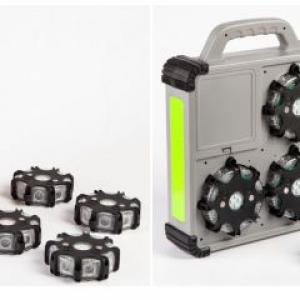
LED Flares vs Arrow Boards: Key Differences & Best Use Cases for Work Zones
I receive questions like "Which one should I buy?" almost every week. Contractors want a simple answer, but the real answer depends on what their site actually needs to communicate to drivers.
LED flares mark hazard boundaries quickly and work best for mobile crews or emergency stops, while arrow boards guide lane shifts and merge points more clearly. The better choice depends on whether your construction site needs fast deployment for short jobs or sustained directional guidance for longer closures—and in many cases, both devices serve different safety layers on the same site.
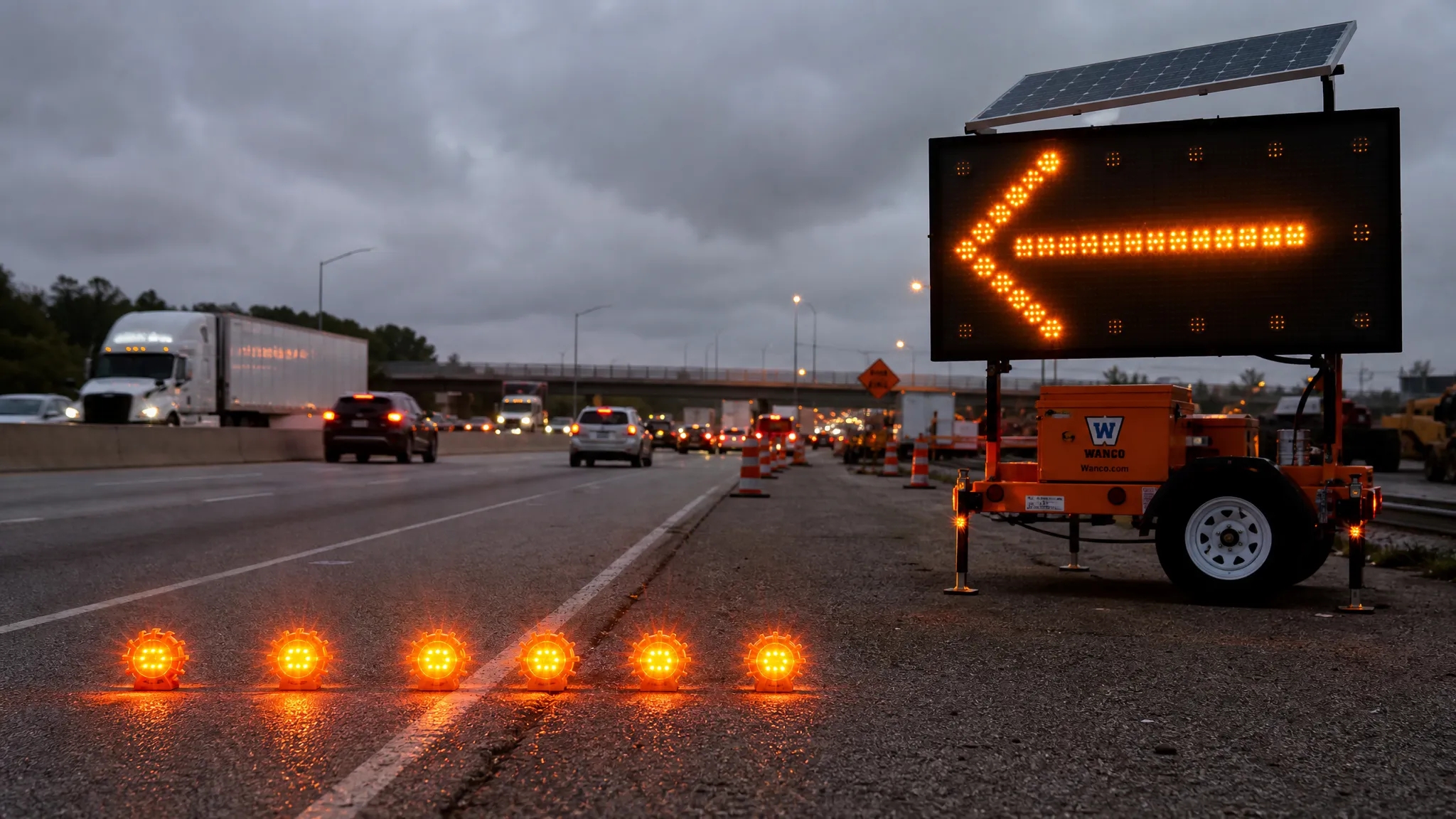
In customer selection discussions, I often see buyers treating these two devices as direct competitors. They ask which one wins. But that framing misses the point—these tools solve different warning problems, and understanding the difference helps you protect workers and reduce confusion for drivers approaching your work zone.
What Do LED Flares Actually Do on a Construction Site?
LED flares mark boundaries and alert drivers to unexpected hazards. They work like bright, portable warning dots that say "something is here—slow down and stay clear."
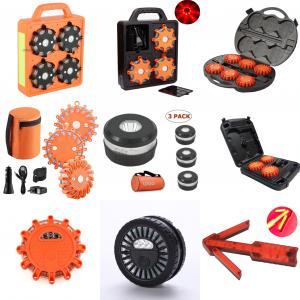
LED flares are compact, battery-powered warning lights that mark hazards, delineate work zones, or replace traditional flame flares. They deploy in seconds, operate in all weather conditions, and help drivers see obstacles, lane edges, or closed areas from a distance.
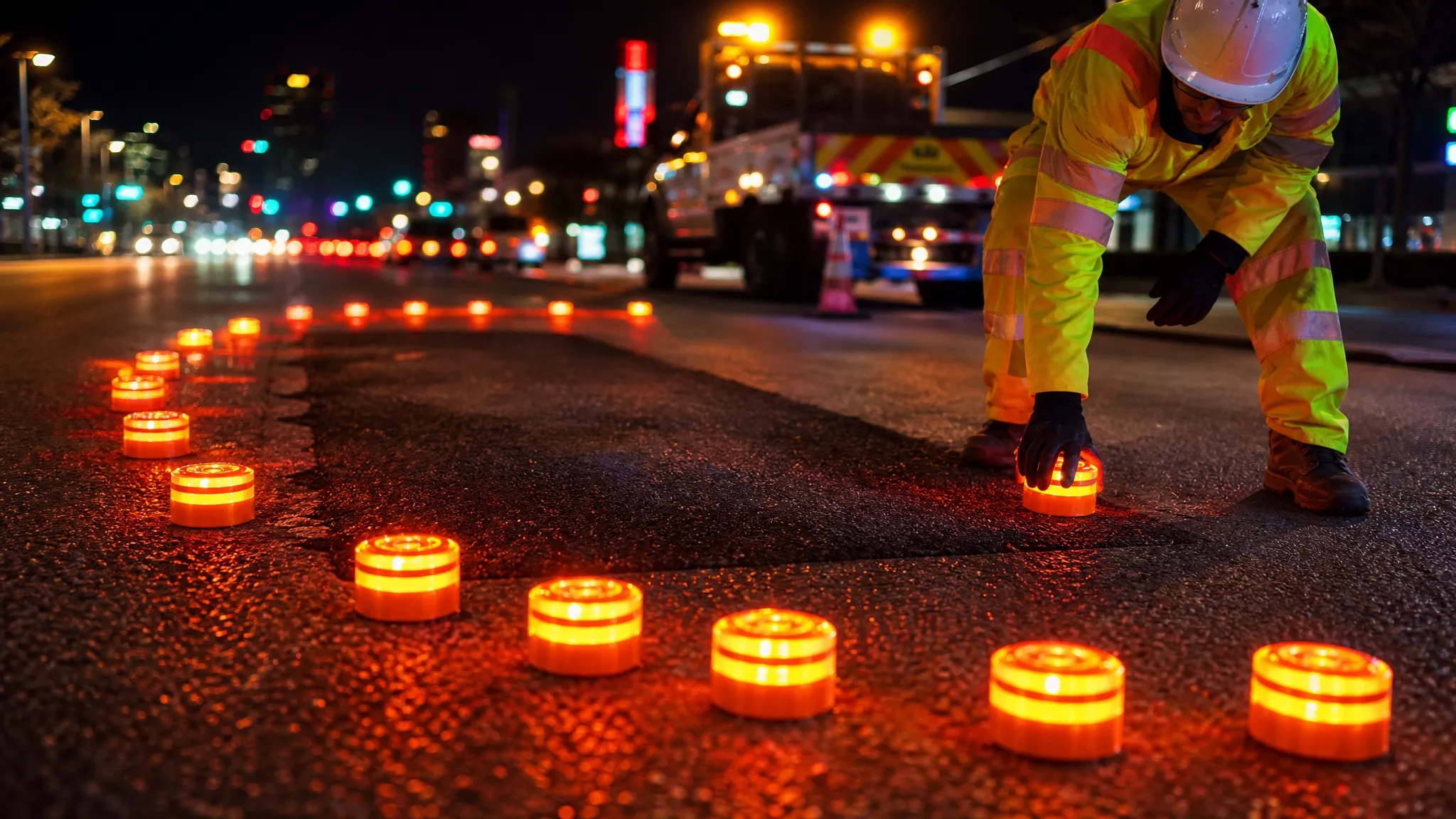
Based on project photos and buyer questions we receive, LED flares solve three core problems: marking sudden hazards fast, creating visible boundaries without infrastructure, and replacing dangerous flame flares that pose fire and handling risks.
When Do Construction Sites Use LED Flares?
Short-duration jobs benefit the most. If your crew needs to mark a pothole repair, temporary shoulder closure, or disabled vehicle in under two minutes, LED flares let you set up fast and adjust positions as work shifts. Mobile maintenance teams often carry LED flares in their trucks for this reason—they do not need cones, signs, or setup time.
Emergency-like conditions also favor LED flares. When weather, timing, or traffic flow makes traditional setups risky, LED flares let one worker quickly establish a perimeter without walking back and forth in live lanes. I have seen customers in towing and roadside assistance replace all their flame flares with LED versions for this exact reason.
Nighttime visibility is another strength. LED flares with multiple flash modes—rotating, steady, or SOS patterns—catch driver attention more reliably than reflective markers alone. Some buyers use LED flares to supplement cones during night paving or line-painting jobs, adding an extra visibility layer that moves with the crew.
What Are the Real Limits of LED Flares?
LED flares mark hazards, but they do not tell drivers what to do. A driver sees a flashing light, slows down, and then must interpret the situation. If the work zone requires a lane merge, detour, or specific directional change, LED flares alone may leave drivers uncertain about where to go.
Distance is another factor. While LED flares are bright, their small size limits their detection range compared to larger devices. A driver moving at highway speed may not have enough time to process a line of LED flares and make a safe lane change, especially in fog, rain, or heavy traffic.
Battery life varies by model. Lower-cost LED flares may run for only 10–15 hours on a full charge, which may not cover a full night shift or multi-day job without recharging. Customers running extended operations sometimes return to us asking for models with longer runtimes or solar recharge options.
How Do Arrow Boards Guide Traffic Differently?
Arrow boards communicate direction, not just presence. They tell drivers which way to move, when to merge, and where the open lane is located.
Arrow boards are large, electronic traffic signs mounted on trailers or vehicles that display flashing arrow patterns, caution symbols, or lane-closure messages. They guide drivers through work zones by showing clear directional instructions that reduce confusion and improve merge behavior at lane closures or detours.
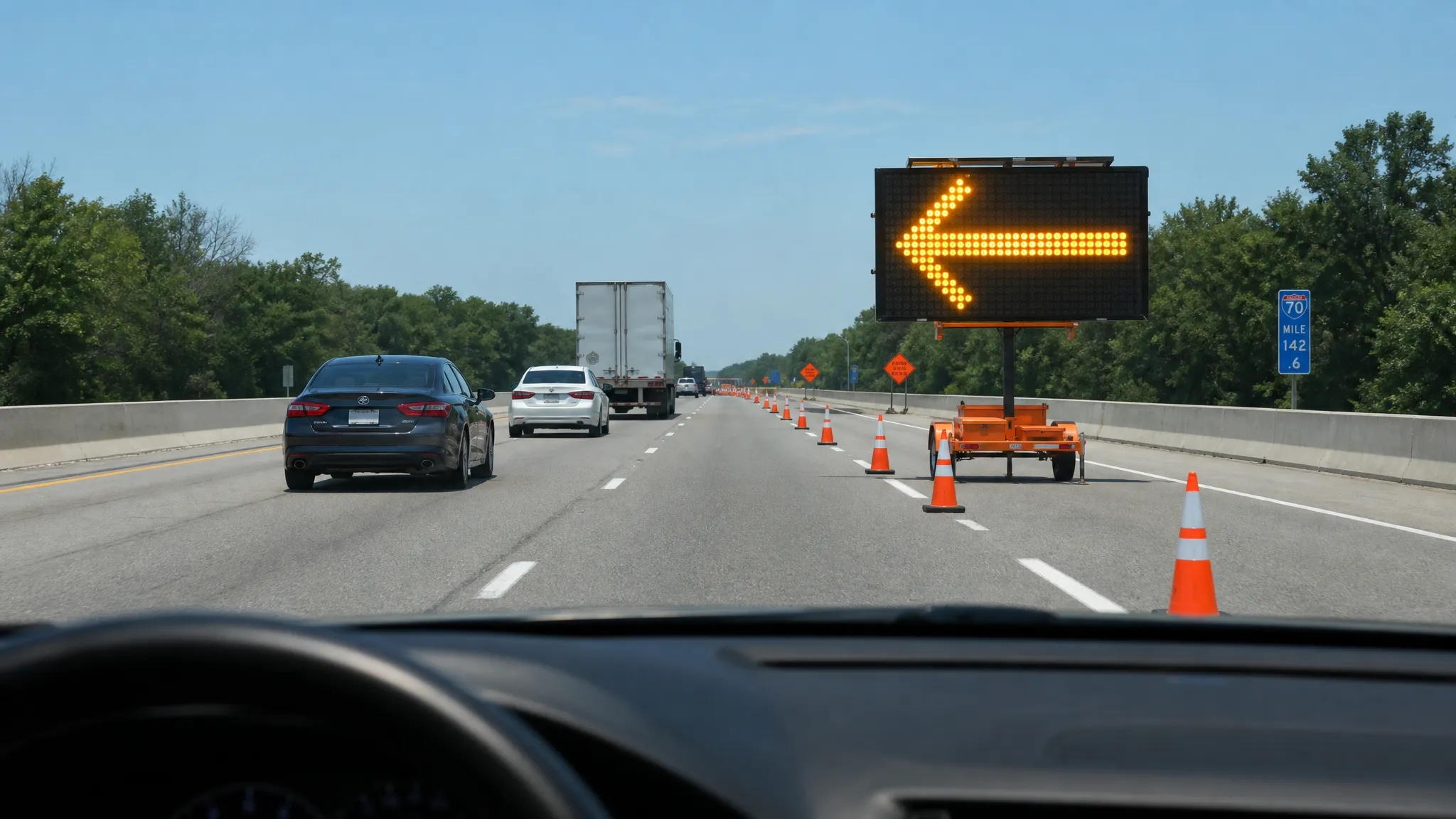
In customer selection discussions, buyers often tell me they need "something stronger than cones." What they mean is that cones mark edges, but drivers still hesitate, change lanes late, or ignore the closure. Arrow boards solve that problem by turning a passive warning into an active instruction.
Where Do Arrow Boards Add the Most Value?
Lane closures and merge points benefit the most. When a construction site reduces a two-lane road to one lane, drivers need to know when and which direction to merge. An arrow board placed 500–1,000 feet ahead of the closure gives drivers early notice and reduces last-minute, aggressive merging that increases crash risk.
Long-duration projects justify the investment. Unlike LED flares, arrow boards require trailers, power sources, and positioning—they are not fast-deploy tools. But for roadwork lasting days, weeks, or months, the one-time setup provides continuous, clear guidance without daily repositioning.
Highway-speed environments favor arrow boards. At speeds above 45 mph, drivers need visual cues they can process quickly from a distance. An arrow board's large display and motion patterns stand out more clearly than scattered small lights, giving drivers the reaction time they need to change lanes safely.
What Limits Arrow Boards in Some Scenarios?
Cost is the first barrier. A basic arrow board with trailer, battery, and solar panel costs significantly more than a set of LED flares. Small contractors or occasional users may not justify the expense for short or infrequent jobs.
Mobility and setup time also matter. Moving an arrow board requires a vehicle with towing capacity, and positioning it safely in live traffic takes more effort than dropping LED flares. For fast-moving crews or emergency stops, arrow boards are too slow to deploy.
Power and maintenance add complexity. Arrow boards need charged batteries, working solar panels, and periodic checks to ensure the display functions correctly. LED flares, by contrast, are simpler—charge them, turn them on, and they work. Customers with limited technical support sometimes struggle to keep arrow boards operational across multiple job sites.
LED Flares vs. Arrow Boards: Which Scenarios Need Which Device?
The better choice depends on what your site needs drivers to understand, how long the work will last, and how fast you need to set up.
| Scenario | Better Choice | Reason |
|---|---|---|
| Pothole repair (under 2 hours) | LED flares | Fast deploy, easy repositioning, no trailer needed |
| Lane closure on highway (3+ days) | Arrow board | Clear directional guidance, sustained operation, reduces merge crashes |
| Nighttime shoulder work | LED flares + cones | Adds visibility layer to existing setup without full arrow-board cost |
| Work-zone taper / merge point | Arrow board | Drivers need early, clear instruction on lane change direction |
| Emergency vehicle breakdown | LED flares | Immediate marking, portable, no setup infrastructure |
| Road resurfacing (rolling closure) | Both | Arrow board leads, LED flares mark active work edges as crew moves |
| Detour or temporary route change | Arrow board | Must communicate turn direction, not just hazard presence |
| Low-speed municipal street work | LED flares | Lower speeds give drivers more reaction time; cost-effective for short jobs |
From project photos and buyer questions we receive, many contractors realize they need both devices after trying to use one for everything. LED flares handle boundary marking and fast-response situations, while arrow boards handle the directional communication that reduces driver confusion at closures and merges.
Can You Use LED Flares and Arrow Boards Together?
Yes, and in many cases, combining them provides the best safety outcome. They serve different warning layers.
Using LED flares and arrow boards together lets you mark hazard boundaries quickly while also providing clear directional guidance. The arrow board tells drivers where to go, and LED flares define the physical edges of the work zone or highlight specific obstacles within the closure area.
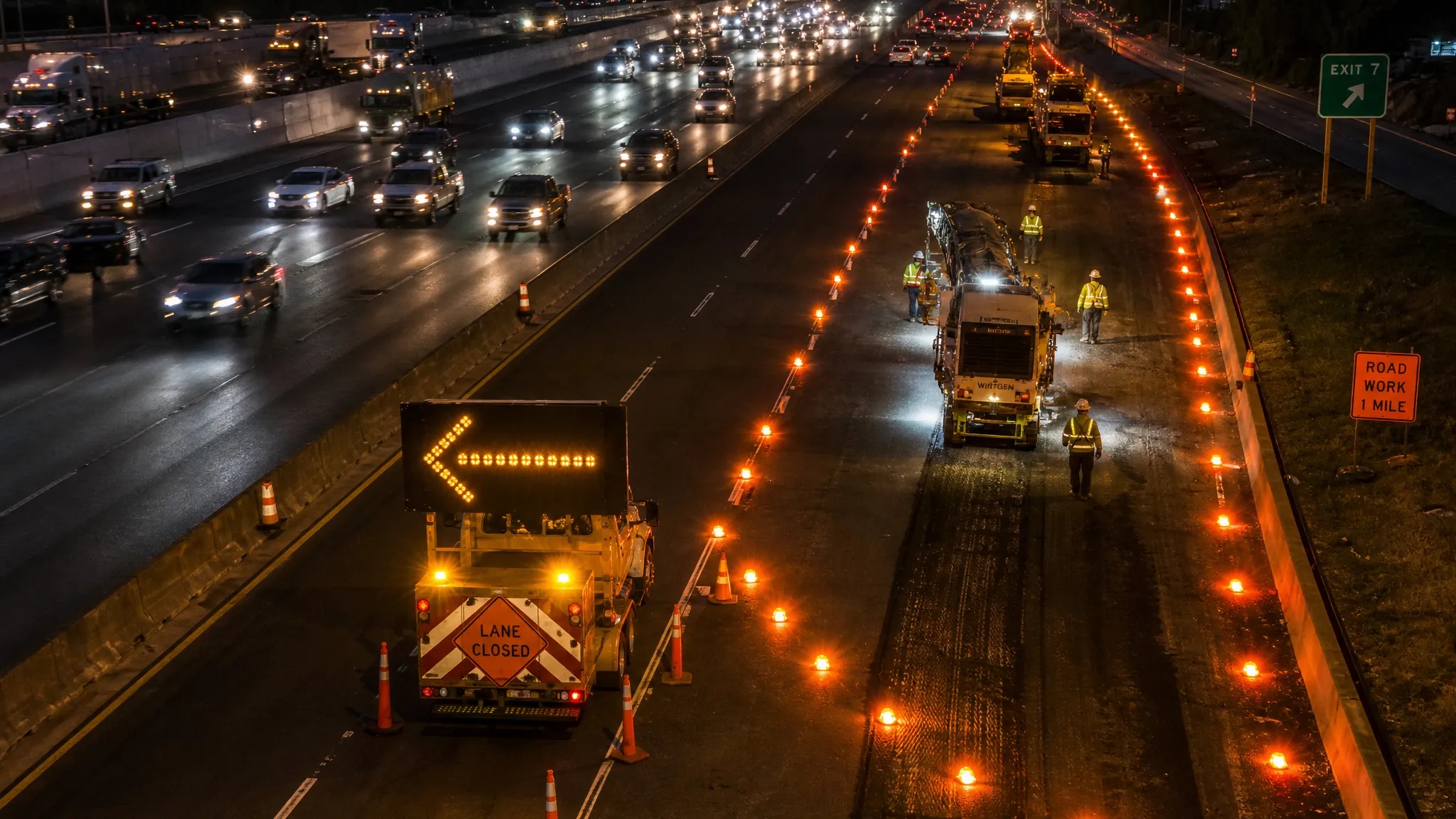
I have seen customers do this on rolling paving jobs. The arrow board sits ahead of the work zone, warning drivers to merge left. As the paving crew moves forward, LED flares mark the fresh asphalt edge and equipment positions. Drivers get both the advance warning and the real-time boundary information they need.
When Does a Combined Setup Make Sense?
High-risk sites justify the investment. If your work zone involves high speeds, limited sight distance, or frequent near-misses, adding both devices reduces the chance that a driver misinterprets the closure and enters the work area.
Extended projects with mobile components benefit too. A long-term highway project might keep an arrow board at the main closure point, but crews working within that closure still need LED flares to mark daily activity areas, material piles, or equipment staging.
Budget and logistics matter. Smaller contractors may start with LED flares for basic jobs and rent an arrow board when larger closures require directional guidance. Over time, many customers build both into their standard safety inventory as they grow.
What Should You Actually Buy for Your Construction Sites?
Start by identifying what your sites need drivers to understand. If your jobs are short, mobile, or emergency-like, LED flares give you fast, flexible hazard marking. If your sites require sustained lane guidance or directional communication, arrow boards reduce confusion and improve merge safety.
Do not ask "which is better"—ask "what does this specific job need to communicate?" That shift in thinking leads to better safety outcomes and smarter equipment choices. In many cases, the answer is both, used for different purposes on the same site.
The safest construction zones are the ones where drivers understand what to do before they reach the work area. Whether that requires LED flares, arrow boards, or a combination depends on your site conditions—but understanding the difference helps you choose the right tool instead of guessing.
Conclusion
LED flares and arrow boards solve different warning problems—one marks hazards fast, the other guides traffic clearly. The best construction sites often use both, matched to the specific communication task each device handles best.
Not sure which product fits your procurement profile? Our LED Road Flare Buyer's Guide covers all buyer tiers — from government to wholesale to brand owners.