Traffic Cone Lamp vs Standalone Beacon: Which Setup Saves More Labor Time?
Traffic Cone Lamp vs Standalone Beacon: Which Setup Saves More Labor Time?
Jump to:
- Why Setup Time Matters
- How a Traffic Cone Lamp Sets Up Faster
- Placement Flexibility
- When to Choose Which
- Specifications to Check
- FAQ
A traffic cone lamp looks like a simple warning light — until your team deploys 50 pieces before a shift starts. Every extra half minute per unit turns into labor cost, delay, and frustration. The better choice isn't only about unit price. It's about how fast the light gets placed, moved, and reused.
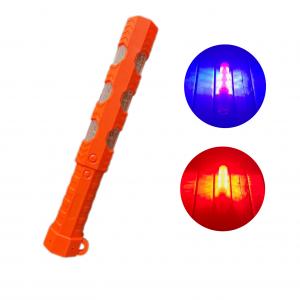
A traffic cone lamp sets up faster than a standalone beacon because it mounts with magnets — no tools, no bracket, no collar. It attaches to cones, vehicle bodies, and steel barriers directly. A standalone beacon typically ships with a fixed collar or fastener-based mount, which adds steps every time it moves.
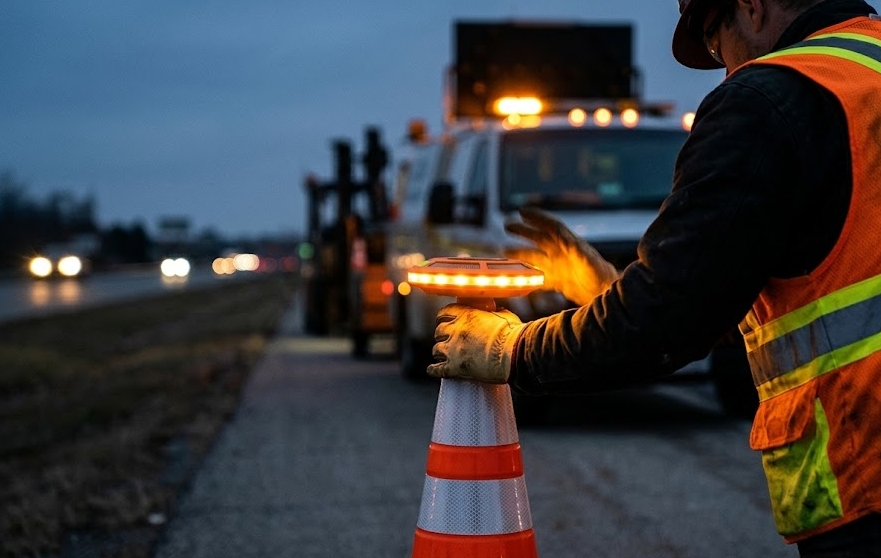
Many buyers ask me whether these two products are basically interchangeable. I understand why — they both flash, they both warn, they both sit near roads, vehicles, and construction zones. But once you look at the actual deployment process, the difference gets very practical, very fast.
Why Setup Time Matters So Much for Buyers
Setup time for a traffic cone lamp matters because procurement cost isn't only the purchase price. If a warning light takes longer to install, move, or redeploy, the buyer pays for that time every single day — and the cost compounds when teams run many units across many locations.
A traffic cone lamp cuts setup time because workers place it without tools, screws, or fixed brackets. The magnetic back panel or cone-mounted design goes on in seconds. A standalone beacon, by contrast, needs a more fixed mounting condition before it does its job.

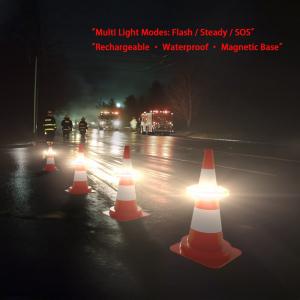
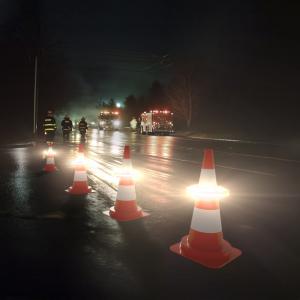
For fleets operating under MUTCD temporary traffic control requirements, deployment speed isn't just a convenience — it directly affects how quickly a crew can establish a compliant work zone. The MUTCD's national standards govern how warning devices are placed and maintained on public roads, and faster, tool-free setup helps crews meet those standards without adding labor overhead.
The Hidden Cost Is Labor, Not the Lamp
I often see buyers compare two warning lights by asking one question first:
"What is your best unit price?"
That question is normal — I work in B2B supply, so price always matters. But with warning lights for roadwork, fleet, emergency, and temporary hazard use, unit price hides the real cost.
Here's a simple example. It's not a lab test — just buying logic. A team deploying:
- 50 warning lights
- once per day
- 5 days per week
- across multiple job sites turns even a small setup difference into real labor. A clip-on product costs seconds per unit. A product that needs alignment, tightening, or fixed placement costs minutes — multiplied by 50 units, 5 days a week.
The invoice only shows product cost. The labor cost shows up later, as:
- Longer morning setup
- More worker complaints
- Slower traffic control preparation
- More missing or incorrectly mounted lights
- Less flexibility when the jobsite changes
Why Procurement Teams Underestimate Setup Time
Most procurement teams compare specs first:
| Item | Common Buyer Focus | What Often Gets Missed |
|---|---|---|
| LED count | Brightness impression | Placement speed |
| Battery type | Runtime | Battery access in daily use |
| Housing material | Durability | Mounting limitations |
| Flash mode | Warning effect | Worker training time |
| Unit price | Purchase cost | Labor cost over repeated deployment |
Product photos make standalone beacons and cone lamps look similar — both orange, yellow, red, or blue; both flash; both sit near a road. The real difference is on the back, base, or mounting structure, not the front photo.
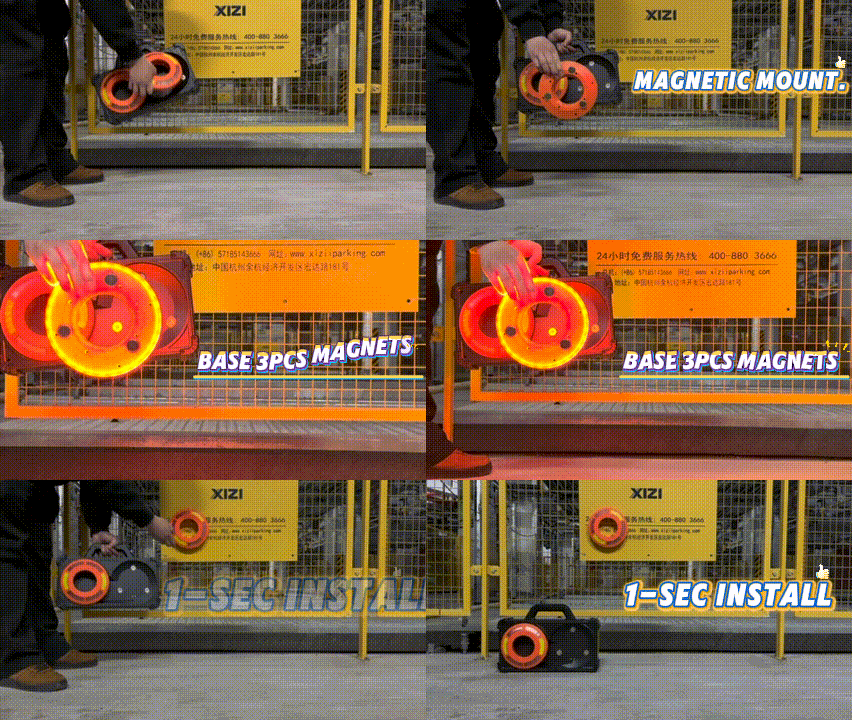
A traffic cone lamp with a 3-magnet back panel attaches to:
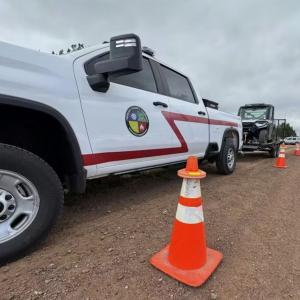
- A standard traffic cone
- A telescoping cone
- A vehicle body
- A steel barrier
- An iron frame
- Machinery surfaces
- Temporary metal structures The worker doesn't need a perfect surface every time. That's where the setup-time advantage actually comes from — structurally, not from a marketing claim.
The Buyer Mistake I See Often
"They're both warning lights. Why is one more expensive?" — that's how the mistake usually starts. The answer: they don't always solve the same deployment problem.
If a jobsite is stable and the light stays in one position long-term, a standalone beacon works fine. If the team moves lights every shift, changes work zones, or needs fast temporary marking, a traffic cone lamp is the better tool. Setup time isn't a small detail — it's part of the total cost of ownership.
How Does a Traffic Cone Lamp Set Up Faster Than a Standalone Beacon?
A traffic cone lamp sets up faster because a worker attaches or places it directly, without tools: pick it up, place it on the cone or magnetic surface, turn it on. A standalone beacon needs a fixed base, collar, screws, bracket, or frame first.
The speed difference comes from the mounting mechanism, not marketing copy. A magnetic or clip-on structure removes several steps. A fastener-based beacon adds positioning, tightening, and stability checks — and sometimes a search for a suitable mounting surface.
The Mechanism Explains the Speed
Real jobsites vary — one worker moves faster than another, one cone is clean and another isn't, one vehicle panel is flat and another isn't. Still, the structure tells the story.
A typical traffic cone lamp setup:
-
Pick up the lamp
-
Attach it to a cone or metal surface
-
Press the power or mode button
-
Walk away A typical standalone beacon setup:
-
Find a flat or fixed mounting point
-
Align the beacon base or collar
-
Insert or tighten fasteners if needed
-
Check whether it's stable
-
Adjust direction or position
-
Turn it on Fewer actions mean faster setup — that's the whole argument, no universal test number required.
Traffic Cone Lamp vs Standalone Beacon: Setup Steps
| Comparison Point | Traffic Cone Lamp | Standalone Beacon |
|---|---|---|
| Mounting style | Magnetic, clip-on, cone-mounted | Fixed base, bracket, collar, or frame |
| Tool-free use | Yes | Not always |
| Surface requirement | Cone or metal surface | Fixed mounting surface |
| Daily relocation | Easy | Less convenient |
| Multi-site use | Strong fit | Can be limiting |
| Best use case | Temporary, mobile, fast deployment | Fixed or semi-permanent point |
Why "Only a Few Extra Steps" Still Matters
Some buyers say, "Our worker can install it fast anyway." True for one unit — but B2B buying is rarely about one unit. A reseller selling to road contractors, towing companies, municipalities, or warehouse operators is selling into batch deployment. A little extra attention per light gets multiplied fast.
The issue shows up clearly when:
- A road crew sets up before sunrise
- A tow operator needs quick warning at night
- A warehouse team marks temporary danger zones
- A maintenance team moves between locations
- A contractor uses cones today and vehicle mounting tomorrow In these cases, the worker doesn't stop to think "where can I fasten this?" — they just need a cone or a usable metal surface.
The 3-Magnet Back Panel Changes the Product Category
Buyers who hear "traffic cone lamp" sometimes assume it only works on cones. Not with a 3-magnet back panel — the lamp isn't cone-dependent. It works on both cones and metal surfaces, which matters because cones aren't always available exactly where the light is needed.
A worker may need to mark:
- The side of a truck
- The back of a service vehicle
- A steel roadside barrier
- A metal gate
- A temporary machinery hazard
- A trailer corner A standalone beacon with a fixed collar can't solve these easily — it needs an iron frame or a dedicated mounting plate. Compare deployment paths, not just product names. The faster product asks less from the environment.
Where Does a Traffic Cone Lamp Offer Better Placement Flexibility?
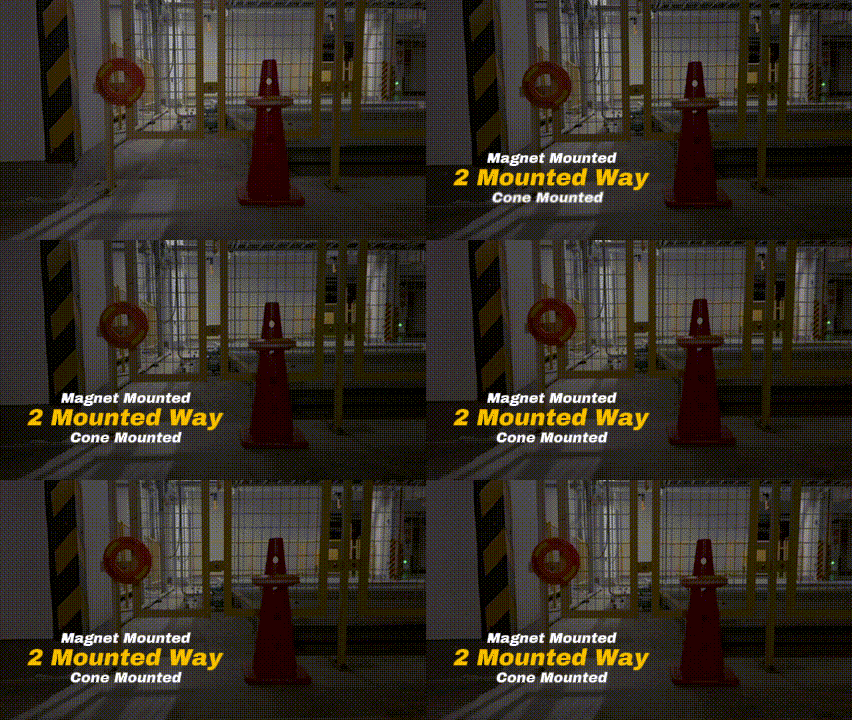
A traffic cone lamp offers better placement flexibility when the jobsite changes, when cones aren't always available, or when workers need to mount lights on different surfaces. Magnetic backs and cone-friendly shapes let the same unit work across vehicles, steel barriers, cones, and temporary warning setups.
A standalone beacon fits better when the buyer already has a fixed mounting surface and doesn't need to move the light often. It becomes less practical when workers rotate between sites or need fast warning without extra hardware.
Flexibility Is the Real Advantage
Speed is the headline. Flexibility is the reason behind it. Buyers picture the product sitting neatly on a cone in a clean product photo — then the actual site looks nothing like that. A worker may arrive and find:
- The cone is missing
- The cone is too far away
- The surface isn't flat
- The mounting point is temporary
- The vehicle needs side visibility
- The team has to move again in 20 minutes
- The light needs to be visible from a different angle A magnetic panel handles these changes without depending on one fixed mounting method. Fit both standard and telescoping cones, and the reseller can sell to a wider customer group.
Scenario Map for Buyers
| Deployment Scenario | Better Choice | Why |
|---|---|---|
| Daily roadwork setup and removal | Traffic cone lamp | Faster placement and pickup |
| Towing and roadside emergency | Traffic cone lamp | Quick vehicle or cone mounting |
| Multi-site maintenance team | Traffic cone lamp | Easy to move between locations |
| Warehouse temporary hazard marking | Traffic cone lamp | Attaches to metal racks or cones |
| Fixed gate warning point | Standalone beacon | Stable location, less movement |
| Permanent equipment warning | Standalone beacon | Fixed mount is acceptable |
| No cone available | Traffic cone lamp with magnet | Attaches to metal surfaces |
| Non-metallic surface, no cone | Neither is ideal without accessories | Plan mounting hardware separately |
| Semi-permanent checkpoint | Standalone beacon | Setup speed matters less here |
Where Standalone Beacons Struggle
Standalone beacons aren't bad products — I sell and discuss many warning light types, so I don't like fake comparisons. But buyers should know where a standalone beacon is weaker:
- No fixed surface — without a stable base, the beacon becomes inconvenient. A frame or bracket can't float in the air.
- No cone collar match — some beacon designs depend on a specific cone top or mounting accessory; mismatched sizes make setup messy.
- Fast site rotation — when workers move every hour, fasteners slow people down.
- Vehicle-side warning — a non-magnetic beacon doesn't attach to a vehicle body.
- Mixed customer resale — wholesalers whose end customers deploy differently see fewer after-sales questions with a flexible cone lamp.
Where Standalone Beacons Still Make Sense
Standalone beacons still fit some jobs — semi-permanent warning points, fixed gates or entrances, mounted equipment, indoor factory positions, or any spot where the bracket is already prepared and the light rarely moves. Installation happens once, so setup time matters less.
The key word is fixed. If the buyer's actual use is temporary, rotating, mobile, or mixed-surface, the traffic cone lamp is the safer purchasing decision.
Why This Matters for Resellers
A reseller in the U.S. or Europe isn't buying for one use case — they're buying a SKU that many end users must understand quickly. A traffic cone lamp is easy to explain: "Put it on a cone." "Attach it to a metal surface." "Move it when the work zone moves." That story is easy for sales teams and reduces returns caused by mounting misunderstandings.
A standalone beacon needs more explanation: the right bracket, a fixed position, the right surface, possibly extra hardware. That doesn't mean it won't sell — it means the sales conversation needs to be clearer up front.
When Should Buyers Choose a Traffic Cone Lamp Instead of a Standalone Beacon?
Buyers should choose a traffic cone lamp for fast deployment, frequent relocation, cone compatibility, vehicle attachment, or mixed-surface placement — the stronger choice for temporary road safety, towing, mobile maintenance, and jobsite warning where setup speed affects labor efficiency directly.
Buyers should choose a standalone beacon mainly for fixed-point or semi-permanent installations, where the mounting surface is already prepared. For daily movement and fast setup, the traffic cone lamp is the better SKU.

A Practical Buying Checklist
| Buyer Question | If Yes | Suggested Product |
|---|---|---|
| Will workers move the light daily? | Yes | Traffic cone lamp |
| Will the product be used on vehicles? | Yes | Traffic cone lamp with magnet |
| Will the user always have a fixed surface? | Yes | Standalone beacon may fit |
| Will the light be used on standard cones? | Yes | Traffic cone lamp |
| Will it be used on telescoping cones? | Yes | Check traffic cone lamp compatibility |
| Is setup speed important? | Yes | Traffic cone lamp |
| Is this a semi-permanent point? | Yes | Standalone beacon can work |
| Are end users varied and unknown? | Yes | Traffic cone lamp is safer for resale |
What I'd Tell a Procurement Manager
Don't treat the traffic cone lamp and standalone beacon as interchangeable just because both flash. Map the worksite first. Count how often the light moves. Ask who installs it. The more movement, the more valuable tool-free mounting becomes — a few seconds saved per unit turns into a real operating advantage once a team repeats the action every day.
What I'd Tell a Wholesaler or Small Brand
If you're buying for resale, look at:
- Ease of explanation
- Compatibility with common cones
- Magnetic mounting strength
- Battery type and replacement convenience
- Flash modes
- Weather resistance
- Packaging options
- Private label or color customization
- MOQ flexibility
- ODM possibility A magnetic traffic cone lamp gives your sales team a broader story — not locked into one installation style. That matters for customers spanning contractors, towing companies, fleet service teams, rental companies, and road safety distributors. At Superflare, we discuss these details with buyers before quoting, because a low unit price doesn't help if the customer later says, "this can't mount where we need it."
The Simple Rule I Use
If the light moves often, choose the traffic cone lamp. If the light stays fixed, a standalone beacon can be enough.
The traffic cone lamp wins for: fast setup, tool-free placement, cone and vehicle use, multi-site rotation, flexible warning positions, lower labor overhead, easy resale explanation.
The standalone beacon fits for: fixed installation, prepared mounting surface, long-term position, less frequent movement, simple point warning.
Why I Commit to the Traffic Cone Lamp for Setup Time
This comparison doesn't need a soft "it depends" ending. For setup time and flexible deployment, the traffic cone lamp is structurally the stronger choice — a magnetic, tool-free, cone-compatible design removes installation steps that a standalone beacon usually adds. In procurement, fewer steps mean fewer delays, fewer mistakes, and lower labor cost. That's the part buyers miss when they compare unit price alone.
What Specifications Should Buyers Check Before Ordering a Traffic Cone Lamp?
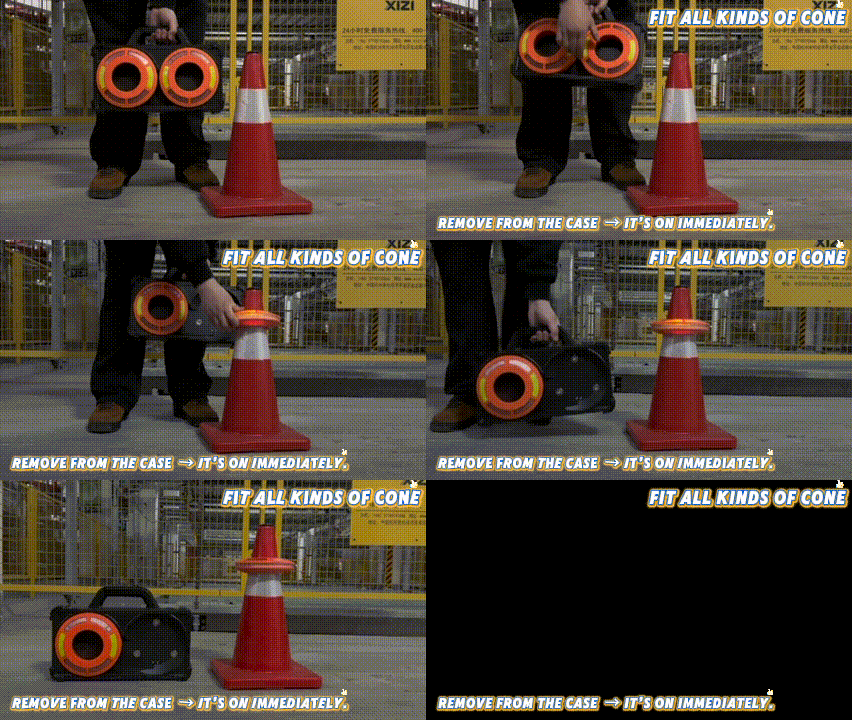
Buyers should check a traffic cone lamp for mounting type, magnet design, cone compatibility, battery system, visibility, flash modes, housing material, waterproof rating, packaging, and customization options. These details decide whether the product is easy to deploy and easy to resell.
For B2B orders, request samples, confirm cone sizes, test magnet holding power on target surfaces, and lock in logo, color, packaging, and MOQ before mass production.
Specs That Affect Setup Time
Specification
Related News |
|---|