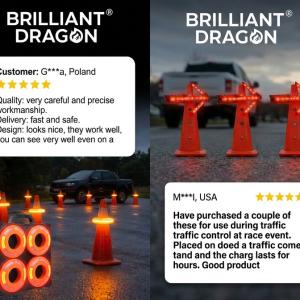
Why Our LED Cone Lights Carry CE Certification (And What It Tests)
A CE mark looks the same on every box. What's behind it can be completely different — and for a traffic cone lamp headed into the EU market, that difference is exactly what a test report was built to catch. These are the same CE, RoHS, and LVD reports behind our 4-Pack Rechargeable LED Traffic Cone Lights, and this guide walks through what each one actually covers, report number by report number, so you know what to ask your own supplier before you order.
Jump to:
- Is a CE Certificate Always the Same Thing?
- What Does the CE Test Actually Cover for a Traffic Cone Lamp?
- What About RoHS? Is That Part of the Safety Story?
- Does CE Mean You Can Sell This Product Anywhere in Europe?
- How to Use This When You're Comparing Suppliers
- FAQ
Is a CE Certificate Always the Same Thing?
Most buyers assume CE means the same thing across all traffic cone lamp suppliers. It doesn't.
The biggest difference is this: who ran the tests? A manufacturer can legally self-declare CE compliance and print the mark on the box. No lab, no third party, no independent verification. That's technically allowed under EU rules for lower-risk product categories — but it's not the same as having an accredited lab test your product.
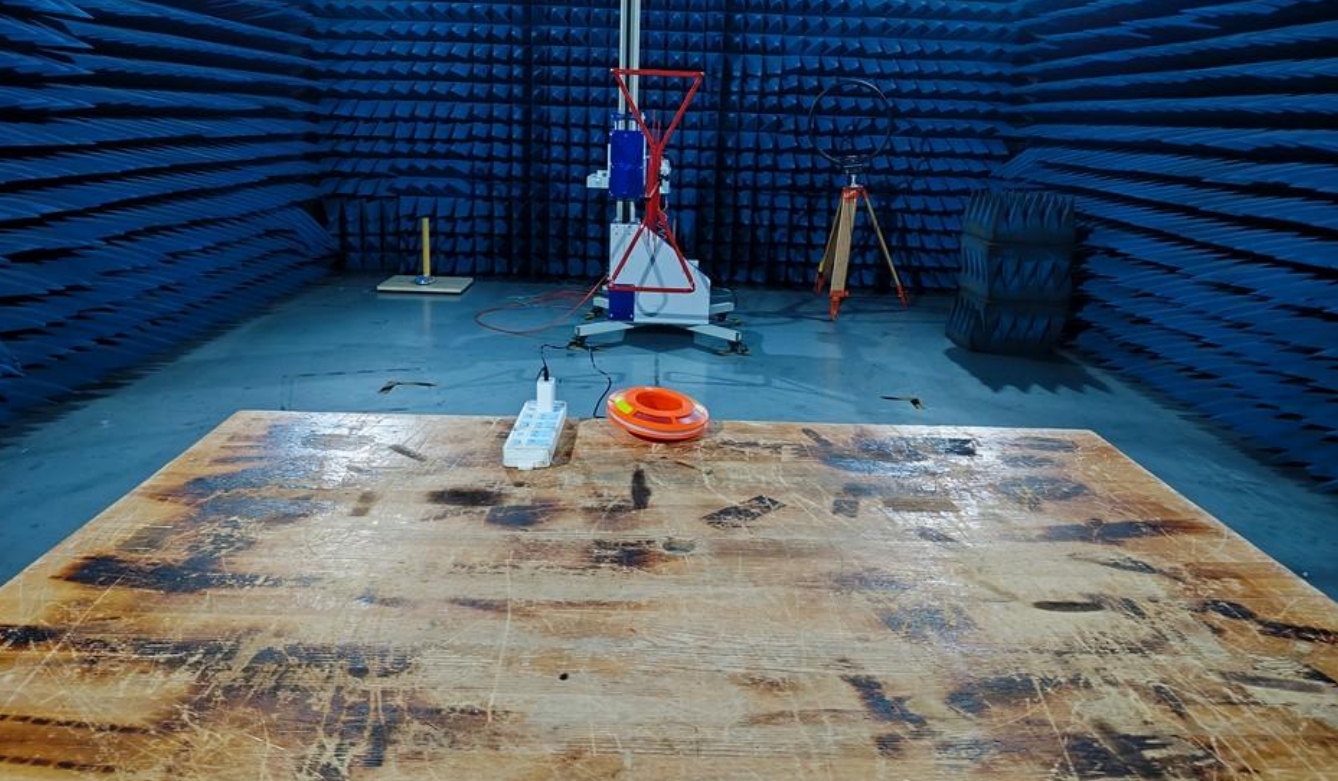
Our CE certification — certificate number UNIA25102406EC-11 — was issued after testing by a recognized third-party body. That's not us testing ourselves and writing a report. That's an outside lab running the product through the required tests and issuing the result. The distinction matters a lot if you're importing into markets where compliance gets scrutinized.
Here's how the two types break down:
| Type | Who Tests | Report Issued By | Reliability |
|---|---|---|---|
| Self-declaration | The manufacturer | The manufacturer | Varies widely |
| Third-party certification | Accredited lab | Independent body | Independently verified |
When you ask a supplier for their CE certificate, the next question should always be: "Can I see the test report, and which lab issued it?" If they can't answer that clearly, the certificate doesn't tell you much.
What Does the CE Test Actually Cover for a Traffic Cone Lamp?
CE is not one test. It's a collection of tests under different directives, and not all of them apply to every product.
For a traffic cone lamp, the two directives that carry real weight are EMC (electromagnetic compatibility) and LVD (low voltage directive). Our EMC report covers radiated emissions and immunity. Our LVD report covers electrical safety — insulation, shock risk, and circuit protection. Together, they address the two most likely ways a warning light can cause harm or fail in the field.
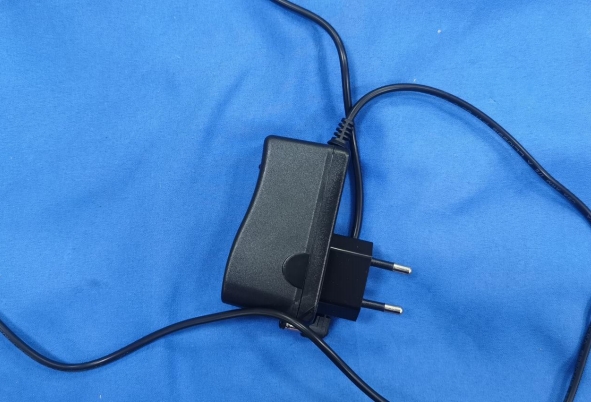
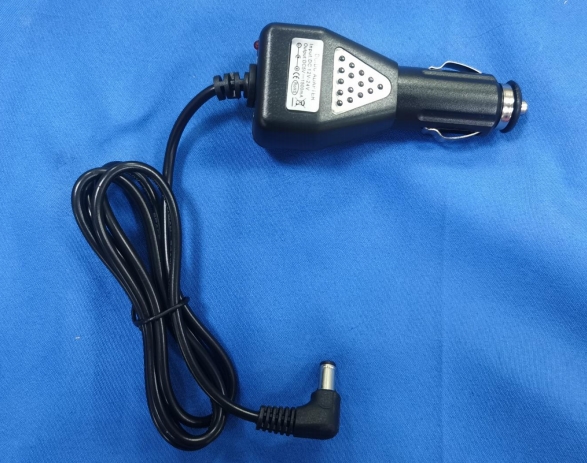
EMC — Why a Traffic Cone Lamp Needs to Pass Electromagnetic Tests
Our EMC tests were conducted under these standards:
- EN IEC 55015:2019+A11:2020
- EN IEC 61000-3-2:2019+A2:2024
- EN 61000-3-3:2013+A2:2021+AC:2022-01
- EN IEC 61547:2023 The reason EMC matters for a traffic cone lamp specifically is context. These lights go on roads, job sites, and emergency scenes. They sit next to radios, vehicle electronics, and communications equipment. If a lamp emits electromagnetic interference beyond the allowed levels, it can disrupt other devices nearby. If it isn't immune to interference from its environment, it can behave unpredictably in exactly the conditions where you need it to be reliable.
| EMC Test Category | What It Checks |
|---|---|
| Radiated emissions | Whether the lamp sends out interference |
| Immunity | Whether the lamp can handle interference from outside |
| Harmonic current (EN 61000-3-2) | Whether the power draw distorts the supply |
| Voltage fluctuation (EN 61000-3-3) | Whether it causes flicker or instability on the circuit |
EN IEC 61547 specifically covers immunity requirements for lighting equipment. That standard exists because lighting products are expected to keep functioning in electromagnetically noisy environments. A traffic cone lamp that shuts off or flickers because of nearby radio traffic is not a reliable warning light.
LVD — The Electrical Safety Test That Covers Shock and Short-Circuit Risk
LVD stands for Low Voltage Directive 2014/35/EU. Our report number is QCT221008002-L01, verification number QCT221008002-V01.
The standards tested under LVD were:
- EN 60598-2-4:2018 (portable luminaires — the category our traffic cone lamp falls under)
- EN IEC 60598-1:2021 (general requirements for luminaires)
- EN 62493:2015 (exposure to electromagnetic fields for lighting equipment) LVD is where you find out if a lamp is electrically safe to use. It covers whether the insulation is adequate, whether the internal wiring is protected correctly, and whether the product can handle normal use without creating a shock or fire risk. For a portable battery-operated warning light, these tests matter in practice — not just on paper.
| LVD Test Area | What It Checks |
|---|---|
| Insulation and creepage | Protection against electric shock |
| Wiring and connections | Short-circuit and heat risk |
| Mechanical protection | Whether the housing protects the electrical parts |
| Human electromagnetic field exposure | Covered under EN 62493 |
EN 60598-2-4 applies specifically to portable luminaires — that's what a traffic cone lamp is. The standard is more relevant here than a general lighting standard would be, because portable lamps get handled, dropped, used in weather, and carried in vehicles. The mechanical and electrical requirements reflect that.
What About RoHS? Is That Part of the Safety Story?
RoHS is real compliance, and our products pass it. Our report number is DPHTL2510231004E, tested under the IEC 62321 series covering cadmium, lead, mercury, hexavalent chromium, and restricted flame retardants.
But RoHS is a different kind of requirement. It restricts hazardous substances in the product's materials. It doesn't test how the product performs electrically or whether it's safe to use. Think of it as baseline compliance for selling in Europe — it has to be done, but passing it doesn't tell you much about the product's functional quality.
Every traffic cone lamp you import to Europe should be RoHS compliant. It's not optional, and it's not a differentiator. What separates suppliers on real safety is the EMC and LVD testing — specifically whether those tests were done by an independent lab or declared by the factory itself.
| Directive | What It Covers | Differentiator? |
|---|---|---|
| EMC | Emissions and immunity performance | Yes — lab-tested vs. self-declared matters |
| LVD | Electrical safety | Yes — covers real-world failure risks |
| RoHS | Restricted substances in materials | No — baseline requirement for the market |
Does CE Mean You Can Sell This Product Anywhere in Europe?
This is a question worth answering honestly, because overstating CE is something that comes back to bite you.
CE certification is necessary to sell a traffic cone lamp in the EU. For most commercial and industrial use, CE covers what you need. But some specific sectors — emergency services, highway use, certain vehicle-mounted applications — may require additional country-level or sector-specific approvals. CE is the floor, not always the ceiling. For the official scope of what CE covers, the European Commission's CE marking guidance is the authoritative source, and the Low Voltage Directive text itself is published on EUR-Lex.
If you're sourcing for a specific regulated application — say, fitting lamps to emergency vehicles in Germany or amber warning systems for road construction in France — check whether there are additional local requirements for that use case.
| Situation | CE Sufficient? |
|---|---|
| General commercial/industrial use in EU | Yes, in most cases |
| Wholesale to distributors for resale | Yes, in most cases |
| Vehicle-mounted on emergency services fleet | Check local vehicle regulations |
| Specific highway or road authority contracts | Check sector approval requirements |
Note for UK buyers: CE covers EU market access. UKCA marking has its own separate requirements — we cover that in a dedicated guide.
How to Use This When You're Comparing Suppliers
When you're looking at two traffic cone lamp suppliers and both claim CE, here's what to actually ask.
Ask for the test report, not the certificate. Ask which directives were tested. Ask whether the tests were done in-house or by an accredited third-party lab. These three questions tell you more than anything on the certificate itself.

Most suppliers won't answer all three clearly — not always because they're hiding something, but because they don't know buyers care about the details. A supplier who has been through real third-party testing will have report numbers, lab names, and specific standards they can point to.
| Question to Ask | What a Good Answer Looks Like |
|---|---|
| "Can I see the test report?" | A document with a report number, test standards, and lab name |
| "Which directives apply to this product?" | At minimum: EMC, LVD, RoHS for a traffic cone lamp |
| "Was this tested in-house or by an accredited lab?" | Named third-party lab, not "our own testing department" |
| "What standards were used?" | Specific EN/IEC standard numbers, not "CE standard" |
If you're comparing this against a fully waterproof option for wet or flooded work zones, our safety cone light guide covers the IPX7 testing side in detail. For fleet-scale orders, the same certified components ship in our LED Traffic Cone Lights 8-Pack, sized for larger job sites and multi-crew deployments.
FAQ
Is CE certification mandatory to sell a traffic cone lamp in the EU?
Yes. Any traffic cone lamp sold in the EU market needs CE marking, covering the EMC and LVD directives at minimum. RoHS compliance is required separately for restricted substances.
What's the difference between CE self-declaration and third-party lab testing?
Self-declaration means the manufacturer tests and signs off on compliance without outside verification. Third-party certification means an accredited, independent lab runs the tests and issues the report — that's the standard our traffic cone lamps are certified under.
Does a CE mark cover UK sales too?
No. CE certification is for the EU market. The UK requires UKCA marking under its own separate scheme, even though the underlying electrical and EMC tests are similar.
What's the MOQ for custom-branded, CE-certified traffic cone lamps?
MOQ is flexible for first orders, with custom logo placement and blank reflective strips available for OEM branding. Our 4-Pack Rechargeable LED Traffic Cone Lights ship with the full CE/RoHS/LVD documentation covered above. Contact us directly for current MOQ tiers and lead times.
Can I request the actual test reports, not just the certificates?
Yes. Full test reports for CE (UNIA25102406EC-11), LVD (QCT221008002-L01), and RoHS (DPHTL2510231004E) are available on request for buyer due diligence.
Sourcing CE-certified traffic cone lamps for your brand or fleet? We provide full test reports — not just certificates — along with OEM documentation and custom branding options. Request the complete CE, RoHS, and LVD report package: sales001@brilliant-dragon.net