Roadside Emergency Safety Kit: Why Most Drivers Are Unprepared for Nighttime Breakdowns
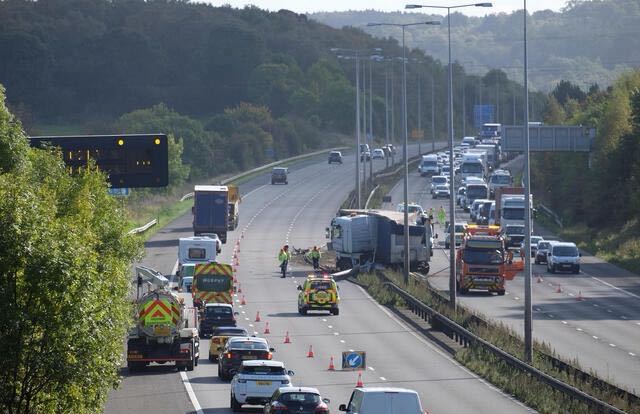
A car breaks down on a highway at night. Traffic is moving fast. Headlights are blinding. The driver steps out to check the issue, unsure where to stand or what to do first.
Within seconds, the situation becomes dangerous—not because of the breakdown itself, but because the surrounding traffic environment offers almost zero visibility, structure, or guidance.
This is the reality of most roadside emergencies:
the problem is not the vehicle failure, but the lack of a clear safety system around it.
The Hidden Problem: Roadside Emergencies Are “Unstructured Risk Events”
Most drivers rely on a basic triangle reflector or hazard lights. But in real-world conditions, especially at night or in high-speed traffic, this is not enough.
Common pain points include:
- Drivers approaching too late to react safely
- No clear direction for traffic flow (left/right confusion)
- Poor visibility of the stopped vehicle in low light or rain
- People standing too close to moving traffic
- No physical boundary separating humans from vehicles
- Long-duration incidents with fading attention and weak signaling
In short, roadside emergencies lack a layered visual control system.
Why Traditional Safety Tools Fail
A single warning triangle or hazard light assumes one thing:
that drivers will notice, interpret, and react correctly in time.
But modern road conditions break that assumption:
- Higher traffic speed reduces reaction time
- Glare from headlights reduces contrast visibility
- Complex road environments increase decision uncertainty
- Night driving significantly lowers object recognition distance
This leads to a critical gap between “warning” and “understanding.”
The Solution: A Layered Roadside Safety System
To solve this, a modern approach is needed—one that doesn’t rely on a single signal, but builds a multi-layer safety environment.
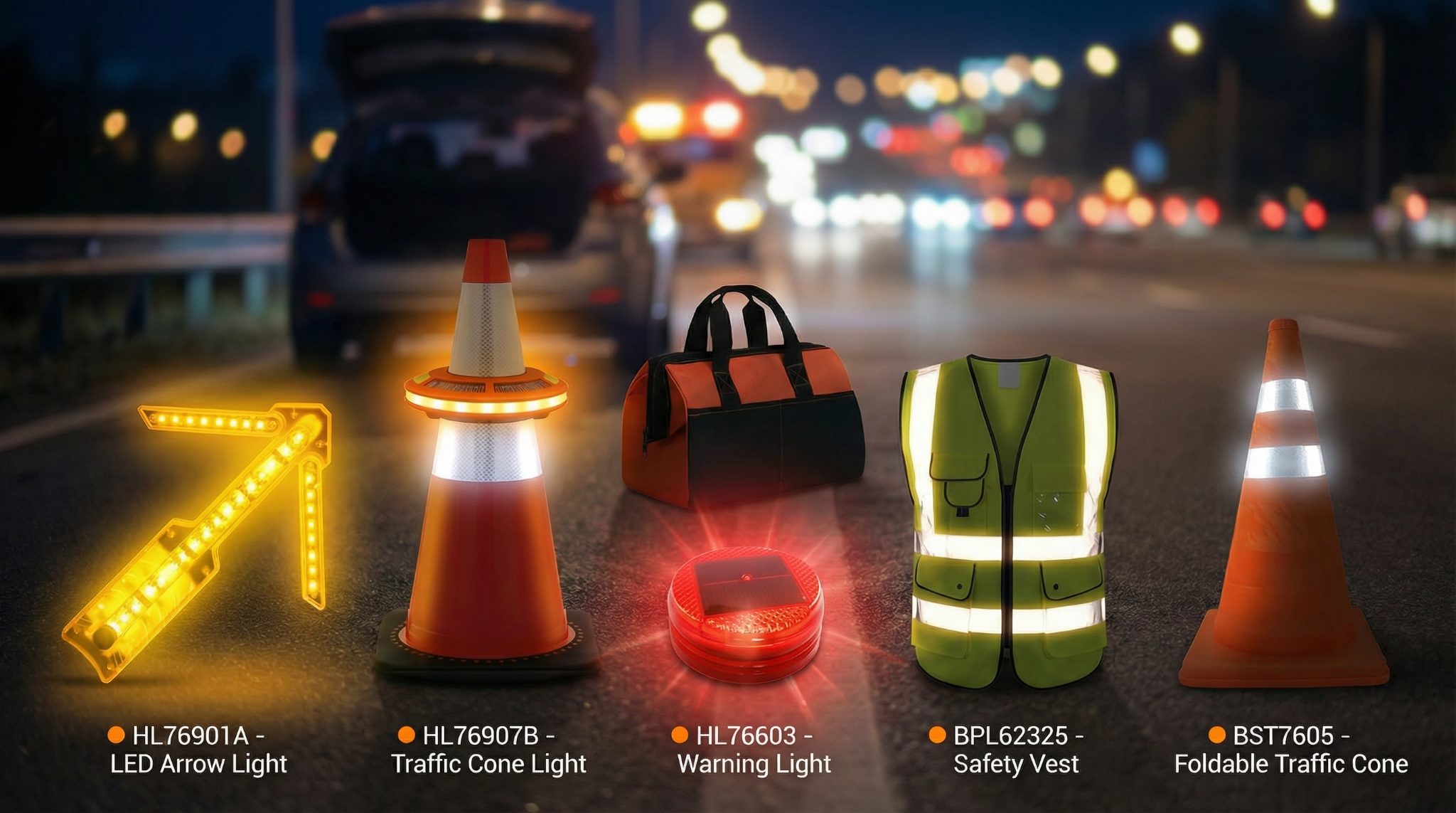
A complete Roadside Warning & Traffic Safety Kit typically includes:
- Arrow Light
- Cone Light (magnetic & cone-compatible)
- Foldable Traffic Cone
- Solar Warning Light
- Reflective Vest
Together, they create a structured response system rather than isolated tools.
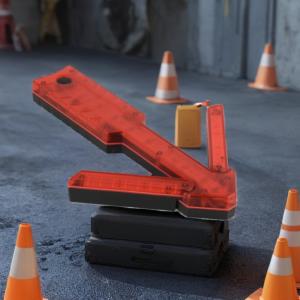
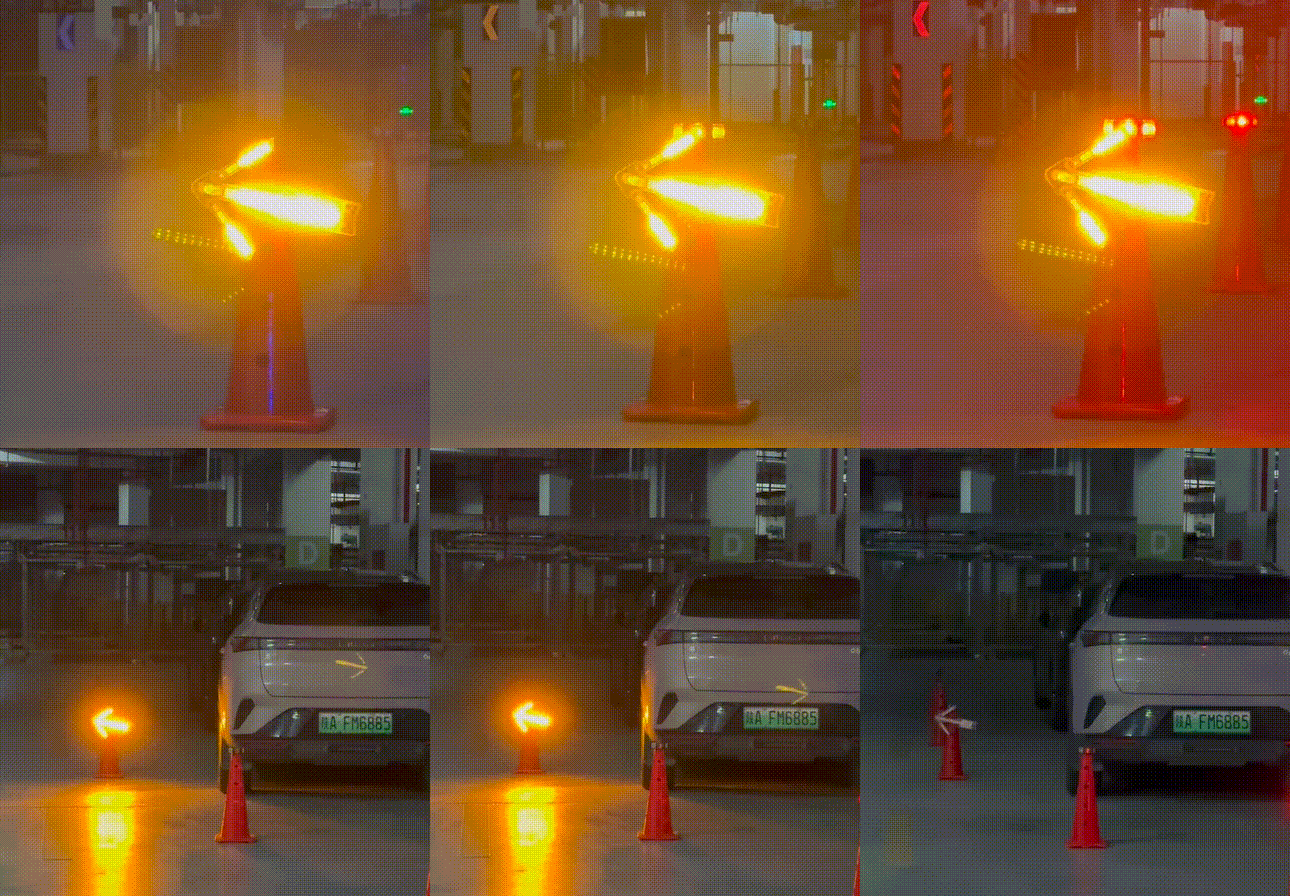
1. Arrow Light: Solving the “Where Should Traffic Go?” Problem
One of the biggest risks in roadside incidents is driver confusion.
Arrow lights provide:
- Clear directional guidance (left/right/merge)
- Early decision-making support for approaching vehicles
- Reduced hesitation and sudden braking
Instead of just saying “danger ahead,” it tells drivers exactly how to behave.
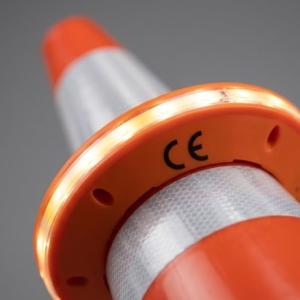
2. Cone Light: Turning Vehicles and Zones Into Visible Boundaries
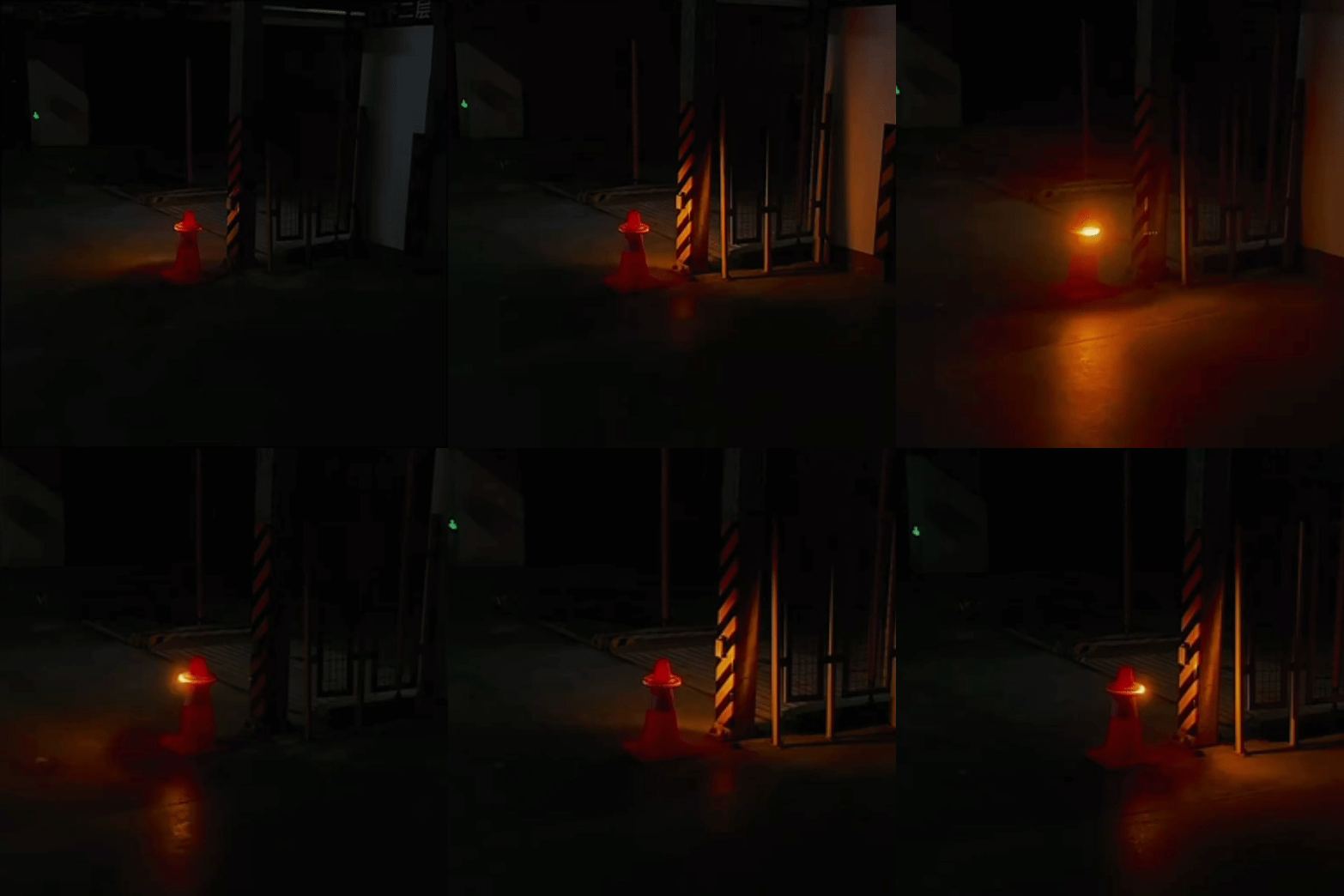
A key limitation of traditional cones is visibility at night.
Cone lights solve this by adding active illumination and flexible deployment:
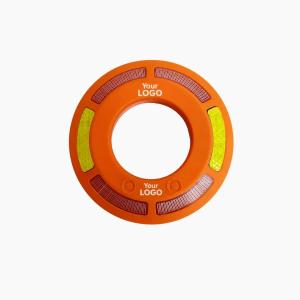
- Magnetic attachment to vehicles or metal surfaces
- Can be used on top of cones for vertical visibility
- Can be repositioned dynamically as the situation evolves
This creates a flexible system where lighting is not fixed, but adaptive to the scene.
3. Foldable Traffic Cone: Rapid Physical Separation
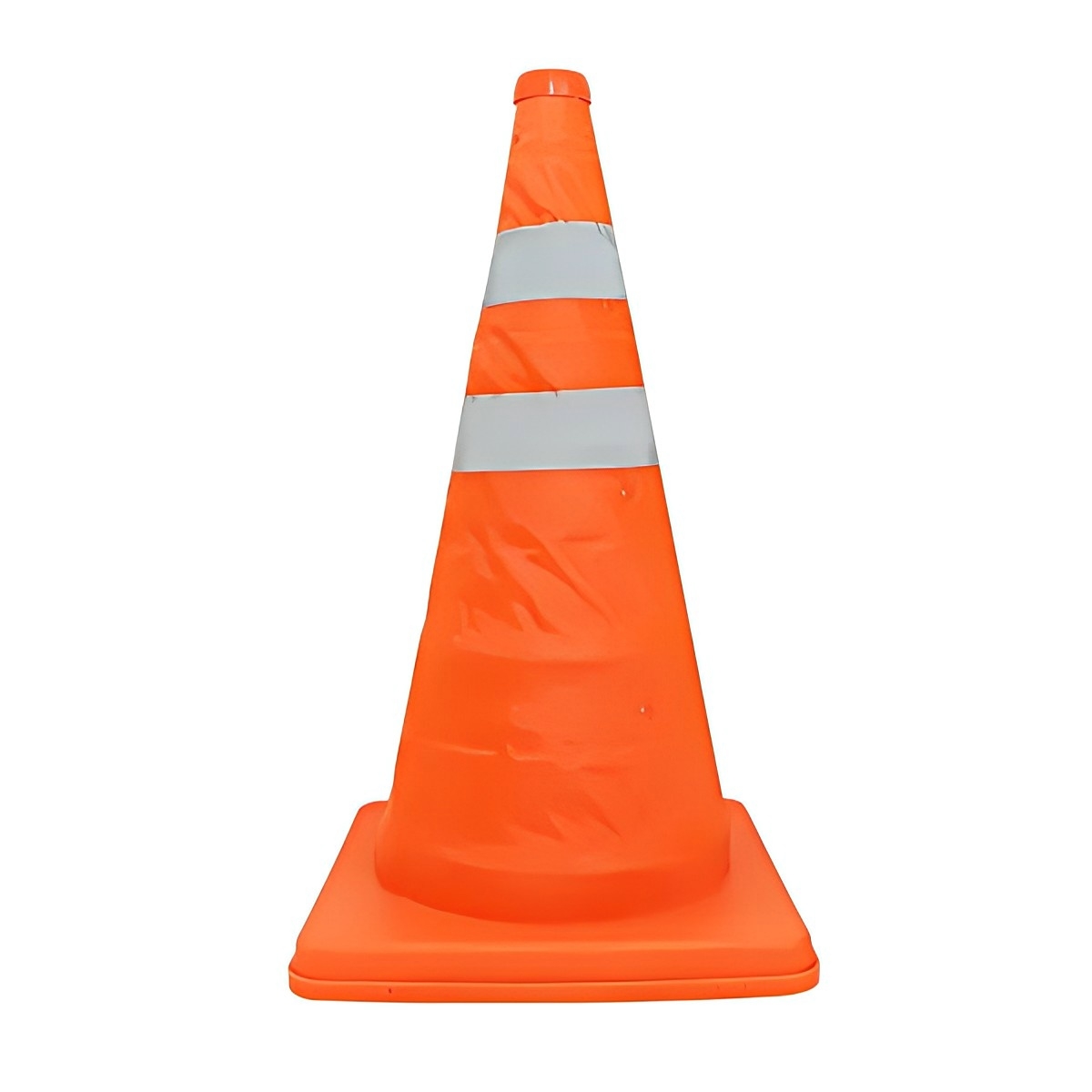
When an emergency happens, speed matters.
Foldable cones allow:
- Fast deployment from vehicles
- Immediate creation of a safe perimeter
- Clear separation between traffic and hazard zones
Unlike lighting alone, cones provide physical structure that defines “do not enter” areas.
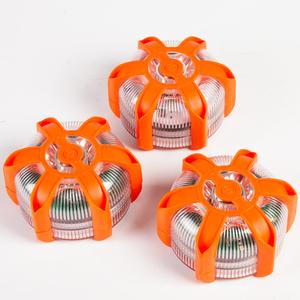
4. Solar Warning Light: Long-Duration Safety Without Maintenance
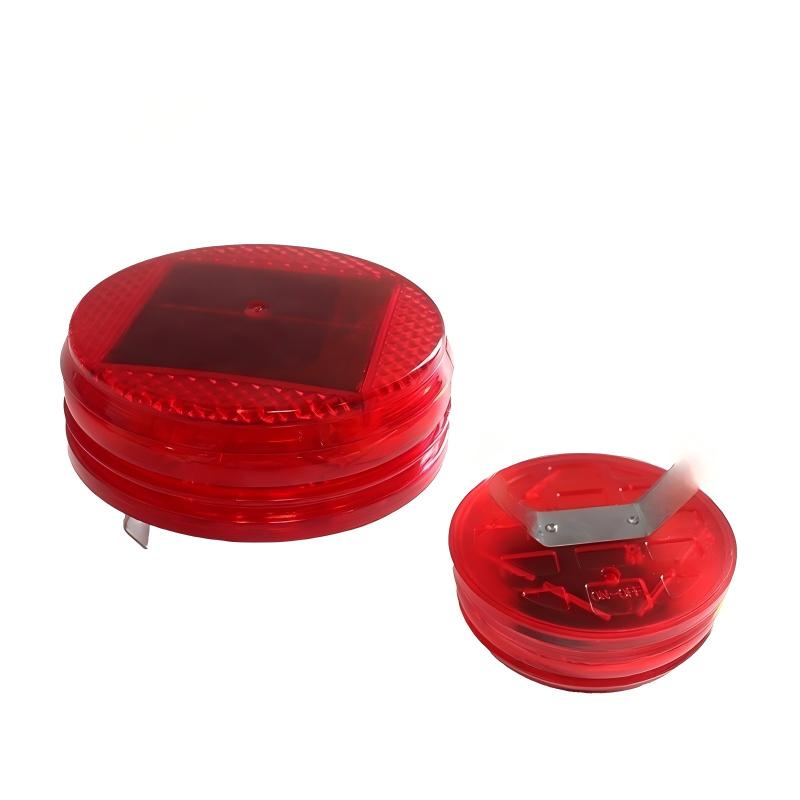
Not all roadside incidents are short.
Some situations last hours or overnight, where manual attention is not possible.
Solar warning lights ensure:
- Continuous flashing without external charging
- Low-maintenance long-duration operation
- Persistent visibility in unattended zones
This is critical for overnight breakdowns or construction zones.
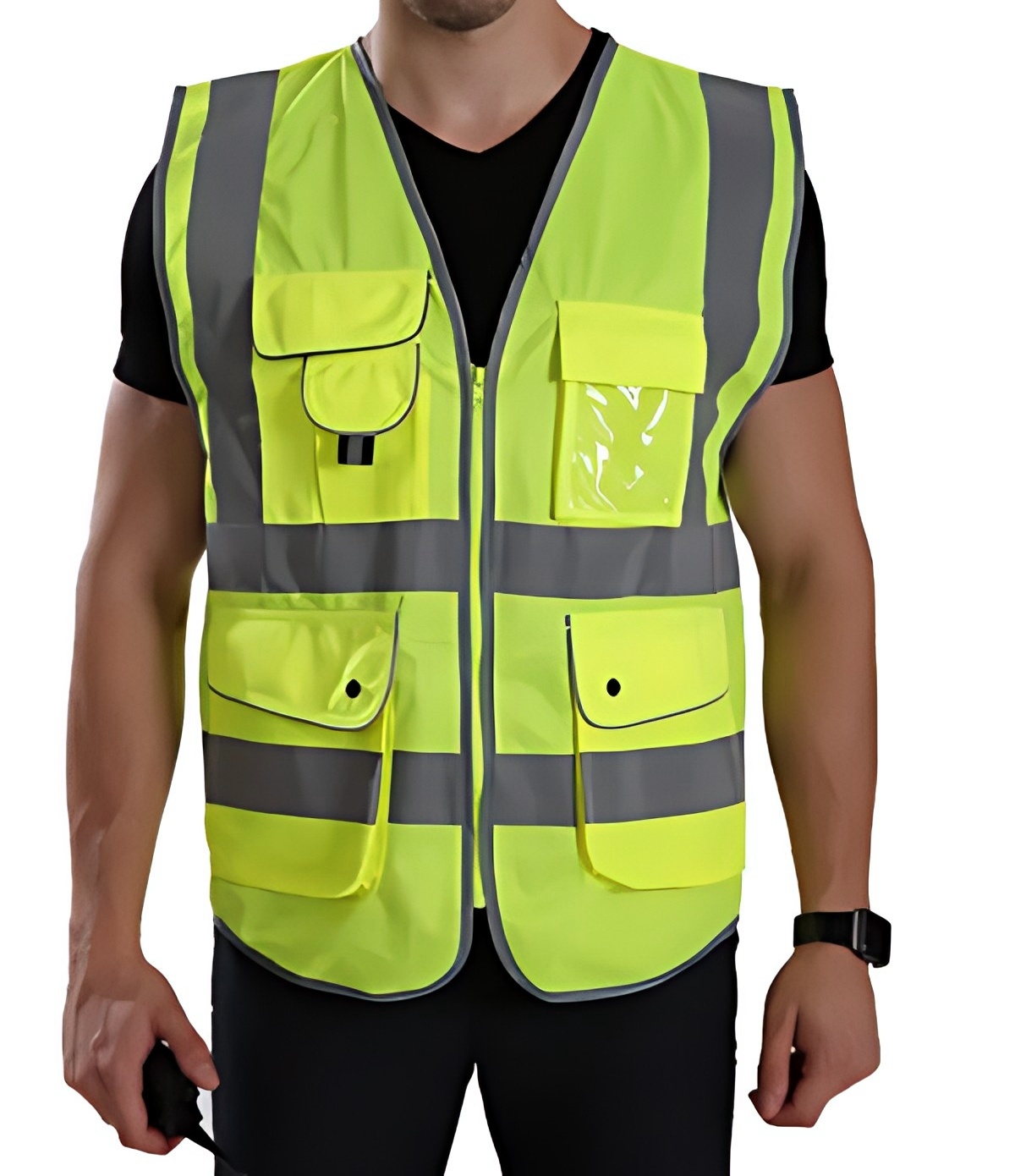
5. Reflective Vest: Protecting the Most Vulnerable Element—People
In every roadside emergency, humans are the highest risk factor.
Reflective vests ensure:
- High visibility in low-light environments
- Clear separation between people and background traffic
- Reduced chance of secondary collisions
The System Logic: Why Layering Matters
A single device cannot solve a multi-phase emergency.
This system works because it aligns with how drivers perceive risk:
- Notice light signals (attention)
- Understand direction (decision)
- Recognize boundaries (spatial awareness)
- Identify human presence (critical caution)
Each layer reinforces the next, reducing cognitive overload and reaction delay.
Final Insight: From Warning Tools to Traffic Control System
Most roadside kits are designed as accessories.
This approach is different—it treats the emergency scene as a system that must be controlled.
Instead of asking:
“Did the driver see the hazard?”
It asks:
“Is the entire scene structured enough to guide safe behavior automatically?”
Conclusion
Roadside emergencies are not just mechanical failures—they are visibility and communication failures.
A modern Roadside Warning & Traffic Safety Kit solves this by building a layered environment that combines:
- Directional guidance
- Visual boundary creation
- Physical isolation
- Continuous illumination
- Human protection
The result is simple but critical:
chaos becomes structured, and risk becomes controlled.
FAQ
1. What is a roadside emergency safety kit used for?
A roadside emergency safety kit is used to improve visibility and safety when a vehicle breaks down, has an accident, or stops on the roadside. It helps warn other drivers, guide traffic flow, and protect people working near the vehicle.
2. Why do I need more than just a warning triangle?
A warning triangle only provides basic static reflection. In real road conditions—especially at night or on highways—it is often not visible early enough. A complete safety kit adds lighting, directional guidance, and physical barriers to create a structured safety zone.
3. How does an arrow light improve road safety?
An arrow light provides clear directional instructions such as left or right diversion. This reduces driver confusion and helps approaching vehicles make safe decisions earlier, lowering the risk of sudden braking or collisions.
4. Can cone lights be used on both vehicles and traffic cones?
Yes. Cone lights are designed with flexible mounting options. They can be magnetically attached to vehicles or placed on top of traffic cones to increase visibility and create a clear illuminated boundary.
5. What is the advantage of foldable traffic cones?
Foldable traffic cones are compact, easy to store, and can be deployed quickly in emergency situations. They allow drivers or workers to rapidly establish a visible safety perimeter around a hazard area.
6. How does a solar warning light work in roadside emergencies?
Solar warning lights charge during the day and automatically operate at night. They provide continuous flashing signals without external power, making them ideal for long-duration roadside incidents or unattended areas.
7. Why is a reflective vest important in a safety kit?
A reflective vest increases human visibility in low-light conditions. It helps drivers clearly identify people near the roadway, significantly reducing the risk of secondary accidents.
8. What makes a layered roadside safety system more effective?
A layered system combines directional guidance, visual warning, physical barriers, and personal protection. Each layer serves a different purpose, creating a structured environment that reduces confusion and improves reaction time for drivers.
9. Is this type of safety kit suitable for commercial fleets?
Yes. It is widely used for commercial vehicles, roadside assistance teams, construction crews, and fleet operators because it improves operational safety and reduces liability risks during roadside incidents.
10. Can this kit be used for construction zones as well?
Yes. The same components used for vehicle breakdown safety can also be applied to construction sites, temporary road closures, and traffic control zones to manage vehicle and pedestrian movement safely.