2026 V16 Regulation: What It Means for Road Warning Devices
Starting January 1, 2026, Spain requires a connected V16 warning beacon as the legal hazard-signaling device for immobilized vehicles covered by the regulation, replacing traditional warning triangles in most cases. The change is designed to reduce the roadside exposure created when drivers leave their vehicles to place warning triangles.
For road safety equipment buyers, the change affects more than the warning device itself—it also changes product selection, certification, documentation, inventory planning, and supplier qualification.
Important: This article discusses Spain's 2026 connected V16 requirement from a B2B road-safety procurement perspective. It should not be interpreted as legal advice or as a claim that every LED warning light is a compliant V16 device. Buyers should verify current requirements and certified models with the relevant authorities before making compliance or market-entry decisions.
What Is the 2026 V16 Regulation in Spain?
Spain's Directorate-General for Traffic (DGT) states that the connected V16 beacon became the legal hazard-signaling device for covered immobilized vehicles from January 1, 2026.
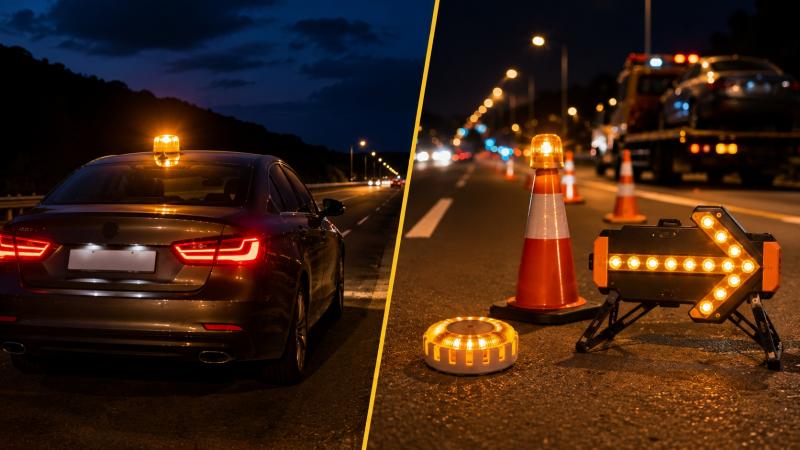
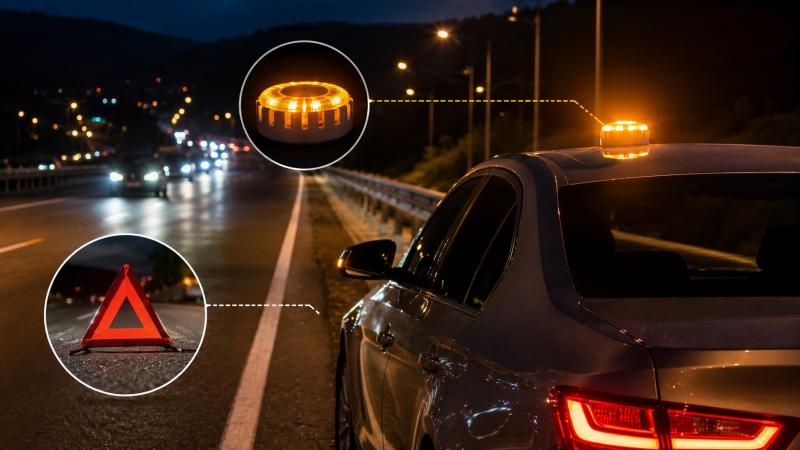
The V16 is a yellow/orange flashing beacon designed to be placed on the highest practical point of an immobilized vehicle. A compliant connected V16 device can also communicate the vehicle's location through the DGT 3.0 platform.
The regulatory change is closely connected to secondary accident prevention.
Traditional warning triangles require a driver to leave the vehicle and walk along the road to place them. The V16 system changes that operating model by allowing the warning device to be activated and placed on the vehicle without requiring the driver to walk along the roadway.
For B2B buyers, this means the question is no longer simply:
"Should we sell warning triangles or LED lights?"
A more useful procurement question is:
"Which warning device is legally appropriate for the target market, certified for its intended use, and suitable for the roadside scenario?"
Why Is Spain Replacing Warning Triangles With Connected V16 Beacons?
The main safety rationale is reducing the time and exposure associated with placing warning equipment on the road.
The traditional triangle system depends on the driver physically leaving the vehicle. A connected V16 beacon changes that operating model.
| Before the 2026 requirement | From January 1, 2026 in Spain |
|---|---|
| Traditional warning triangles used for immobilized vehicles | Connected V16 beacon required for covered vehicles |
| Driver must leave the vehicle to place triangles | Beacon can be activated and placed on the vehicle |
| Passive visual warning | Active flashing light |
| No digital location transmission | Location communicated through DGT 3.0 |
| Warning depends on physical placement | Physical warning plus connected warning capability |
The DGT explains that the connected V16 combines a visible warning signal with location transmission, allowing the incident to be communicated through connected traffic systems.
This distinction is important for distributors:
A connected V16 beacon is a regulated product category, not simply a generic rechargeable LED warning light.
What Does the 2026 Change Mean for Road Warning Device Buyers?
The 2026 V16 requirement does not mean that every road safety product becomes obsolete.
Instead, buyers should separate products by regulatory role and use scenario.
For example:
| Roadside scenario | Main risk | Product evaluation focus |
|---|---|---|
| Vehicle breakdown | Fast-approaching traffic | Legal compliance, visibility, deployment speed |
| Night towing work | Low driver attention | Flash pattern, mounting, battery reliability |
| Road construction | Traffic approaching workers | Directional guidance, visibility, deployment speed |
| Rain or fog | Reduced visibility | Optical performance, weather resistance |
| Urban roadside repair | Short reaction distance | Compact storage and quick deployment |
| Fleet emergency kit | Unfamiliar users | Simple operation and clear instructions |
This is where secondary accident prevention becomes a useful procurement concept.
The goal is not to find one product that replaces every warning device.
The goal is to build a product portfolio that reduces risk in the specific situations customers face.
Can a Regular LED Road Warning Light Replace a V16 Beacon?
No—not simply because it flashes.
This is one of the most important points for distributors and private-label buyers.
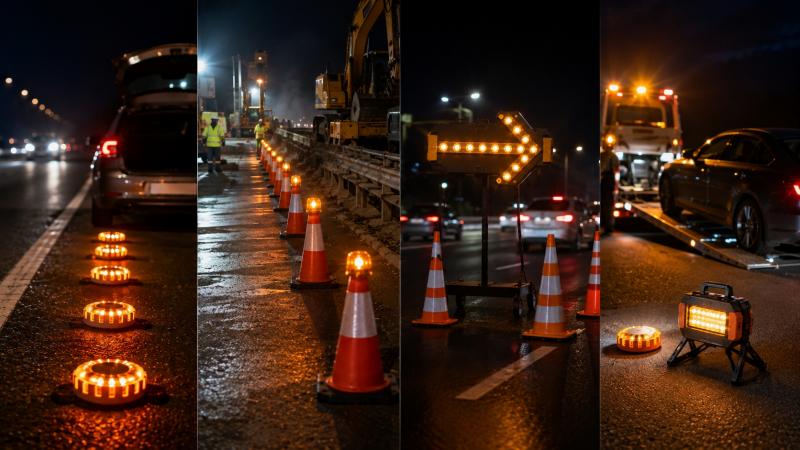
A regular rechargeable LED road flare, traffic cone light, arrow warning light, or magnetic warning light may be useful for roadside safety, traffic control, towing, work zones, and emergency response.
However, that does not automatically make it a legally compliant V16 beacon.
A V16 device intended for the Spanish regulated use must meet the applicable technical and certification requirements, including the required connectivity and certification status.
Therefore, buyers should distinguish between two product categories.
Regulated V16 Beacon
Designed for the specific vehicle hazard-signaling requirement in Spain.
Key procurement questions include:
- Is the model on the official certified list?
- Does it provide the required connectivity?
- Does it meet the applicable technical requirements?
- Is the certification valid?
- Is the device suitable for the intended vehicle category?
General LED Road Warning Light
Designed for broader safety applications such as:
- Roadside work
- Towing
- Traffic control
- Road construction
- Emergency response
- Fleet safety
- Hazard marking
These products can still have strong commercial value even when they are not intended to replace a regulated V16 beacon.
V16 Beacon vs. General LED Road Warning Light
| Factor | Connected V16 Beacon | General LED Road Warning Light |
|---|---|---|
| Primary purpose | Immobilized vehicle hazard signaling | Broader roadside and traffic safety |
| Regulatory role in Spain | Specific regulated device | Depends on product and application |
| Connectivity | Required for regulated V16 use | Usually not required |
| Location transmission | Integrated into compliant V16 systems | Generally not available |
| Typical placement | On immobilized vehicle | Cone, vehicle, roadwork area, barrier, or ground |
| Main buyer concern | Certification and regulatory compliance | Visibility, deployment, durability, price, and application fit |
| Typical B2B applications | Vehicle emergency equipment | Towing, construction, traffic control, fleets, emergency response |
This distinction helps prevent a common sourcing mistake:
Not every flashing LED product is interchangeable.
What Should B2B Buyers Check When Sourcing Road Warning Devices?
Whether you are a distributor, fleet supplier, towing-equipment company, or private-label brand, procurement should go beyond unit price.
1. Confirm the Target Market
Start with the destination market.
Ask:
- Which country will the product be sold in?
- Is the product for consumer emergency kits or professional use?
- Is a specific regulatory category involved?
- Does the customer require certification or market-specific documentation?
A product that is suitable for general roadside safety may not be suitable for a regulated vehicle emergency application.
2. Verify Certification and Test Documentation
For regulated products, ask the supplier for the documents needed to support the intended market.
Depending on the product, this may include:
- Product specification sheet
- Applicable certification
- Test reports
- Battery information
- User manual
- Labeling information
- Packaging artwork
- Material information
For Spain's connected V16 requirement, buyers should verify the model against the official DGT certified-device information rather than relying only on supplier marketing claims.
3. Evaluate Deployment Speed
In roadside emergencies, deployment time matters.
A warning device should be easy to understand and quick to activate.
For non-V16 applications, rechargeable LED road flares and other portable warning lights can be evaluated by:
- Activation method
- Number of operating steps
- Mounting method
- Storage format
- Battery status
- Charging method
- User instructions
For more practical deployment guidance, see our guide:
How to Deploy Road Flares in Under 10 Seconds | Rechargeable LED Road Flare Guide
4. Evaluate the Complete Product, Not Just Lumens
Brightness is important, but lumen numbers alone do not determine roadside effectiveness.
Buyers should also consider:
- Viewing angle
- Flash pattern
- Optical distribution
- Light color
- Runtime
- Weather resistance
- Mounting options
- Battery reliability
- Charging method
- Packaging and instructions
A highly specified product can still perform poorly in the field if it is difficult to deploy or if users do not understand how to operate it.
5. Check OEM and Private-Label Capabilities
For distributors and safety brands, customization can be as important as the base product.
Typical OEM/ODM requirements include:
- Logo placement
- Product color
- Packaging
- Instruction manuals
- Labeling
- Product configuration
- Charging accessories
- Customized kits
- Production MOQ
- Lead time
If you are evaluating an OEM project, see:
OEM LED Light Customization: MOQ, Options & Lead Time Guide
How Should Buyers Adjust Their Road Safety Product Portfolio?
A regulation change can create both opportunity and inventory risk.
Buyers should avoid assuming that one new product will replace every existing warning device.
A more practical approach is to organize products according to customer scenario.
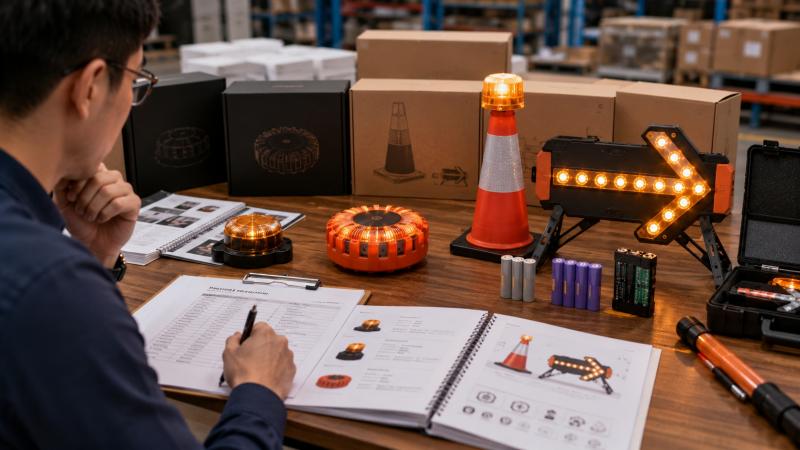
Example Road Safety Product Portfolio
| Product category | Procurement role |
|---|---|
| Connected V16 beacon | Regulated vehicle emergency signaling in Spain |
| Rechargeable LED road flare | Portable active warning for roadside and fleet applications |
| Traffic cone warning light | Temporary hazard marking and traffic control |
| Arrow warning light | Directional traffic guidance and lane-control applications |
| Magnetic warning light | Vehicle, towing, and roadside work applications |
| Customized emergency kit | Private-label and fleet safety programs |
For example, a distributor may offer a regulated V16 solution for the Spanish vehicle emergency market while continuing to offer general LED warning products for towing, construction, traffic control, and fleet applications.
This approach reduces the risk of confusing regulatory products with general-purpose safety equipment.
Example: Choosing the Right LED Warning Product by Scenario
Roadside Breakdown
The primary concern is warning approaching drivers quickly while minimizing the time people spend exposed to traffic.
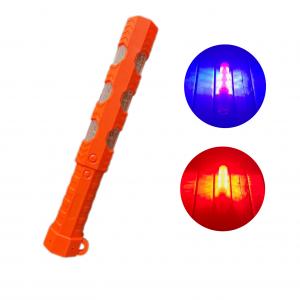
For general roadside applications, a rechargeable LED road flare can provide an active visual warning and can be deployed as part of an emergency safety kit.
For more information about fast roadside deployment, see:
How to Deploy Road Flares in Under 10 Seconds | Rechargeable LED Road Flare Guide
Traffic Control and Roadwork
Directional information becomes more important in temporary work zones.
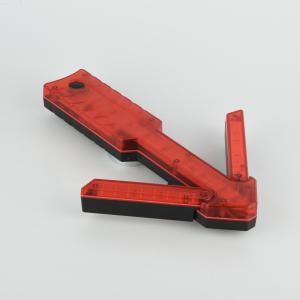
A portable arrow warning light can help communicate traffic direction and lane-control information.
Our LED Arrow Warning Light Wholesale | 4-Mode OEM Supplier is designed for roadside and emergency applications, with a folding design and magnetic and cone-mounting options.
It can be considered for:
- Road construction and maintenance
- Temporary traffic control
- Emergency roadside assistance
- Vehicle breakdown situations
- Fleet and truck applications
- Tow trucks and utility vehicles
Traffic Cone and Hazard Marking
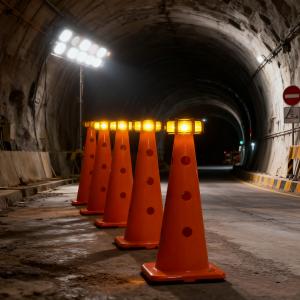
For temporary work areas, traffic cone lights can add active visibility to existing traffic-control equipment.
Our LED Traffic Cone Lights 8-Pack | Rechargeable Warning Cone Light Manufacturer can be considered for applications where rechargeable warning lights are mounted on traffic cones.
Typical applications include:
- Road construction
- Temporary traffic control
- Work zones
- Parking and vehicle management
- Roadside hazard marking
Important: These general LED products should not be presented as substitutes for Spain's regulated connected V16 beacon unless the specific model has the required certification and is listed by the relevant authority.
What Does the 2026 Change Mean for OEM Buyers?
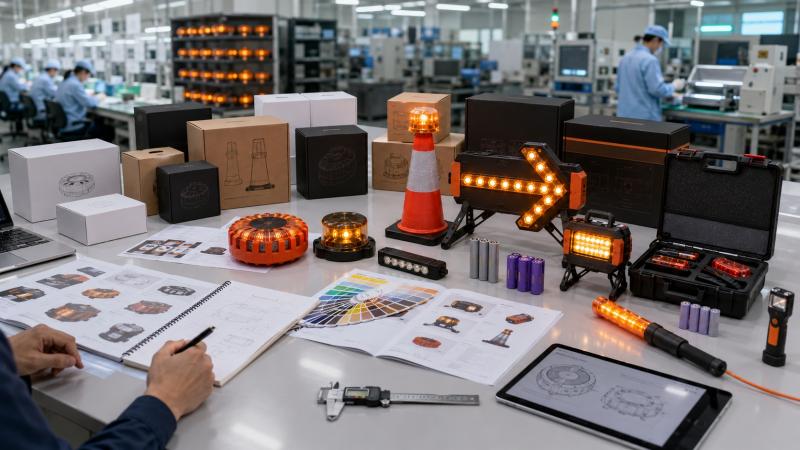
For OEM and private-label buyers, regulatory changes can influence product development before production even begins.
Instead of starting with:
"Which LED light can we customize?"
Start with:
"What market, application, regulatory category, and customer scenario is this product designed for?"
Then work backward into the product specification.
A practical OEM workflow can include:
- Define target market.
- Define application scenario.
- Identify regulatory requirements.
- Select the appropriate product category.
- Confirm technical specifications.
- Confirm certification and test documentation.
- Develop logo and packaging.
- Confirm MOQ and lead time.
- Approve samples.
- Start mass production.
This approach can reduce the risk of developing a product that looks attractive but does not fit the intended market.
For more information on OEM customization, MOQ, options, and lead time, see:
OEM LED Light Customization: MOQ, Options & Lead Time Guide
Frequently Asked Questions
What is the V16 warning light in Spain?
The V16 is a hazard warning beacon designed to signal an immobilized vehicle.
Spain's DGT states that the connected V16 is the legal signaling device for covered immobilized vehicles from January 1, 2026.
Are warning triangles still legal in Spain in 2026?
For the regulated use of immobilized vehicles covered by the Spanish requirement, connected V16 is the required signaling method from January 1, 2026.
Buyers should check the latest DGT guidance for specific vehicle categories and international-circulation situations.
Can a regular LED road flare replace a V16 beacon?
Not automatically.
A regular LED road flare is not a compliant V16 simply because it flashes.
For regulated V16 use, buyers must verify the specific model's certification, connectivity, and listing status.
What is the difference between a V16 beacon and an LED road flare?
A V16 beacon is designed for a specific regulated vehicle hazard-signaling application in Spain and includes required connectivity.
A general LED road flare is typically designed for broader roadside warning, traffic control, towing, fleet, or emergency applications.
What should B2B buyers ask a warning light supplier?
At minimum, ask about:
- Target-market compliance
- Certification and test reports
- Product specifications
- Battery and charging information
- Runtime
- Waterproofing
- Flash modes
- Mounting options
- Packaging and manuals
- OEM logo options
- MOQ
- Lead time
Do the 2026 changes mean all LED warning products need to become V16 products?
No.
The V16 requirement applies to the regulated vehicle emergency-signaling use in Spain.
Other LED warning products can continue serving different applications such as roadwork, traffic control, towing, fleet safety, and emergency response.
Conclusion
Spain's 2026 connected V16 requirement is an important example of how road-safety regulations can change the way warning devices are selected, sourced, and marketed.
The key lesson for B2B buyers is not to treat every flashing LED product as interchangeable.
Instead, evaluate each product by:
- Target market
- Regulatory category
- Certification
- Roadside scenario
- Deployment method
- Visibility
- Battery and runtime
- Weather resistance
- Documentation
- OEM requirements
For general roadside safety applications, products such as rechargeable road flares, traffic cone lights, and arrow warning lights can remain valuable parts of a broader safety portfolio.
For regulated vehicle emergency signaling in Spain, buyers should verify the specific connected V16 requirements and certified models before sourcing.
If you are developing a private-label road safety product, emergency kit, or traffic warning light program, Superflare can support product selection, OEM customization, packaging, and production planning based on your target market and application.