How to Deploy Road Flares in Under 10 Seconds | Rechargeable LED Road Flare Guide
How to Deploy Road Flares in Under 10 Seconds: A Fleet Buyer's Guide
Quick Answer
The fastest way to deploy road flares is to use a rechargeable LED road flare kit with one-button activation, magnetic mounting, synchronized flashing, and an organized carrying case. A complete kit allows operators to establish a visible warning zone quickly while reducing roadside exposure during towing and emergency response.
Table of Contents
- Why Deployment Speed Matters
- What Makes Road Flares Fast to Deploy?
- Switch Logic Matters More Than Buyers Expect
- Physical Handling Affects Roadside Exposure
- How Should Road Flares Be Arranged?
- Why the Complete Kit Matters
- Storage and Readiness Best Practices
- Recommended Products
- Frequently Asked Questions
- Conclusion
Why Deployment Speed Matters
Road flares protect towing operators, roadside assistance technicians, law enforcement personnel, and maintenance crews by creating an early visual warning for approaching traffic. However, even the brightest warning light cannot improve safety if it takes too long to locate, activate, or deploy.
Every second spent outside a vehicle increases exposure to moving traffic. From my experience discussing OEM and ODM projects with fleet buyers, deployment speed is not simply a product specification—it is a combination of product design, storage organization, and operator familiarity.
Many procurement teams initially compare lumen output, battery capacity, or flashing modes. Those specifications certainly matter, but they should never be the first purchasing criterion. The more important question is:
Can an operator deploy the complete warning system quickly, correctly, and consistently under pressure?
For roadside assistance fleets, towing companies, highway maintenance contractors, and emergency response teams, reducing setup time often provides greater safety benefits than simply purchasing a brighter warning light.
Recommended Product for Towing & Fleet Operations
For professional roadside applications, we generally recommend using a synchronized rechargeable LED road flare kit instead of individual warning lights.
Recommended Product
https://www.superflare.net/8pack-auto-sync-rechargeable-led-amber-road-flares-p.html
Typical applications include:
- Towing companies
- Roadside assistance fleets
- Police departments
- Fire & rescue vehicles
- Municipal maintenance
- Utility service fleets
Key advantages include:
- Auto-sync flashing
- Rechargeable battery
- Magnetic mounting
- High-visibility amber LEDs
- Rugged housing for outdoor environments
- Designed for rapid deployment
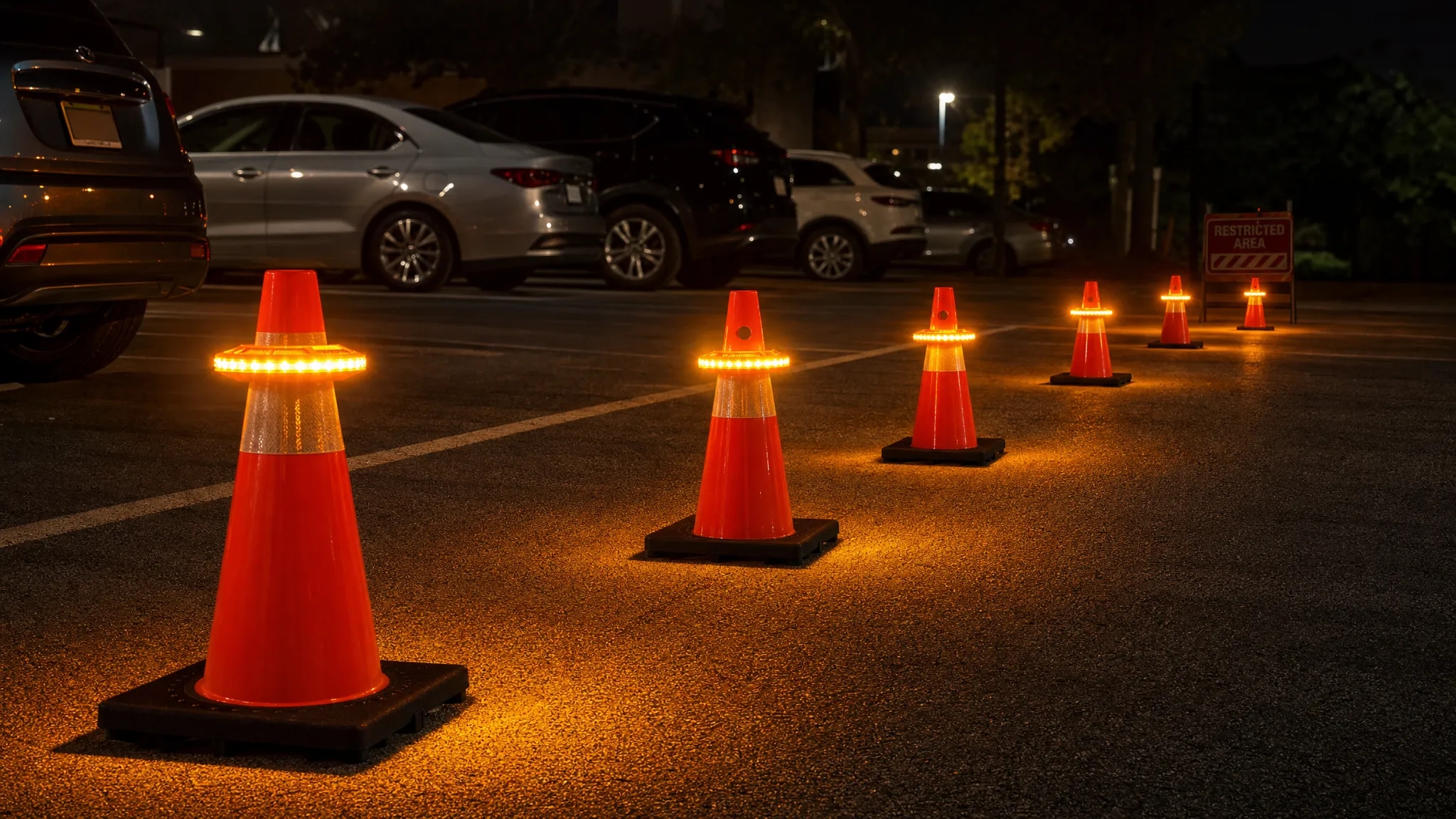
Many buyers ask about brightness, waterproof ratings, battery life, or charging methods. While these specifications are important, I usually recommend evaluating operational efficiency first.
A road flare should be:
- Easy to locate
- Easy to activate
- Easy to deploy
- Easy to recover
- Easy to recharge
- Easy for every operator to use consistently
Those characteristics have a greater impact on real-world roadside safety than adding another flashing mode or increasing brightness by a few hundred lumens.
What Makes Road Flares Fast to Deploy?
At first glance, a road flare appears to be a simple product. In reality, deployment speed depends on dozens of small design decisions.
A confusing switch layout, complicated flashing sequence, slippery housing, or poorly organized storage case can all increase setup time. During a roadside emergency, even a few additional seconds may significantly increase operator exposure to moving traffic.
Fast deployment begins long before the operator leaves the vehicle. The ideal warning light should be immediately recognizable, intuitive to operate, and ready for use without requiring additional thought.
Professional fleet buyers should evaluate the following factors before comparing brightness specifications alone:
- One-button activation
- Simple flashing sequence
- Memory function
- Glove-friendly controls
- Strong magnetic base
- Stable anti-roll housing
- Rechargeable battery
- Organized carrying case
These features work together to reduce hesitation, minimize operator error, and improve deployment consistency across an entire fleet.
Switch Logic Matters More Than Buyers Expect
In OEM and ODM discussions with fleet buyers, switch logic is often one of the first usability topics we evaluate. A warning light may offer excellent brightness, a durable housing, and a long battery life, but if operators must cycle through multiple flashing modes before reaching the required warning pattern, valuable time is lost.
Roadside emergencies rarely happen in ideal conditions. Operators may be working at night, in heavy rain, during snowstorms, or while wearing thick safety gloves. In these situations, a complicated user interface can become a safety risk rather than an advanced feature.
For fleet procurement, I usually recommend evaluating the following points before comparing lumen output alone:
- One-button activation for the primary warning mode
- Clear tactile feedback that can be recognized while wearing gloves
- Low risk of accidental mode changes after the light has been placed
- Logical flash sequence, with the most commonly used warning mode appearing first
- Memory function that restores the previously selected mode when appropriate
Although additional lighting modes may look attractive on a specification sheet, operators typically use only one or two modes during real roadside deployments. A simpler interface usually results in faster and more consistent deployment across an entire fleet.
Procurement Checklist for Fleet Buyers
| Feature | Why It Matters | Questions to Ask Suppliers |
|---|---|---|
| One-button activation | Reduces reaction time | Does the warning mode activate immediately? |
| Memory function | Speeds up repeated deployment | Does the light remember the previous mode? |
| Button size | Easier operation with gloves | Can operators easily locate the switch by touch? |
| Tactile feedback | Prevents operating errors | Is there a noticeable click when pressed? |
| Mode sequence | Improves usability | Are commonly used modes placed first? |
Procurement Tip: During supplier evaluation, ask for a product demonstration video showing how quickly the warning light can be activated directly from the OFF position. This often reveals more about real-world usability than a specification sheet.
Physical Handling Affects Roadside Exposure
Once the warning light has been switched on, physical handling becomes the next factor influencing deployment speed.
A road flare should be easy to remove from its storage case, comfortable to grip, and stable after placement. These details may seem minor in a showroom, but they become extremely important when operators are working beside high-speed traffic.
A housing that is too smooth may become slippery in rain. A warning light that is too small may disappear among other equipment inside a truck compartment. Likewise, a product without anti-roll features may move after being placed on uneven pavement, reducing its visibility.
Professional fleet operators should look for products that balance portability with ease of handling.
Recommended Evaluation Criteria
| Feature | Operational Benefit | Buyer Check |
|---|---|---|
| Large grip area | Easier handling with gloves | Can it be picked up quickly? |
| Magnetic base | Fast attachment to vehicles | Is the magnet strong enough for truck panels? |
| Anti-roll housing | Prevents movement after placement | Does it remain in position on uneven pavement? |
| Durable shell | Resists accidental drops | Is the housing impact resistant? |
| Compact carrying case | Faster deployment | Can the complete kit be carried with one hand? |
Rather than evaluating a warning light in isolation, I usually encourage procurement teams to simulate an actual roadside deployment. Time how long it takes an operator to retrieve the complete kit, activate every light, establish the warning zone, and return the equipment to storage. This practical test provides far more useful purchasing information than comparing specifications alone.
Why Rechargeable Kits Improve Fleet Efficiency
Rechargeable warning light systems have become increasingly popular among towing companies and roadside assistance fleets because they simplify equipment management.
Compared with disposable battery models, rechargeable systems reduce battery replacement costs, minimize maintenance time, and help ensure every unit remains ready for deployment through scheduled charging routines.
For organizations operating multiple service vehicles, synchronized rechargeable kits also create a more professional and consistent warning pattern.
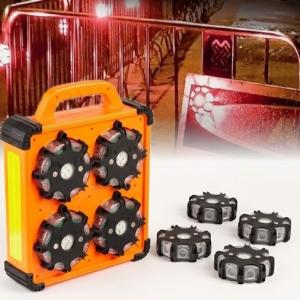
One example is the 8-Pack Auto Sync Rechargeable LED Road Flares, designed specifically for fleet applications.
Recommended Product
https://www.superflare.net/8pack-auto-sync-rechargeable-led-amber-road-flares-p.html
Typical features include:
- Auto-sync flashing across multiple units
- Rechargeable lithium battery
- Magnetic mounting
- High-visibility amber LEDs
- Rugged construction for roadside environments
- Designed for OEM and private label projects
For B2B buyers, evaluating the complete deployment system—including charging, storage, synchronization, and long-term maintenance—is often more valuable than comparing brightness specifications alone.
How Should Road Flares Be Arranged for Towing Operations?
Deploying a warning light is only the first step. An effective roadside safety zone depends on how the lights are arranged, how quickly they can be deployed, and whether approaching drivers can recognize the hazard early enough to react safely.
For towing companies and roadside assistance providers, the objective is not simply to illuminate the breakdown vehicle. The goal is to create a highly visible warning corridor that gives approaching drivers sufficient time to slow down, change lanes, or stop safely.
Rather than placing warning lights randomly, fleet operators should follow their internal safety procedures and applicable local traffic regulations. A consistent deployment method also makes training easier and reduces the risk of operator error during emergencies.

The Complete Kit Is More Important Than a Single Road Flare
One of the most common questions we receive from buyers is:
"How bright is one road flare?"
While brightness is certainly important, experienced fleet managers usually focus on a different question:
"How quickly can my team deploy an entire warning system?"
A complete warning kit provides better protection than relying on a single high-output warning light.
Instead of evaluating individual products, procurement teams should consider the entire deployment process:
- How many warning lights does each service vehicle carry?
- Can the entire kit be removed with one hand?
- Are all units synchronized?
- Are charging and storage simple?
- Can operators deploy the complete warning zone within seconds?
For fleet operations, the warning system—not the individual light—is the actual product being purchased.
Why Auto-Sync Road Flares Improve Deployment Efficiency
One challenge with traditional warning lights is inconsistency. Different flashing patterns or activation times may reduce the visual impact of the warning zone.
Auto-synchronized LED road flare systems solve this problem by ensuring every light flashes together, creating a cleaner and more professional warning pattern.
For towing fleets, emergency response teams, and roadside assistance providers, synchronized lighting also helps drivers recognize hazards more quickly.
Recommended Product
8-Pack Auto Sync Rechargeable LED Road Flares
https://www.superflare.net/8pack-auto-sync-rechargeable-led-amber-road-flares-p.html
Typical advantages include:
- Auto-sync flashing
- Rechargeable lithium battery
- Strong magnetic mounting
- High-visibility amber LEDs
- Designed for fleet deployment
- Suitable for OEM & ODM customization
Placement Flexibility Reduces Operator Hesitation
Roadside conditions change constantly.
An operator may need to place warning lights:
- Directly on the pavement
- On steel vehicle panels
- Beside guardrails
- Around accident scenes
- Near traffic cones
- At temporary construction sites
The more deployment options available, the less time operators spend deciding where to position each warning light.
When evaluating products, fleet buyers should consider:
| Feature | Operational Benefit |
|---|---|
| Magnetic mounting | Fast attachment to vehicle bodies |
| Flat anti-roll base | Stable placement on uneven roads |
| 360° visibility | Better visibility from multiple directions |
| Waterproof housing | Reliable operation during rain |
| Impact-resistant shell | Withstands accidental drops |
| Rechargeable battery | Reduces long-term maintenance costs |
Deployment flexibility directly affects roadside safety because hesitation increases exposure to moving traffic.
Traffic Cone Lights Create an Even Safer Work Zone
Road flares provide excellent ground-level warning, but many temporary work zones require additional elevated visual guidance.
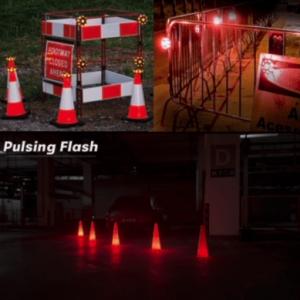
For construction contractors, utility companies, municipalities, and road maintenance crews, traffic cone warning lights help drivers recognize lane closures from a greater distance.
Compared with ground-level warning lights alone, illuminated traffic cones create a taller and more recognizable traffic control system, especially during nighttime operations.
Recommended Product
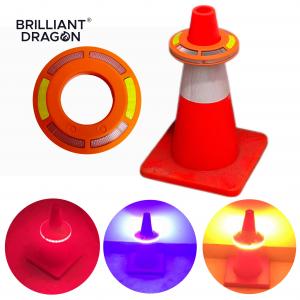
Rechargeable Traffic Cone Ring Light
https://www.superflare.net/rechargeable-traffic-cone-ring-light-8pack-p.html
Ideal applications include:
- Road construction
- Highway maintenance
- Utility repairs
- Temporary lane closures
- Parking management
- Traffic control projects
Many fleet customers combine LED Road Flares with Traffic Cone Ring Lights to create a complete roadside safety solution that improves both ground-level and elevated visibility.
Procurement Advice for Fleet Buyers
When evaluating roadside safety equipment, avoid selecting products based solely on brightness specifications.
Instead, compare suppliers using the following criteria:
✔ Deployment speed
✔ Ease of operation
✔ Charging efficiency
✔ Storage organization
✔ Synchronization capability
✔ OEM customization
✔ Product durability
✔ Long-term maintenance costs
A well-designed warning system helps operators work more efficiently, improves fleet standardization, and supports a safer roadside working environment.