How Many Road Flares Do I Need? A Deployment Guide for Drivers & Fleet Professionals
Every driver asks this question eventually — usually after a breakdown, or right before a long trip. The problem is, there is no single right number.
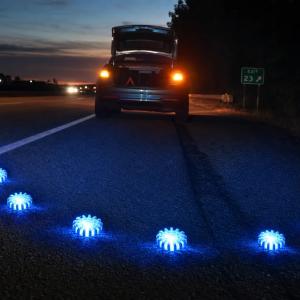
The number of road flares you need depends on your road type, vehicle, speed environment, and how long you plan to be stopped. For most passenger cars on a standard highway, 3 to 6 units cover the basics. For commercial vehicles and fleet operators, FMCSA regulations set specific placement distances that often require more — and at highway speeds, 8 units is the professional standard.
This guide gives everyday drivers, fleet managers, tow operators, and road contractors a practical reference for figuring out exactly how many LED road flares to carry and deploy in real-world scenarios.

The Minimum Standard: What Regulations Actually Require
For commercial motor vehicles in the United States, the FMCSA requires drivers to carry 3 warning devices and deploy them within 10 minutes of a breakdown or stop on a roadway. This applies to trucks, buses, and other regulated commercial vehicles.
LED road flares are recognized as a compliant alternative to traditional fusee flares and warning triangles under FMCSA exemptions, provided the units meet applicable visibility and performance standards. The agency has granted exemptions to sequential LED warning light systems as legal substitutes for fusee flares — eliminating the fire hazard of traditional flares without sacrificing compliance.
A few important caveats:
- The federal minimum of 3 devices is a floor, not a recommendation. At highway speeds, 3 units provide minimal advance warning distance.
- Individual states may have additional requirements beyond the federal standard. Always verify with your state DOT before finalizing fleet equipment specs.
- For government and emergency vehicle applications, additional certifications such as SAE or ECE R65 may be required depending on jurisdiction.
- For everyday passenger vehicles, there is no federal law requiring you to carry flares at all. But if you drive regularly on highways or in remote areas, having at least 3 to 4 warning devices is standard preparation. Some countries in Europe, including France and Spain, legally require warning triangles in every vehicle — check local rules before traveling internationally.
How Many Road Flares by Road Type and Scenario
Road type changes everything. On a straight highway, a flare 300 feet back gives a driver at 60 mph about 3 seconds of warning — which is already tight. On a blind curve, that same flare placed at 300 feet may not be visible until a driver is 100 feet away. So you place it earlier, and that means more units to cover the same scene.
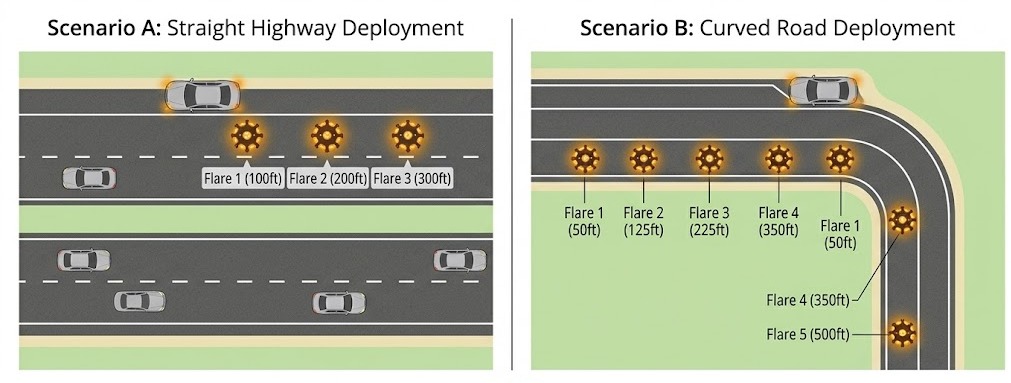
| Scenario | Recommended Units | Key Reason |
|---|---|---|
| Urban / city street breakdown | 2–3 | Lower speeds, but proximity to traffic is higher |
| Straight highway (daytime) | 3 | Standard placement at 10 ft, 100 ft, 300 ft |
| Straight highway (night) | 3–4 | Add one closer unit for immediate visibility |
| Rural two-lane highway | 4–5 | Both directions need coverage |
| Curve or hill | 4–6 | Earlier warning needed before the hazard point |
| Highway breakdown (55–65 mph) | 6–8 | High speed requires longer advance warning |
| Highway breakdown (65–75 mph) | 8–10 | Extended warning distance, lane change lead time |
| Single-operator roadside response | 6 minimum | No crew assistance; sequential sync reduces setup risk |
| Active construction work zone | 8–10 | Long-duration deployment, full perimeter definition |
| Multi-lane incident management | 8–10 | Multiple lanes require extended warning arc |
| Mountain or winding road | 5+ | Multiple blind spots require more placement points |
| Tow truck magnetic vehicle mount | 4–6 | Supplement ground placement with vehicle-mounted units |
For most professional fleet operators — tow companies, roadside assistance services, DOT contractors — the 8-unit set has become the standard. It covers the majority of deployment scenarios without requiring units to be rationed or redeployed mid-incident.
Placement Distance: How Far Apart Should Road Flares Be?
Unit count and placement distance work together. Buying 8 flares and placing them all within 50 feet of the hazard delivers far less protection than spacing them correctly.
The MUTCD (Manual on Uniform Traffic Control Devices) provides the standard reference for warning device spacing in the United States. As a practical field guide:
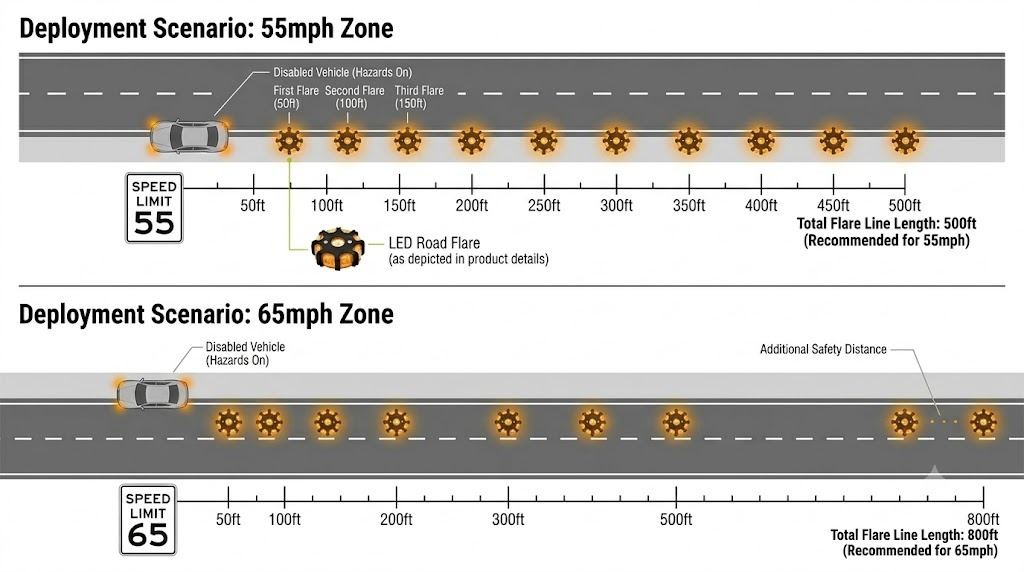
At 55 mph:
- First flare: 100 feet behind the hazard
- Second flare: 200 feet behind the hazard
- Third flare: 300–500 feet behind the hazard
- Additional units: extend the warning line further or define the lateral boundary
At 65–70 mph:
- First flare: minimum 200 feet behind the hazard
- Extend spacing proportionally — at higher speeds, drivers need more distance to process the warning and change lanes safely
- For a full lane closure setup, the warning line should begin 500–800 feet from the hazard
Key principle: the first unit a driver sees should give them enough distance to react, not just enough distance to brake. At 70 mph, a vehicle travels roughly 100 feet per second. A warning device 200 feet away gives less than 2 seconds of reaction time — not enough for a lane change.
Sequential vs. Non-Sequential: Does It Change How Many You Need?
Yes — and this is a point most buying guides skip.
Non-sequential flares flash independently. Each unit signals "hazard present." To define a clear warning zone and give drivers directional guidance, you need more units placed at tighter intervals to compensate for the lack of coordinated movement.
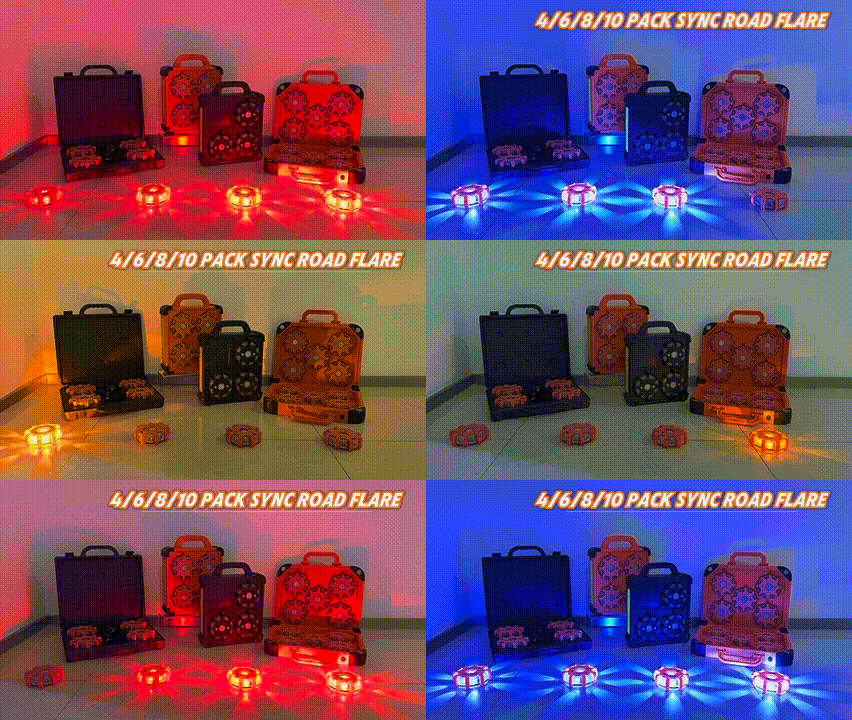
Sequential flares communicate between units, creating a flowing directional pattern — a visible wave that tells drivers not just that a hazard exists, but which way to move. The pattern itself carries information that a cluster of independent flashes cannot.
The practical implication: a well-deployed 6-unit sequential set can deliver clearer lane guidance than 8 non-sequential units in a highway scenario. The sequential pattern is visible from further away and processed faster by approaching drivers.
For highway deployments and multi-lane incident management, sequential is not just a feature upgrade — it changes the minimum effective unit count. Most professional highway deployments use 8-unit sequential sets as the baseline.
For single-point hazards in low-speed environments — a pothole on a residential street, a breakdown in a parking area — non-sequential units at the FMCSA minimum of 3 are sufficient.
How Long Will You Be Stopped? Why Duration Changes What You Should Buy
This is the question most people forget to ask — and it changes the cost logic completely.
For a short roadside stop while waiting for a tow, 3 flares may be enough. But traditional flares burn for 15–30 minutes and are single-use. If your stop runs long, or if you're managing a work zone that lasts hours, you need either more units or a reusable alternative.
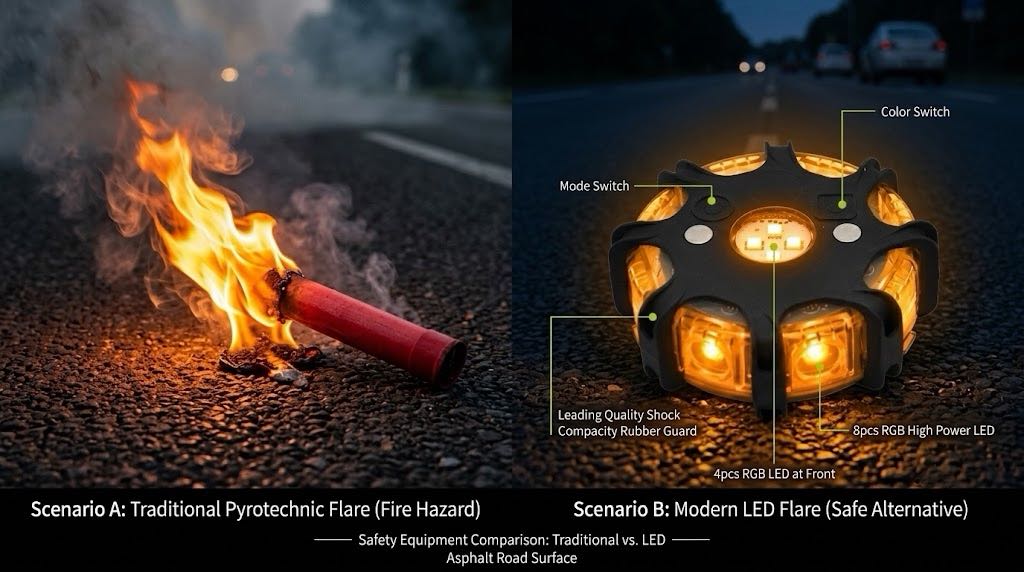
| Factor | Traditional Flare | LED Warning Light |
|---|---|---|
| Burn time | 15–30 min (single use) | 10–50+ hours (rechargeable) |
| Reusability | None | Full — recharge and reuse |
| Fire risk | Yes — open flame | None |
| Visibility in rain / fog | Moderate | High (flashing mode) |
| Safe near fuel leaks | No | Yes |
| Cost per use over time | Increases with each use | Drops with each reuse |
There is also a safety angle that matters in the field. Traditional flares are open flames. If a vehicle has a fuel leak — which is not uncommon after a collision — lighting a flare near that vehicle is a serious risk. LED warning lights have no ignition risk. For emergency responders, tow operators, and fleet drivers, that difference matters.
For a fleet operator equipping 30 vehicles, the upfront cost of LED warning lights pays itself back within a short period compared to a regular flare reorder schedule. And you never have a driver reach for a flare kit and find it already used.
From Minimum to Permanent Standard: How Many Should You Keep on Hand?
Instead of asking "how few flares do I need to get by," the better question for most drivers and fleet operators is: how many warning devices should I keep on hand permanently? Reusable LED lights make it practical to carry more, because there is no replacement cost every time you use them.
| Use Case | Suggested Quantity | Device Type |
|---|---|---|
| Everyday passenger car | 3–4 | Traditional flares or basic LED set |
| Long-distance solo driver | 4–6 | LED preferred for reusability |
| Commercial truck (FMCSA) | 3 minimum | Must meet regulatory spec |
| Fleet vehicle (per unit) | 4–6 LED | Reusable, reduces reorder cost |
| Road construction / work zone | 6–10+ | LED with high-visibility flash modes |
| Emergency response vehicle | 6+ | LED, no fire risk near scenes |
| Camping / overlanding | 4–6 | Dual-purpose LED (camp + road) |
One pattern we see consistently: drivers who switch from traditional flares to LED warning lights start carrying more units because they can. When there is no single-use cost, the logic of "just enough" disappears. A driver who used to carry 3 flares keeps 6 LED lights in the vehicle — same long-term cost, more flexibility at a scene.
That shift in thinking — from minimum to permanent standard — is what good emergency preparation actually looks like.
Why Most Professionals Choose 8-Pack Sets
The 8-pack has become the standard professional configuration for one straightforward reason: it covers the full range of deployment scenarios without forcing operators to make on-scene calculations about whether they have enough units.
At an incident scene, the last thing an operator should be thinking about is whether to space the flares closer together because there are only 5 left in the case. An 8-unit set provides enough for a complete highway deployment, with units to spare for defining lateral boundaries or replacing any unit displaced by passing traffic.
For fleet procurement, the 8-unit set also simplifies inventory management. One SKU covers the majority of use cases across tow trucks, service vehicles, and emergency response kits.
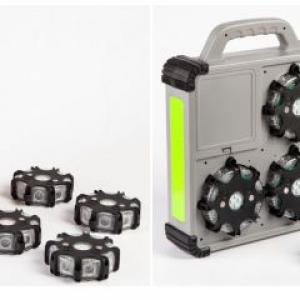
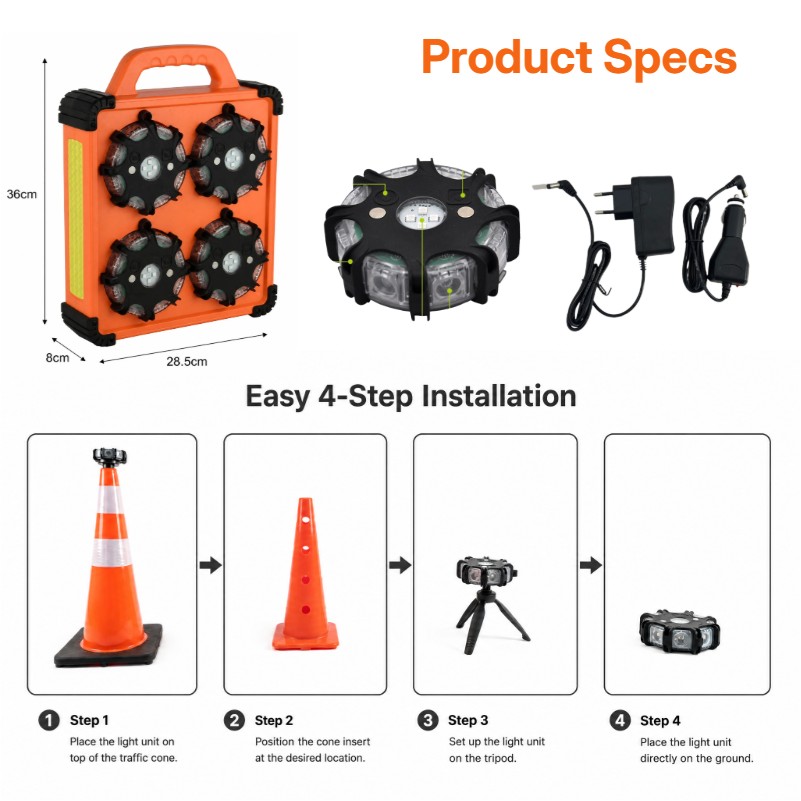
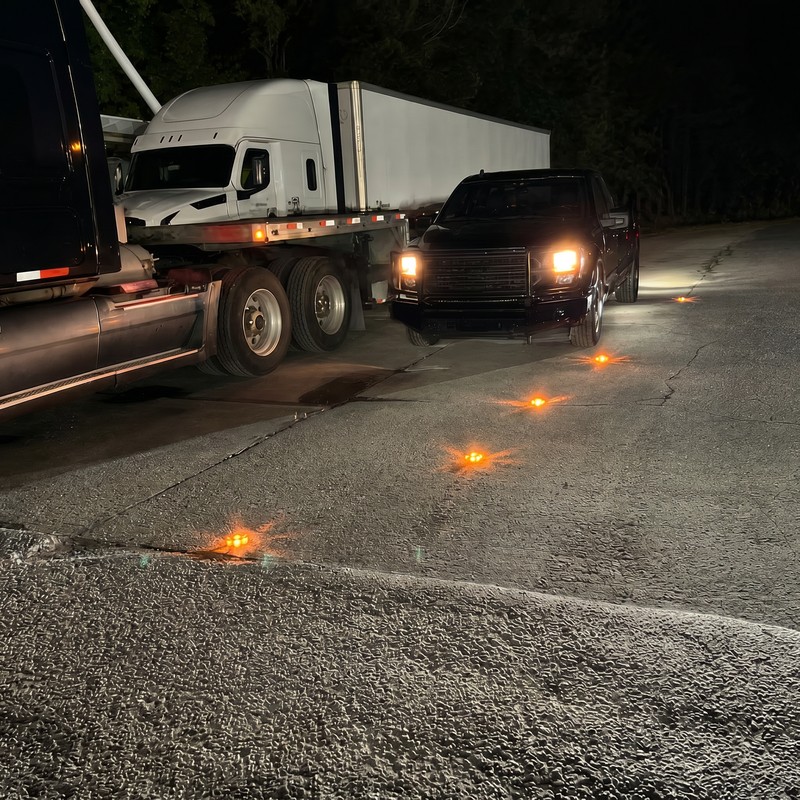
Our HL75011 8-Pack Sequential Road Flare Set uses AUTO SYNC technology — every unit joins the sequential pattern automatically the moment it leaves the case, with no pairing or configuration required. For single-operator deployments where setup speed matters, this eliminates one variable from an already high-pressure situation.
Frequently Asked Questions
Can I use fewer than 3 flares to reduce kit weight?
For commercial vehicles regulated by the FMCSA, 3 is the legal minimum — not a choice. For personal vehicles, there is no federal minimum, but 3 units remains the practical baseline for any deployment on a road with moving traffic. Reducing below 3 leaves meaningful gaps in the warning perimeter.
Do I need more flares at night than during the day?
The unit count stays the same, but placement matters more at night. Visibility is reduced, and drivers may not see warning devices until they are already close. At night, prioritize extending the warning line further from the hazard rather than concentrating units near it.
Does battery type affect how many units I need?
Indirectly, yes. If you are operating in cold climates with alkaline battery units, battery failure mid-deployment is a real risk. A unit that dies during an active incident creates a gap in your warning perimeter. Lithium battery units maintain performance down to -40°F/-40°C. If your fleet operates in northern markets, lithium chemistry is not optional — it's the spec that determines whether your units are reliable when you actually need them.
How often should I check and recharge my road flares?
For rechargeable units, a pre-shift battery check is best practice. Recharge after every deployment, not on a calendar schedule. A fully charged 8-unit set should be ready for deployment at all times.
What is the difference between using road flares alone versus combining them with traffic cones?
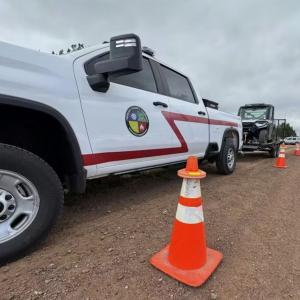
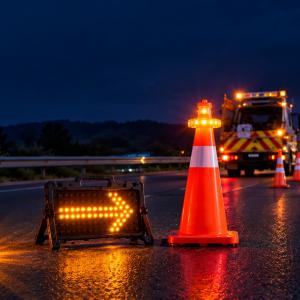
Road flares alone define a warning zone and provide visibility. Adding traffic cones creates a physical barrier that reinforces the warning perimeter and provides a mounting point for cone-top lights. For extended deployments — work zones, lane closures lasting more than an hour — the combination provides better zone definition and driver compliance. For rapid emergency response where speed of deployment is the priority, flares alone are the standard approach.
Are LED road flares legal for commercial vehicles?
Yes — the FMCSA has granted exemptions recognizing sequential LED warning lights as compliant substitutes for fusee flares on commercial vehicles. Ensure the units you purchase meet applicable visibility standards. For government and emergency vehicle applications, verify any additional certification requirements with your agency or state DOT.
Putting It Together
The right number of road flares is not one number — it depends on your road, your vehicle, your conditions, and how often you use them. Start with the scenario, then choose accordingly:
- Carry 8 units minimum for highway and professional fleet use — covers most scenarios and leaves margin for complex scenes
- Use sequential for any deployment at highway speeds or in multi-lane environments
- Space for reaction distance, not just visual range — at 65 mph, start your warning line at least 500 feet from the hazard
- Switch to LED if you deploy regularly — the cost and safety case is clear once you run the numbers
- Check battery spec if your fleet operates in cold climates — lithium chemistry is the only reliable option below freezing
For a full breakdown of how to evaluate and source LED road flares based on your buyer profile — including certification requirements, MOQ realities, and supplier vetting — see our LED Road Flare Buyer's Guide by Profile.
For questions about fleet pricing, OEM configurations, or sample requests, contact our team.
Looking for a complete sourcing guide? See our LED Road Flare Buyer's Guide for specs, compliance, and supplier requirements by buyer profile.
SuperFlare manufactures sequential LED road flares and traffic cone lights for tow operators, fleet managers, DOT contractors, and global brand owners. All products are CE certified and available for OEM/ODM customization.
Related News