
Tow Truck Lighting Setup for Safer Night Towing
Introduction
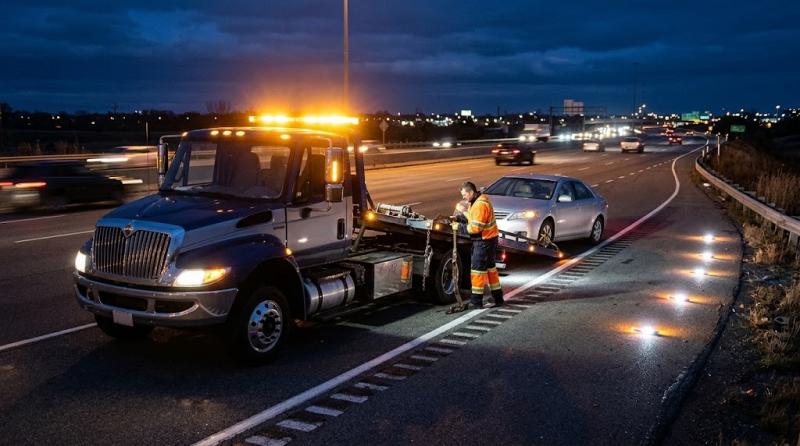
Night towing requires more than a bright roof-mounted warning light. Tow truck operators may need to alert approaching traffic, mark a roadside hazard, guide vehicles around a work area, and maintain visibility while loading, inspecting, or recovering a vehicle.
A practical tow truck lighting setup should match the actual job, the vehicle configuration, and the working environment. Different warning devices serve different purposes: directional arrow lights communicate where traffic should move, while rechargeable LED road flares help mark a vehicle or roadside hazard.
For towing companies, fleet managers, roadside assistance providers, and safety equipment distributors, selecting the right combination also involves checking mounting options, charging requirements, operating modes, product documentation, and supplier consistency.
This guide explains how to evaluate a night towing lighting setup and select suitable warning equipment for professional fleet operations.
Why Is a Complete Tow Truck Lighting Setup Important at Night?
A single warning light cannot necessarily address every visibility requirement around a tow truck and a disabled vehicle.
For example, a roof-mounted light may provide a visible warning from certain directions, but it does not automatically mark every hazard around the work area or communicate a clear direction for passing traffic.
When planning a tow truck lighting setup, consider five operational requirements.
-
Vehicle warning: Make the tow truck more noticeable to approaching road users.
-
Hazard marking: Identify the disabled vehicle or roadside incident area.
-
Directional guidance: Communicate a clear direction when traffic needs to move around a work zone.
-
Work-area visibility: Provide suitable illumination for inspection, loading, or recovery tasks.
-
Crew visibility: Ensure workers follow appropriate high-visibility clothing and roadside safety procedures.
These functions are related but not interchangeable. A warning light alerts other road users, a directional light communicates movement, and a work light illuminates a task.
The right equipment combination depends on the incident, available mounting positions, road conditions, and applicable local requirements.
What Lighting Products Should a Tow Truck Carry?
A professional towing vehicle may use several types of warning and work lighting. Each should have a defined purpose in the operating procedure.
| Lighting Equipment | Primary Function | Key Buying Considerations |
|---|---|---|
| LED light bar or beacon | Provides a vehicle-mounted warning signal | Mounting, visibility, flash patterns, electrical compatibility |
| LED arrow warning light | Communicates directional guidance | Arrow visibility, mounting flexibility, operating modes |
| Rechargeable LED road flares | Marks roadside hazards and warning points | Battery runtime, magnetic mounting, synchronization, storage |
| Work light | Illuminates inspection or recovery tasks | Beam pattern, light output, positioning |
| Wearable safety light | Adds visibility for personnel | Attachment, operating time, weather resistance |
Not every tow truck needs every product. Buyers should evaluate their existing equipment, common job types, and operating procedures before deciding which items to add.
How Should You Choose Warning Lights for Different Towing Situations?
The most useful starting point is the task that needs to be performed rather than the brightness rating of an individual product.
1. Vehicle Breakdowns and Roadside Assistance
When a commercial vehicle breaks down, operators may need to establish a visible warning area around the incident.
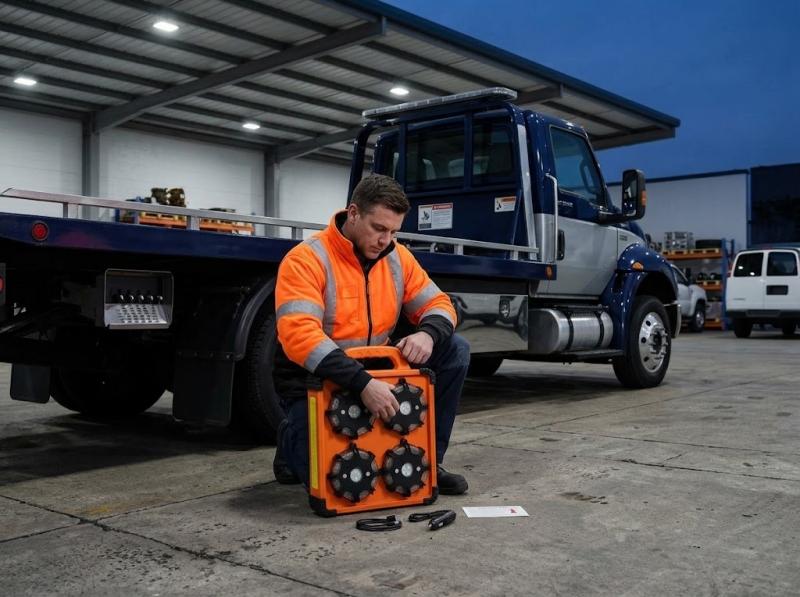
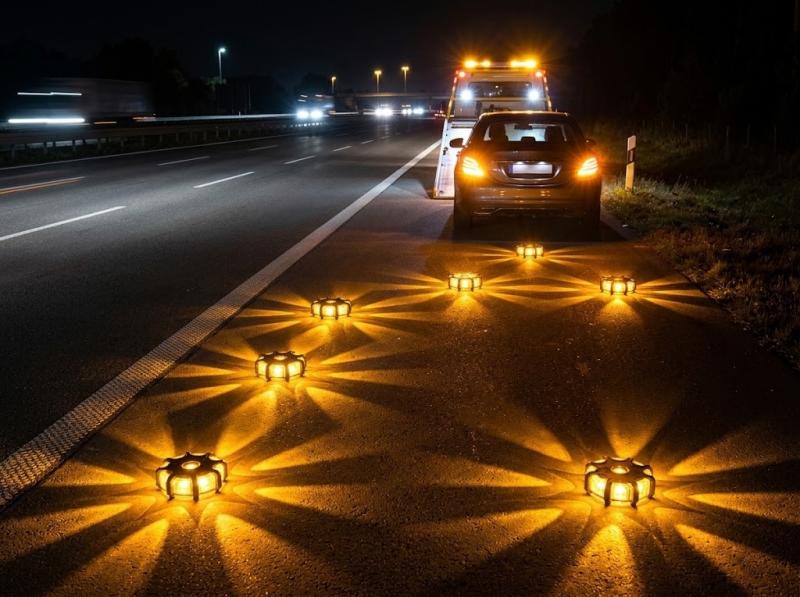
Rechargeable LED road flares can provide multiple warning points without requiring each unit to be permanently wired into the vehicle.
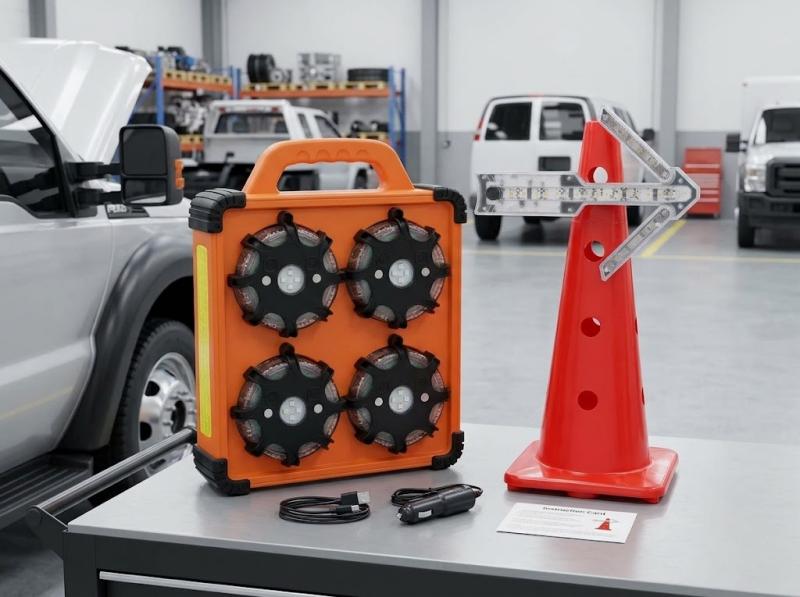
For example, the 6-Pack Rechargeable Sequential LED Road Flares are designed for truck and fleet emergency applications. The product page describes magnetic mounting, rechargeable operation, multiple flashing modes, and wireless synchronization.
For fleet buyers, a multi-unit kit can make it easier to standardize equipment storage and evaluate how warning devices are deployed across vehicles.
Before purchasing, confirm the operating time under the intended flash mode, charging arrangements, storage requirements, and the product's suitability for the target application.
2. Traffic Diversion and Directional Guidance
Some roadside jobs require more than marking a hazard. Drivers may also need a clear visual indication of where to proceed.
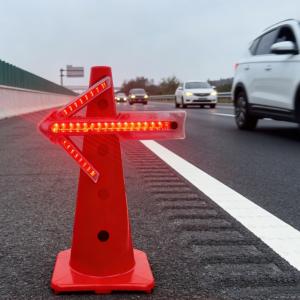
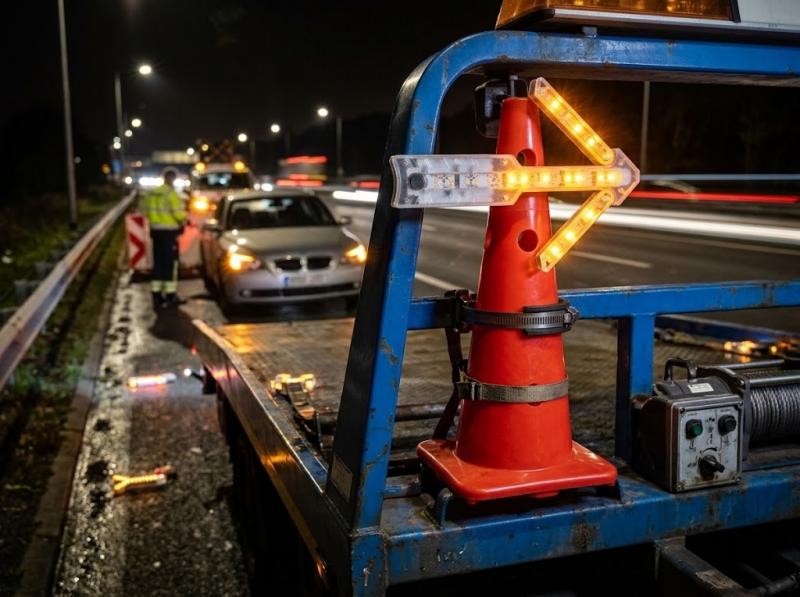
An LED arrow warning light can help communicate directional guidance during temporary traffic control, roadside maintenance, or recovery operations where the device and its use are appropriate.
The Rechargeable LED Arrow Traffic Warning Light features a foldable design, rechargeable power, magnetic mounting, and accessories for cone mounting. Its product page describes multiple lighting modes for directional warning applications.
When evaluating an arrow light, buyers should check:
-
Whether the arrow remains clear from the intended viewing direction.
-
Whether the mounting method suits the vehicle or temporary work area.
-
Whether the available lighting modes fit the intended task.
-
Whether charging and storage are practical for routine fleet use.
-
Whether the device is suitable for the target market's regulations and operating procedures.
A directional warning device should not be treated as a substitute for a complete traffic management plan.
3. Vehicle Inspection and Recovery Work
Towing operations may involve inspecting tires, connecting equipment, loading a disabled vehicle, or working around recovery hardware.
In these situations, warning lights and work lights serve different purposes. Warning devices help communicate hazards to other road users, while suitable work lights help operators see the task they are performing.
Buyers should assess beam direction, light output, mounting position, power supply, and the potential for glare before selecting a work light.
Where personnel work close to moving traffic, lighting equipment should be used alongside appropriate traffic control, high-visibility clothing, and established roadside safety procedures.
How Should You Evaluate a Tow Truck Lighting Setup?
A practical configuration should be assessed as a system rather than as a collection of individual products.
Use the following checklist when reviewing a proposed setup.
| Evaluation Factor | What Buyers Should Check |
|---|---|
| Visibility coverage | Can the intended warning points be seen from relevant approach directions? |
| Directional signaling | Does the selected device communicate its intended direction clearly? |
| Flash patterns | Are the available modes suitable for the intended application? |
| Mounting stability | Are the mounting method and accessories suitable for the installation? |
| Weather protection | Is the stated IP rating supported by relevant product documentation? |
| Battery performance | Is the runtime sufficient under the intended operating mode? |
| Charging and storage | Can the fleet recharge, store, and inspect the equipment consistently? |
| Product documentation | Are specifications, test records, and applicable compliance documents available? |
| Batch consistency | Can the supplier maintain the approved specification across repeat orders? |
Why Isn't Brightness the Only Buying Factor?
Brightness is important, but a single output figure does not fully describe warning performance.
The practical result also depends on viewing direction, optical design, flash pattern, mounting height, surrounding lighting, weather, and the position of the observer.
For example, a directional warning light must communicate the intended direction, while a roadside flare is generally used to identify a hazard or warning point.
For B2B buyers, sample evaluation should therefore reflect the intended application rather than rely exclusively on catalog images or headline specifications.
Before approving a product, document the agreed specification, required operating modes, mounting arrangement, charging method, and relevant quality checks.
How Can Fleet Managers Standardize Roadside Warning Equipment?
For companies operating multiple tow trucks or service vehicles, a standardized equipment plan can simplify purchasing, inspection, training, and replenishment.
Fleet managers can begin by identifying the most common operating situations and mapping each one to the required equipment category.
| Fleet Operation | Equipment to Evaluate | Procurement Priority |
|---|---|---|
| Truck breakdown response | Rechargeable LED road flares | Deployment, charging, storage, warning coverage |
| Roadside recovery | Road flares and suitable directional warning equipment | Hazard marking, directional guidance, mounting |
| Temporary maintenance work | Suitable arrow lights and other warning devices | Work-zone layout, visibility, regulatory requirements |
| Vehicle inspection | Appropriate work lights and warning equipment | Task illumination, power supply, glare control |
| Multi-vehicle fleet operations | Standardized warning kits | Consistent specifications, inventory, repeat ordering |
This is a planning framework, not a universal deployment prescription. Actual equipment requirements depend on the vehicle, road conditions, work procedures, and local rules.
For a broader selection framework covering mounting positions, operating environments, and fleet procurement, read our guide: How to Choose LED Warning Lights for Fleet Vehicles.
What Should B2B Buyers Ask a Tow Truck Lighting Supplier?
A suitable product is only one part of a successful bulk purchase. Buyers should also evaluate whether the supplier can support repeat orders and provide the information needed for product approval.
Before placing an order, ask the supplier:
-
Can you provide a complete specification sheet for each proposed model?
-
What are the charging method and operating time under each relevant mode?
-
Which mounting accessories are included, and which are optional?
-
What product test reports and market-specific compliance documents are available?
-
What are the minimum order quantity, sample arrangements, and lead time?
-
Can the logo, packaging, or other agreed product details be customized?
-
How are product specifications and quality checked before shipment?
-
Can the approved sample and production specification be maintained across repeat orders?
Certification and compliance requirements vary by product and market. Buyers should verify the actual documents and their scope rather than assume that one certificate establishes suitability for every application.
For distributors and fleet procurement teams, a documented specification and a repeatable inspection process can make supplier comparisons more meaningful than unit price alone.
Frequently Asked Questions
What lighting equipment should a tow truck carry for night towing?
The appropriate setup depends on the work performed. Buyers may evaluate vehicle-mounted warning lights, rechargeable LED road flares, directional arrow lights, work lights, and personnel visibility equipment. The final selection should follow the operating procedure and applicable local requirements.
What is the difference between an LED arrow light and an LED road flare?
An LED arrow light is designed to communicate directional guidance. An LED road flare is generally used to mark a hazard or warning point. They perform different functions and may complement each other in suitable roadside applications.
Are rechargeable LED road flares suitable for fleet vehicles?
They can be considered for fleets that need portable, reusable warning devices. Buyers should check battery runtime, charging arrangements, mounting options, storage, product documentation, and the requirements of the intended application before purchasing.
What should buyers check before ordering warning lights in bulk?
Confirm the product specification, operating modes, mounting accessories, charging requirements, applicable test documents, MOQ, lead time, packaging, and quality inspection process. Requesting samples before approving a bulk order can help buyers evaluate product suitability.
Can tow truck warning lights be customized for distributors?
Customization depends on the model and the supplier's capabilities. Buyers should confirm available options for logo printing, packaging, light colors, operating modes, and accessories, along with any MOQ or lead-time implications.
Conclusion: Build a Tow Truck Lighting Setup Around the Job
A practical tow truck lighting setup should address the actual needs of roadside recovery rather than rely on one powerful light. Hazard marking, directional guidance, task illumination, and vehicle visibility are separate functions that should be evaluated together.
For towing companies, fleet managers, and safety equipment distributors, the next step is to identify the common operating scenarios, define the required equipment specifications, and verify the suitability of each product before bulk purchasing.
Superflare offers rechargeable LED road flares and a foldable LED arrow warning light for buyers evaluating roadside warning equipment. Review the 6-Pack Rechargeable LED Road Flares and the Rechargeable LED Arrow Traffic Warning Light to compare their intended functions and available configurations.
Planning a warning equipment package for your fleet or distribution business? Contact Superflare through the relevant product page to discuss your application, target market, quantity requirements, and product documentation needs before requesting a quotation.