Arrow Light vs Traffic Cone Light: Differences & Uses
Arrow Light vs Traffic Cone Light: When Should You Use Each?
Choosing the right warning light is an important decision for road safety distributors, traffic equipment wholesalers, construction suppliers, and fleet management companies.
Among portable LED warning devices, Arrow Lights and Traffic Cone Lights serve two different but complementary purposes. Both improve visibility around roadside hazards and work zones, but they communicate different types of safety information.
An Arrow Light helps communicate direction and alert approaching drivers to potential traffic movement changes. A Traffic Cone Light makes cones, work-zone boundaries, and roadside hazards more visible, especially in low-light conditions.
So, which product should you choose for your market? Should you stock one or both?
This guide explains their differences, applications, advantages, and key purchasing considerations to help B2B buyers select the right products for their customers.
1. Understanding the Difference Between Arrow Light and Traffic Cone Light
Before comparing specifications, it is important to understand the primary function of each product.
What Is an LED Arrow Light?
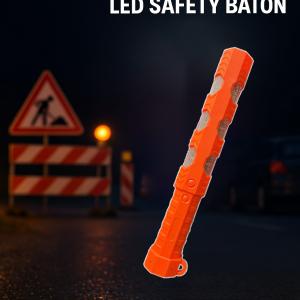
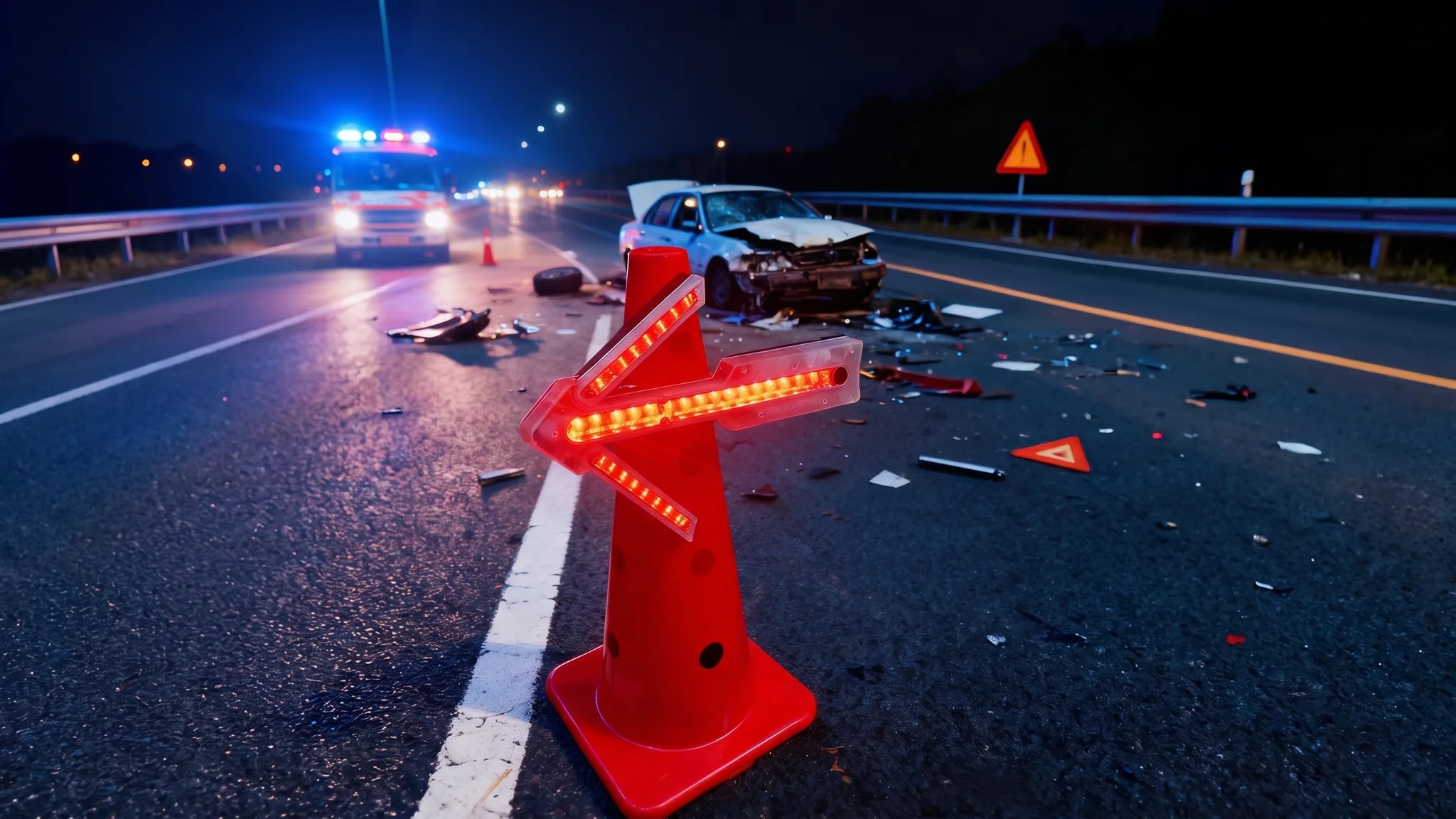
An LED Arrow Light is a portable directional warning device designed to attract drivers' attention and communicate directional or caution information.
It is particularly useful in temporary roadside situations where workers need to warn approaching vehicles or provide additional visual guidance.
Key Features:
-
Directional arrow and multiple flashing modes.
-
High-visibility LED warning signals.
-
Portable and easy-to-deploy design.
-
Magnetic mounting for flexible positioning.
-
Rechargeable battery for repeated use.
-
Suitable for roadside maintenance, vehicle breakdowns, and temporary work areas.
For distributors and wholesalers, portable Arrow Lights are attractive products because they offer flexibility across different roadside applications.
LED Arrow Warning Light Wholesale | 4-Mode OEM Supplier
What Is an LED Traffic Cone Light?
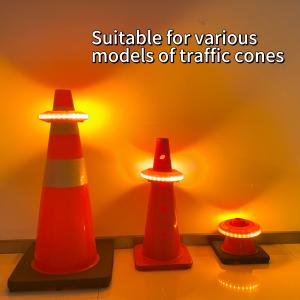
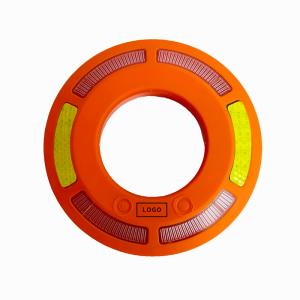
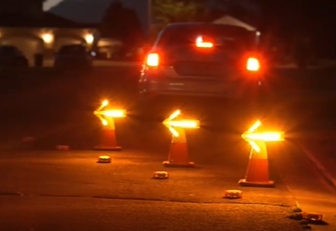
An LED Traffic Cone Light is a warning light designed to be installed on top of a traffic cone.
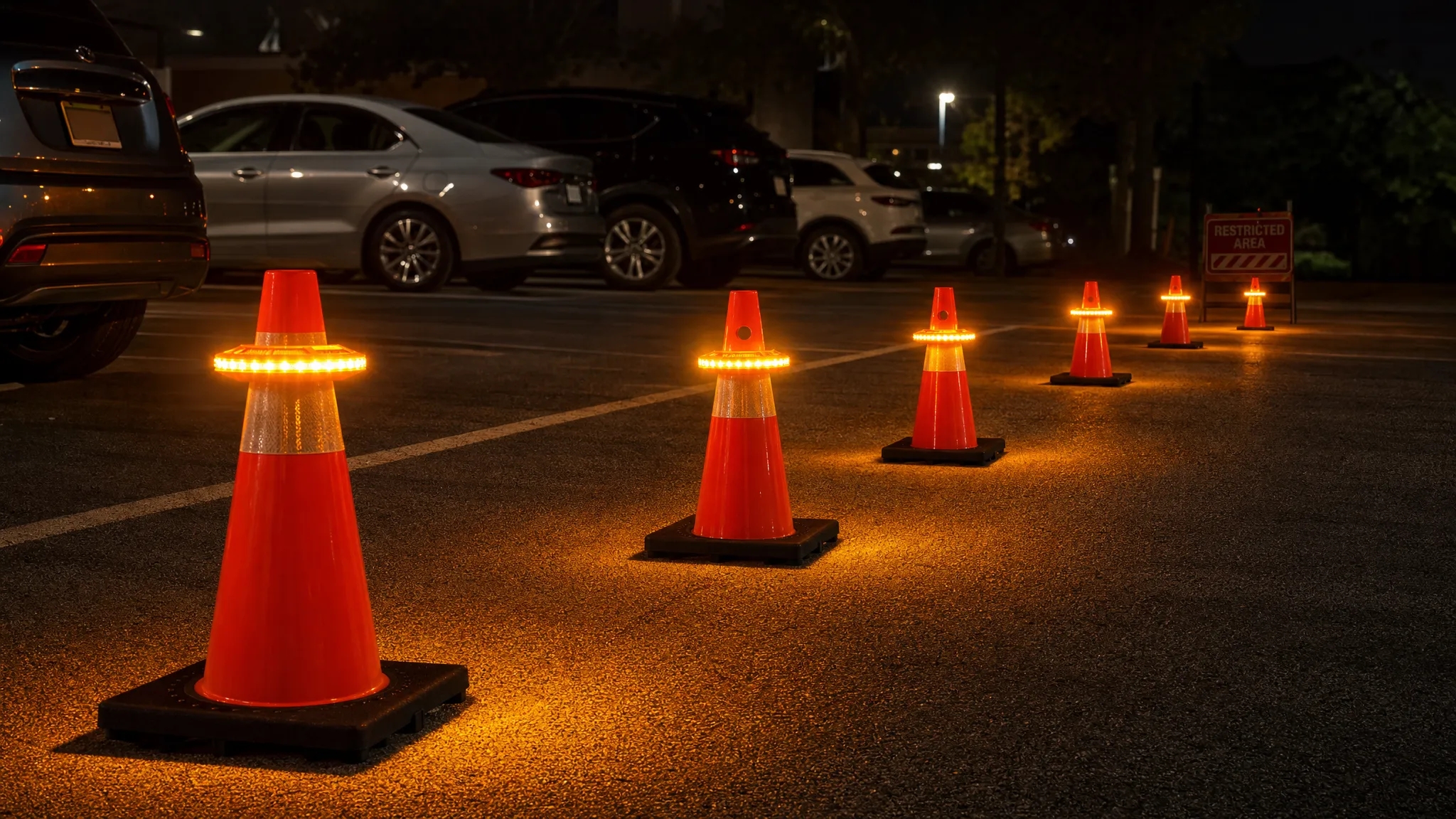
Its main purpose is to improve the visibility of traffic cones and clearly mark temporary work areas, road hazards, and restricted zones.
Unlike directional warning devices, cone lights primarily provide visual hazard identification rather than directional instructions.
Key Features:
-
360-degree visibility, depending on product design.
-
Multiple flashing and warning modes.
-
Compact structure for easy installation.
-
Rechargeable battery.
-
Magnetic or mechanical mounting options, depending on the model.
-
Available in different colors and kit configurations.
For traffic safety suppliers, cone lights are practical additions to existing traffic cone and roadwork equipment product lines.
LED Traffic Cone Lights 8-Pack | Factory Direct OEM
2. Arrow Light vs Traffic Cone Light: Key Differences
Although both products use LED technology to improve roadside visibility, their functions and deployment methods are different.
| Comparison | LED Arrow Light | LED Traffic Cone Light |
|---|---|---|
| Primary Function | Directional warning and visual guidance | Hazard visibility and work-zone marking |
| Main Application | Roadside incidents and temporary traffic guidance | Construction zones and traffic control areas |
| Installation | Magnetic mounting or compatible brackets | Mounted on top of traffic cones |
| Light Display | Arrow patterns and flashing modes | Flashing and warning patterns |
| Deployment | Flexible positioning | Installed along cone layouts |
| Main Advantage | Communicates directional information | Makes work-zone boundaries more visible |
| Typical Buyers | Towing companies, fleet operators, road service suppliers | Construction suppliers, traffic safety distributors |
The key difference: Arrow Lights focus on communicating warning and directional information, while Traffic Cone Lights focus on making the location and boundaries of hazards more visible.
Neither product automatically replaces legally required traffic-control equipment. Buyers should verify local traffic regulations and approved equipment requirements before selecting products for regulated roadwork applications.
3. When Should You Choose an Arrow Light?
An Arrow Light is a suitable choice when the main requirement is flexible warning and directional communication.
Here are four common application scenarios.
Scenario 1: Vehicle Breakdowns and Roadside Emergencies
When a vehicle breaks down on a roadside, drivers approaching from behind need to recognize the potential hazard.
A portable Arrow Light can provide additional visual warning and directional information when appropriately positioned.
Why choose it?
-
Quick deployment during emergency situations.
-
Flexible mounting on compatible vehicle surfaces.
-
Easy to store inside service vehicles.
-
Rechargeable for repeated roadside operations.
Scenario 2: Road Maintenance and Temporary Work Areas
Road maintenance teams frequently work in changing environments. They may need to reposition warning equipment as work progresses.
A portable Arrow Light provides a flexible warning option without requiring a large permanent installation.
Scenario 3: Towing and Recovery Operations
Towing professionals often work near moving traffic, particularly on highways and busy roads.
A portable warning light with directional display functions can supplement their existing warning equipment and improve the visibility of roadside operations.
Scenario 4: Fleet and Utility Vehicle Operations
Fleet maintenance, utility services, and roadside assistance teams need warning equipment that can be transported between vehicles and work locations.
Portable Arrow Lights are worth considering when flexibility, convenient storage, and quick deployment are purchasing priorities.
4. When Should You Choose a Traffic Cone Light?
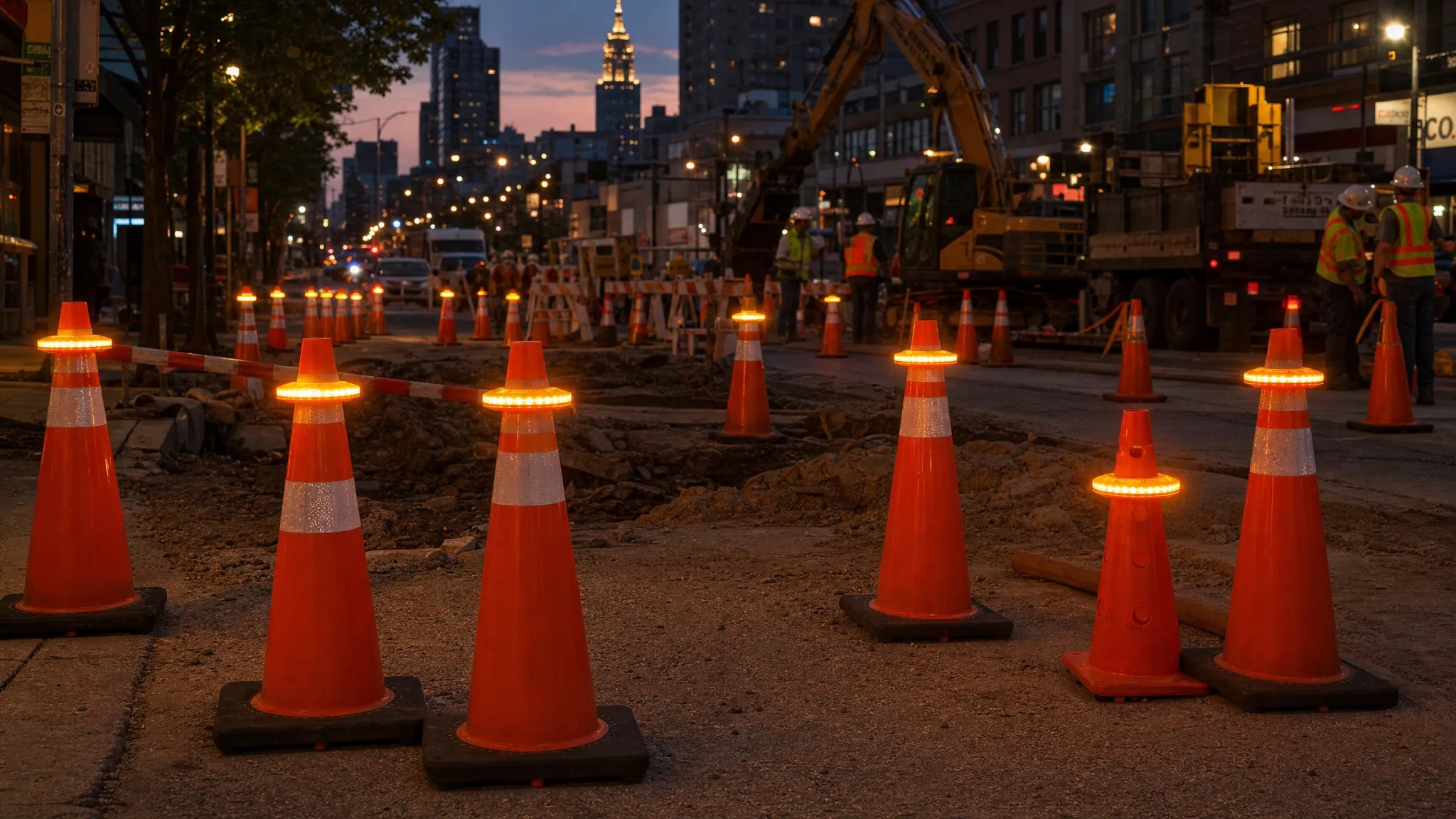
If the primary objective is to make traffic cones and temporary work-zone boundaries more visible, Traffic Cone Lights are generally the more appropriate choice.
Scenario 1: Road Construction and Maintenance
Construction workers use traffic cones to separate work areas from moving traffic.
Adding LED lights to the cones can improve their visibility, particularly at night, during poor weather, or in low-light environments.
Why choose it?
-
Improves the visibility of individual cones.
-
Helps identify work-zone boundaries.
-
Can be deployed across multiple cones.
-
Supports repeated use across different projects.
Scenario 2: Highway and Lane Closure Support
Temporary lane closures require clear visual indications of restricted areas.
Cone-mounted warning lights can supplement traffic cones and other appropriate traffic-control devices, helping approaching drivers identify the temporary work-zone layout.
Scenario 3: Nighttime Roadside Maintenance
Visibility becomes especially important when maintenance teams operate after dark.
LED cone lights can make the positions of traffic cones easier to identify and help distinguish the work area from the surrounding roadway.
Scenario 4: Event Management and Temporary Restricted Areas
Traffic Cone Lights can also be considered for parking management, event organization, temporary access restrictions, and other applications where illuminated boundary markers are useful.
5. Can You Use Arrow Lights and Traffic Cone Lights Together?
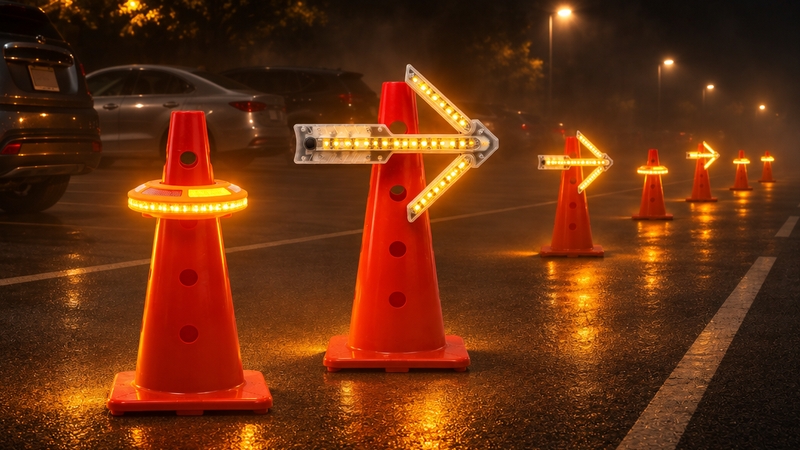
Absolutely. In many roadside applications, combining the two products creates a more complete warning setup.
Consider a typical roadside maintenance operation:
-
Arrow Light: Provides additional directional warning to approaching drivers.
-
Traffic Cone Lights: Improve the visibility of individual cones and help identify the work-zone boundaries.
-
Traffic Cones: Establish the physical layout of the temporary work area.
Together, these products support different functions within the same roadside safety setup.
For B2B buyers, this also creates an opportunity to develop product bundles instead of selling individual warning lights separately.
For example:
Roadside Safety Equipment Kit
-
1 Portable LED Arrow Light
-
4 or 6 LED Traffic Cone Ring Lights
-
Compatible mounting accessories
-
Charging case or charging accessories, depending on configuration
This type of combination can be attractive to towing suppliers, roadside assistance companies, fleet operators, and traffic safety equipment distributors.
The final configuration should always be matched to the actual application and local traffic-control requirements.
6. How Should Distributors Choose the Right Product?
For importers, wholesalers, and distributors, product selection should go beyond comparing prices and LED quantities.
Consider the following five factors before placing an order.
1. Identify Your Target Customers
Different customer groups have different purchasing requirements.
| Target Customer | Recommended Product |
|---|---|
| Towing and roadside assistance companies | Arrow Lights |
| Road construction equipment distributors | Traffic Cone Lights |
| Traffic safety equipment wholesalers | Both |
| Fleet maintenance suppliers | Arrow Lights and selected cone light kits |
| Event and parking management suppliers | Traffic Cone Lights |
2. Consider the Main Application
Ask yourself:
-
Do customers need directional warning?
-
Do they need to identify roadside hazards?
-
Do they need to illuminate multiple traffic cones?
-
Do they need equipment that can be quickly moved between locations?
The answers will help determine which product category deserves priority.
3. Check the Product Specifications
Before selecting a supplier, compare important technical parameters.
| Specification | Arrow Light | Traffic Cone Light |
|---|---|---|
| LED Configuration | Check LED quantity and arrangement | Check LED quantity and light distribution |
| Lighting Modes | Check arrow and flashing functions | Check available warning modes |
| Battery Capacity | Check capacity and runtime | Check capacity and runtime |
| Charging Method | USB or Type-C, depending on model | USB or Type-C, depending on model |
| Mounting Method | Magnets and compatible mounting accessories | Cone-compatible mounting structure |
| Waterproof Rating | Verify tested IP rating | Verify tested IP rating |
| Packaging | Single unit or multi-unit kit | Single unit or multi-unit kit |
Do not evaluate products based on brightness claims alone. Battery performance, visibility, durability, mounting stability, and ease of operation are also important.
4. Evaluate Portability and Storage
For professional users, convenient storage and deployment can make a significant difference.
A folding Arrow Light with magnetic mounting can be useful for service vehicles with limited storage space.
For Traffic Cone Lights, multi-unit charging cases can simplify transportation, charging, and storage when customers need to deploy several lights together.
5. Check Customization and OEM/ODM Capability
For distributors building their own brands, supplier flexibility is another important purchasing consideration.
Look for manufacturers that can support:
-
Custom logo printing.
-
Private-label packaging.
-
Different light colors and functions.
-
Customized kit quantities.
-
Battery and charging configurations.
-
Product appearance and structural customization.
A supplier with manufacturing and OEM/ODM capabilities can help buyers develop products that better match their target markets.
7. Why Source Arrow Lights and Traffic Cone Lights from a Professional Manufacturer?
Choosing the right product is only the first step. Choosing a reliable manufacturer is equally important.
At Superflare, we focus on portable LED warning lights and roadside safety solutions for international B2B customers.
Our product range includes portable LED Arrow Lights and Traffic Cone Ring Lights designed for different roadside and work-zone applications.
We understand that different distributors have different market requirements. Therefore, we support product selection and customization based on your business needs.
Our manufacturing and OEM/ODM capabilities include:
-
Multiple product configurations and kit options.
-
Custom logo and private-label solutions.
-
Flexible packaging options.
-
Different lighting colors and functions.
-
Product customization for different applications.
-
Support for distributors, importers, wholesalers, and safety brands.
Whether you are expanding your existing traffic safety product range or developing a new roadside safety collection, selecting the right combination of warning products can help you serve more customer needs.
8. Frequently Asked Questions
Q1: What is the main difference between an Arrow Light and a Traffic Cone Light?
An Arrow Light provides directional warning and visual guidance, while a Traffic Cone Light improves the visibility of traffic cones and helps mark temporary work areas.
Q2: Which product is better for nighttime roadwork?
Both can be useful. Arrow Lights provide additional warning information, while Traffic Cone Lights help identify the positions of cones and work-zone boundaries. The appropriate combination depends on the worksite and its traffic-control plan.
Q3: Can an Arrow Light be mounted on a vehicle?
Portable Arrow Lights with compatible magnetic mounting systems can be positioned on suitable metal vehicle surfaces. Always check the mounting design and installation instructions of the specific model.
Q4: Can Traffic Cone Lights fit different types of traffic cones?
Compatibility depends on the mounting structure and cone dimensions. Buyers should confirm the product's mounting specifications before purchasing in bulk.
Q5: Should distributors purchase Arrow Lights and Traffic Cone Lights together?
If your customers include road maintenance teams, towing companies, construction contractors, or fleet operators, offering both categories can help expand your product range and provide more complete roadside safety solutions.
Q6: Can I customize Arrow Lights and Traffic Cone Lights with my own brand?
Yes. Depending on the product model and order requirements, OEM/ODM options may include logo printing, packaging, lighting functions, colors, and kit configurations.
Conclusion: Choose the Right Warning Light for the Right Application
Arrow Lights and Traffic Cone Lights are not competing products. They serve different purposes within roadside safety operations.
Choose an Arrow Light when directional warning, portability, and flexible deployment are the main priorities.
Choose a Traffic Cone Light when improving cone visibility and identifying work-zone boundaries are more important.
Choose both when your customers need a more comprehensive roadside warning equipment selection.
For distributors and wholesalers, understanding these differences is the first step toward building a more competitive traffic safety product portfolio.
Looking for a reliable manufacturer of LED Arrow Lights and Traffic Cone Lights?
Contact Superflare to discuss your product requirements, bulk orders, and OEM/ODM customization options.
Visit: https://www.superflare.net/
Related News