LED Road Flare Buying Guide: Types, Features & B2B Selection
LED Road Flare: Types, Uses and What B2B Buyers Should Evaluate
A LED road flare provides a reusable way to mark vehicles, roadside hazards, work zones, and emergency areas without relying on traditional disposable flares. For B2B buyers, the right LED road flare should be evaluated beyond brightness. Battery runtime, deployment method, waterproofing, mounting options, synchronization, charging, packaging, documentation, and customization can all affect the value of a complete warning solution.
For fleet operators, roadside assistance companies, traffic management teams, wholesalers, and private-label brands, choosing the right LED road flare also means matching the product configuration to the intended application and sales channel.
Quick answer: The best LED road flare for B2B applications should combine high visibility, reliable runtime, fast deployment, weather resistance, practical mounting options, and a configuration that fits the buyer's operational or resale requirements.
Jump to
- What Is a LED Road Flare?
- What Are the Different Types of Road Flares?
- Why Choose a Rechargeable LED Road Flare?
- How Should B2B Buyers Choose a LED Road Flare?
- How Should You Configure a LED Road Flare Kit?
- What Should Buyers Check Before Bulk Ordering?
- Frequently Asked Questions
What Is a LED Road Flare?
A LED road flare is an electronic warning light designed to improve visibility around vehicles, roadside incidents, temporary hazards, and work areas.
Unlike traditional road flares that use a consumable flame, LED road flares can be designed for repeated deployment. Depending on the product, they may use rechargeable batteries, magnetic mounting, multiple flash patterns, weather-resistant housings, and carrying or charging cases.
For B2B applications, an LED road flare is often more than a single warning light. A complete solution may include:
- Multiple LED road flare units
- A rechargeable charging case
- Magnetic mounting
- Multiple flashing modes
- Wireless synchronization
- Carrying and storage accessories
- Product manuals and warning labels
- Retail or private-label packaging
The configuration should be selected according to how and where the warning lights will be deployed.
For example, an emergency roadside team may need compact warning lights that can be placed directly on the ground or attached magnetically to a vehicle. A road construction contractor may instead need warning lights that work together with traffic cones to create a clearly defined work zone.
What Are the Different Types of Road Flares?
Road flares can generally be divided into traditional disposable flares and electronic LED road flares. Within the LED category, different form factors and configurations are available for different applications.
Traditional Road Flares
Traditional road flares use a flame or pyrotechnic composition to produce a visible warning signal. They are consumable and require replacement after use.
Their main limitation for repeated fleet or professional deployment is that each use consumes the flare.
LED Road Flares
LED road flares use electronic light sources instead of an open flame. Rechargeable models can be deployed repeatedly after charging.
Typical features may include:
- Rechargeable batteries
- Multiple flash modes
- Magnetic mounting
- Waterproof construction
- Compact storage
- Carrying or charging cases
For organizations that regularly deploy roadside warning equipment, reusability can make LED road flares easier to manage as part of a long-term safety equipment program.
Sequential or Synchronized LED Road Flares
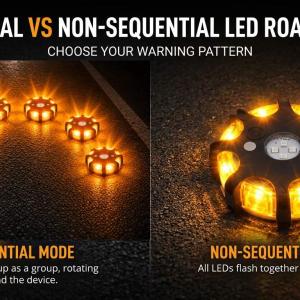
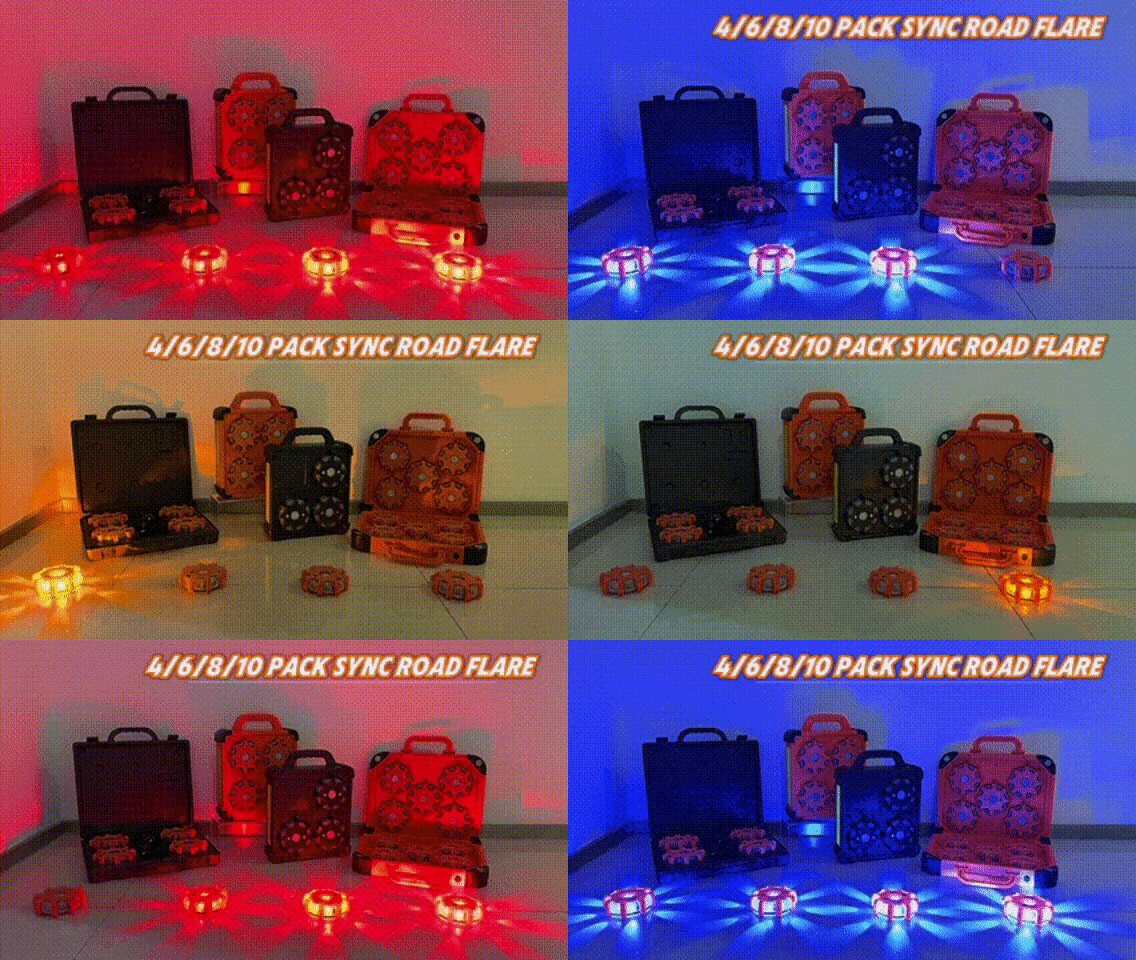
Some professional LED road flare systems use multiple units that synchronize wirelessly.
For example, Superflare's HL75011 8-pack LED road flare uses wireless synchronization within a 10-meter range. The eight units can be deployed together to create a coordinated warning pattern rather than operating as isolated lights. The product uses a rechargeable 3.7V 3000mAh battery and provides up to 60 hours of battery life depending on flashing mode. :contentReference[oaicite:1]{index=1}
For applications that require multiple warning points, synchronized LED road flares can make the deployment pattern easier for approaching drivers to recognize.
Learn more about the 8-Pack Rechargeable Auto-Sync LED Road Flare

Note: Product specifications and available configurations can vary by model. Buyers should confirm the exact product specification before placing a bulk order.
Why Choose a Rechargeable LED Road Flare?
For professional users, the value of a rechargeable LED road flare is not simply that it produces a bright warning signal. Reusability, deployment speed, storage, and operating cost can also influence the total value of the solution.
Reusable Deployment
A rechargeable LED road flare can be used repeatedly after charging, making it suitable for fleet operators, emergency response teams, roadside assistance providers, and traffic management applications.
Fast Deployment
Roadside incidents often require warning equipment to be deployed quickly.
A compact LED road flare can be positioned directly around a vehicle or hazard without requiring a complex setup process.
For fleet teams that need a repeatable deployment procedure, see our guide:
Road Flare Deployment SOP for Fleet Management
Multiple Warning Points
A multi-pack allows users to establish a visible warning perimeter rather than relying on one light.
For example, an 8-pack can be positioned around a disabled vehicle, temporary road hazard, or work area to create multiple warning points.
Weather Resistance
Outdoor warning equipment may be exposed to rain, wet roads, and changing weather conditions.
For example, the HL75011 LED road flare is rated IPX7 and uses an ABS + TPR construction. The product is also specified with crush resistance of up to 3 tons. :contentReference[oaicite:2]{index=2}
Magnetic Mounting
Magnetic mounting provides another deployment option when a warning light needs to be attached to a metal vehicle surface.
The HL75011 can be placed directly on the ground or magnetically mounted to a vehicle, giving users more flexibility during roadside emergencies.
How Should B2B Buyers Choose a LED Road Flare?
When purchasing LED road flares for professional use, buyers should evaluate the complete deployment solution rather than comparing unit price or LED count alone.
The following factors are especially important.
1. Visibility and Flash Pattern
The purpose of a road flare is to attract attention and communicate the presence of a vehicle, hazard, or controlled area.
Instead of looking only at LED quantity, buyers should evaluate:
- Flash pattern
- Viewing angle
- Light color
- Deployment distance
- Number of warning points
- Synchronized operation
For multi-light systems, synchronized flashing can help create a more consistent warning pattern.
The HL75011, for example, supports six flashing modes and wireless synchronization between units within 10 meters.
2. Battery Runtime
Battery runtime directly affects how long a warning system can remain deployed.
For professional buyers, ask:
- How long does the battery last?
- Under which flashing mode?
- How long does charging take?
- Is the battery rechargeable?
- Does the charging case recharge multiple units?
- Is the battery documentation available?
The HL75011 uses a 3.7V 3000mAh lithium battery and provides up to 60 hours of battery life depending on the flashing mode. Its charging case supports AC 100–240V / DC input.
Runtime should always be compared under the same operating mode because different flash patterns can produce different battery performance.
3. Waterproofing and Outdoor Durability
Roadside warning lights are often used outdoors, so weather resistance is an important procurement factor.
Buyers should check:
- IP rating
- Housing material
- Impact resistance
- Crush resistance
- Charging protection
- Temperature requirements where applicable
For example, the HL75011 is specified with IPX7 waterproofing and crush resistance of up to 3 tons.
However, buyers should always verify the exact rating and testing documentation for the model being purchased.
4. Mounting Options
Different roadside situations require different deployment methods.
Useful mounting options may include:
- Ground placement
- Magnetic mounting
- Hook mounting
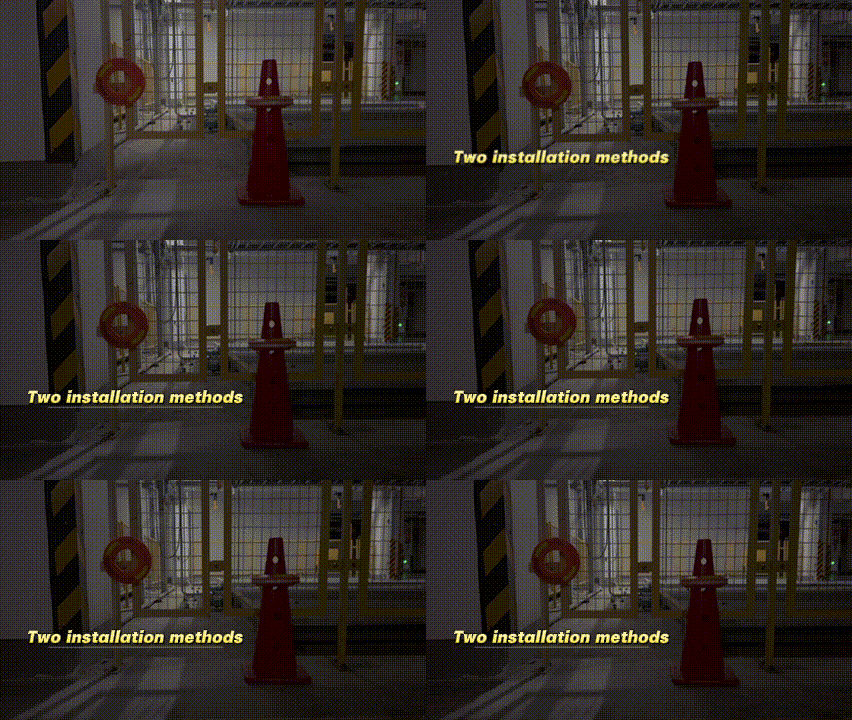
- Cone mounting
- Vehicle mounting
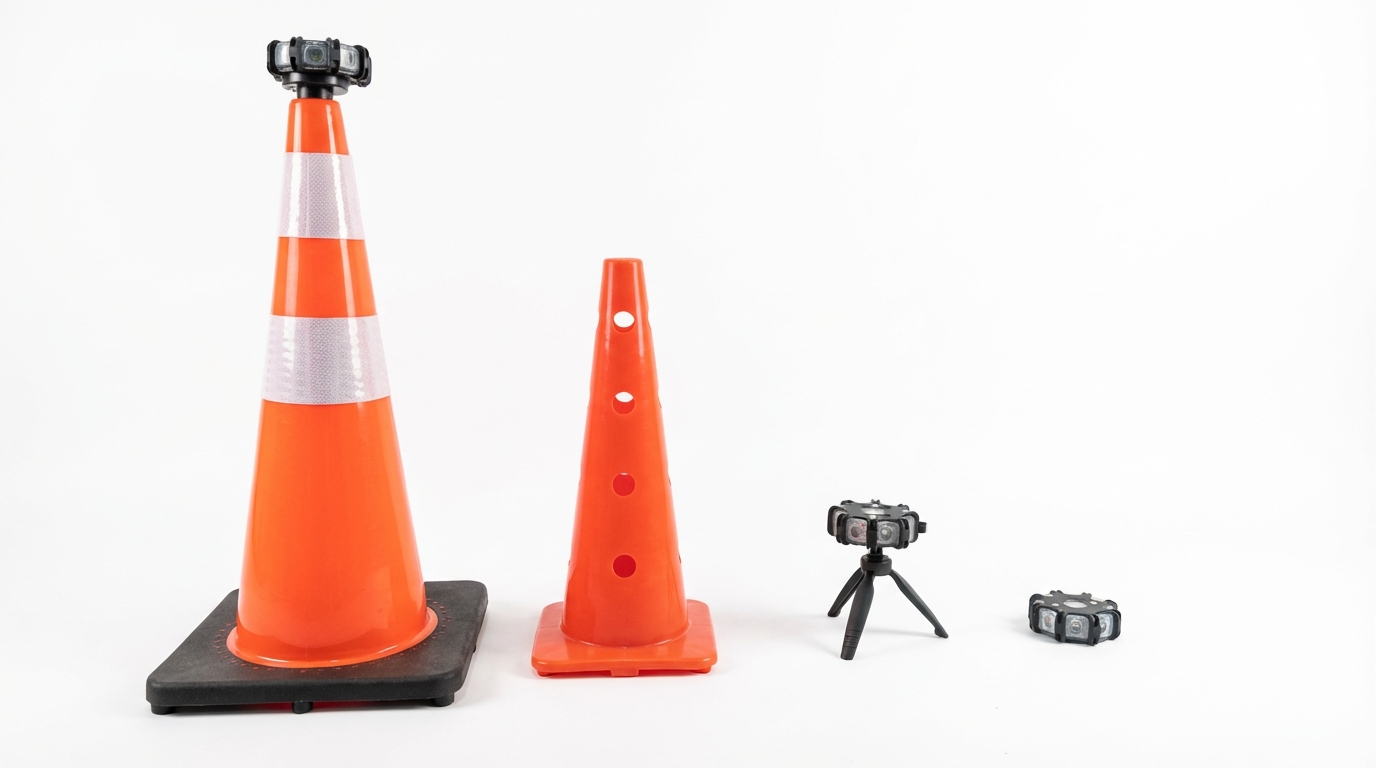
A standalone LED road flare is particularly useful when traffic cones are not available.
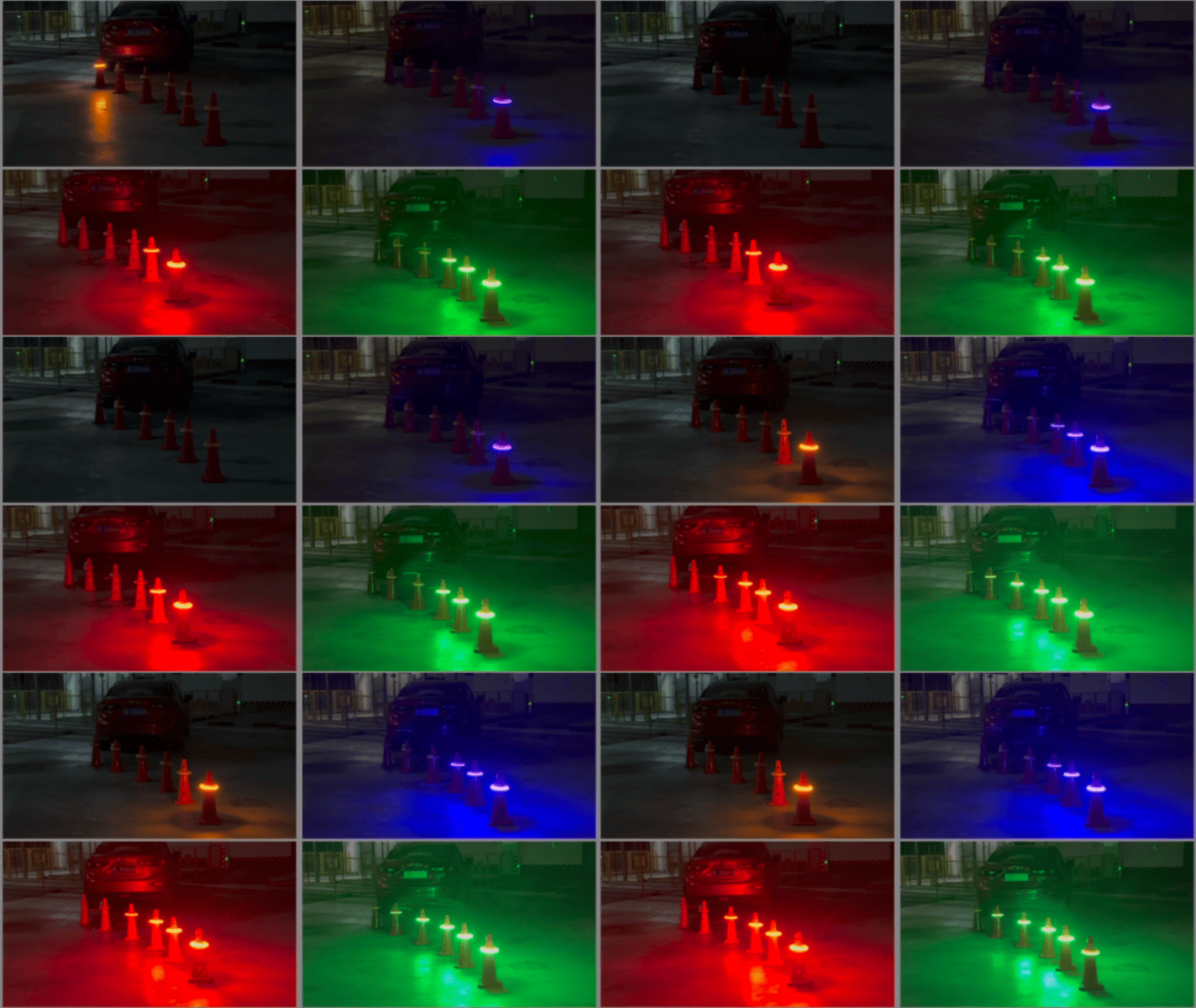
For construction and traffic management, a cone-mounted warning light may provide a better solution.
See the Rechargeable LED Traffic Cone Light 8-Pack
The HL76907B traffic cone light is designed to sit directly on traffic cones and can also be magnetically mounted to metal vehicle surfaces. It provides 360° illumination, wireless synchronization within 10 meters, and up to 50 hours of battery life depending on operating mode.
5. Deployment Method
The physical form of the warning light should match the deployment scenario.
| Application | Recommended Configuration |
|---|---|
| Vehicle breakdown | Standalone LED road flare |
| Roadside emergency | Magnetic or ground-deployed LED road flare |
| Traffic control | Multiple synchronized warning lights |
| Construction zone | Cone-mounted warning lights |
| Fleet safety | Rechargeable multi-pack |
| Private-label resale | Branded kit with custom packaging |
A common mistake is selecting the light first and considering deployment later.
For professional procurement, it is more effective to start with the scenario and then determine the appropriate warning-light configuration.
6. Charging and Storage
For a multi-light kit, the charging solution can be just as important as the lights themselves.
A professional charging case can help users:
- Store multiple lights together
- Reduce misplaced units
- Recharge the equipment after deployment
- Transport the complete kit
- Simplify fleet equipment management
The HL75011 8-pack includes eight LED road flare units and a rechargeable suitcase charging case. Returning the units to the case automatically switches them off and starts charging.
7. Customization and Private Label
B2B buyers may require different branding or product configurations depending on their market.
Common customization options include:
- Logo printing
- Shell color
- Light color
- Flash mode programming
- Custom packaging
- Product manuals
- Barcode labels
- Battery capacity
- Kit quantity
For the HL75011, free logo printing is available from 50 sets, while OEM/ODM customization is available from 200 sets according to the current product specification.
How Should You Configure a LED Road Flare Kit?
There is no single configuration that works for every buyer.
The right kit quantity depends on the intended deployment pattern, sales channel, and target price.
Single LED Road Flare
A single unit can be useful for:
- Individual vehicle emergency use
- Backup warning equipment
- Service vehicles
- Small roadside incidents
The main advantage is compact storage and a lower entry cost.
3-Pack LED Road Flare
A 3-pack can provide several warning points around a vehicle or hazard.
This configuration can be suitable when buyers need more coverage than a single warning light but do not require a large multi-unit system.
6-Pack LED Road Flare
A 6-pack can provide additional flexibility for:
- Fleet vehicles
- Roadside assistance
- Temporary traffic control
- Work areas
It can also provide more positioning options around a vehicle or hazard.
8-Pack LED Road Flare
An 8-pack is suitable when multiple synchronized warning points are required.
For example, Superflare's HL75011 contains eight LED road flare units and one rechargeable charging case. The units support wireless synchronization within 10 meters and can be deployed as a coordinated warning group. :contentReference[oaicite:10]{index=10}
This type of configuration can be particularly useful for fleet operators, emergency response teams, traffic departments, and professional roadside safety equipment suppliers.
Custom LED Road Flare Kit
For wholesalers and private-label brands, a custom configuration may be more appropriate.
A customized kit can combine:
- Selected unit quantity
- Specific light colors
- Custom flashing sequences
- Logo printing
- Custom packaging
- User manuals
- Barcode labels
- Customized charging solutions
The key is to define the target application and sales channel before finalizing the kit configuration.
LED Road Flare vs Traffic Cone Warning Light
LED road flares and traffic cone warning lights can both be used for roadside safety, but they are designed for different deployment situations.
| Feature | LED Road Flare | Traffic Cone Warning Light |
|---|---|---|
| Main deployment | Ground / vehicle | Traffic cone / vehicle |
| Typical use | Breakdown and emergency response | Construction and traffic control |
| Cone required | No | Usually yes |
| Magnetic mounting | Model dependent | Available on selected models |
| Warning pattern | Flashing / synchronized | 360° / flashing / synchronized |
| Best for | Mobile roadside warning | Defined work zones |
The choice should be based on the scene rather than simply selecting the product with the highest brightness.
For example, a roadside assistance team may benefit from a standalone LED road flare because it can be deployed immediately around a disabled vehicle.
A construction contractor may prefer cone-mounted warning lights because the cones already define the work-zone boundary.
What Should Buyers Check Before Bulk Ordering?
Before placing a bulk order for LED road flares, B2B buyers should confirm the following points.
1. Target Market
Different markets may have different requirements for product documentation, battery shipping, labeling, and packaging.
Confirm the destination market before finalizing the product specification.
2. Application
Define how the LED road flare will actually be used:
- Roadside emergency
- Fleet safety
- Traffic management
- Construction
- Police and emergency response
- Wholesale distribution
- Private-label resale
The application will determine the most suitable product configuration.
3. Kit Quantity
Decide whether the application requires:
- Single unit
- 3-pack
- 6-pack
- 8-pack
- Custom quantity
For multi-unit systems, also confirm whether synchronization is required.
4. Battery and Charging
Confirm:
- Battery capacity
- Runtime
- Charging method
- Charging time
- Charging case
- Battery documentation
For example, the HL75011 uses a 3.7V 3000mAh lithium battery and offers up to 60 hours of battery life depending on flashing mode. :contentReference[oaicite:11]{index=11}
5. Waterproof and Durability Requirements
Confirm the required IP rating and whether the product has supporting test documentation.
Do not assume that all LED road flares have the same outdoor durability.
6. Packaging
For wholesale or retail sales, packaging can affect the total product cost and resale readiness.
Confirm whether you need:
- Standard packaging
- Color box
- Private-label packaging
- Custom inserts
- User manual
- Barcode
- Warning labels
7. MOQ and Lead Time
MOQ should be evaluated together with customization requirements.
For example, the current HL75011 product configuration lists a standard MOQ of 50 sets, with different customization options available at different order quantities.
Buyers should request a current quotation because pricing and lead time may change according to quantity, customization, packaging, and shipping requirements.
8. Documentation
Before bulk ordering, request the documents applicable to the exact product model and destination market.
Depending on the product and market, buyers may need documentation such as:
- CE
- RoHS
- Battery-related documentation
- Shipping documents
- Product test reports
- Other market-specific compliance documents
Documentation should always be verified against the exact SKU rather than assumed from a similar product.
How Fast Can an LED Road Flare Be Deployed?
Deployment speed matters when warning equipment is needed during a roadside emergency.
A practical deployment procedure should allow users to:
- Remove the warning lights from storage.
- Activate or position the units.
- Place them around the vehicle or hazard.
- Create a clear warning pattern.
- Retrieve and recharge the lights after use.
For fleet operators, creating a repeatable deployment procedure can reduce setup time and make roadside safety practices easier to standardize.
For a detailed procedure, see:
How to Deploy Road Flares in Under 10 Seconds
This type of standardized deployment approach is particularly useful when the same warning equipment is carried across multiple service vehicles.
Frequently Asked Questions
What is a LED road flare?
A LED road flare is a reusable electronic warning light designed for roadside emergencies, vehicle breakdowns, traffic management, construction zones, and other situations where increased visibility is required.
Depending on the model, LED road flares may provide rechargeable batteries, multiple flash modes, magnetic mounting, waterproof construction, and synchronized operation.
Are LED road flares reusable?
Yes. Rechargeable LED road flares can be used repeatedly after charging.
For example, the HL75011 uses a built-in rechargeable lithium battery and includes a rechargeable charging case for its 8-unit configuration.
How long do LED road flares last?
Battery runtime depends on the product and operating mode.
The HL75011 is specified for up to 60 hours of battery life depending on flashing mode. :contentReference[oaicite:14]{index=14}
Buyers should always compare runtime using the same flashing mode when evaluating different products.
Are LED road flares waterproof?
Some LED road flares are designed for outdoor use with a defined IP rating.
For example, the HL75011 is specified with an IPX7 waterproof rating.
However, buyers should verify the actual IP rating and supporting documentation for the exact model before bulk purchase.
Can LED road flares be synchronized?
Some multi-unit LED road flare systems support wireless synchronization.
The HL75011 supports wireless synchronization between units within a 10-meter range, allowing multiple warning lights to operate as a coordinated group.
Can LED road flares be customized?
Yes. Depending on the manufacturer and model, customization may include:
- Logo printing
- Housing color
- Light color
- Flashing modes
- Packaging
- Manuals
- Barcode labels
- Battery capacity
- Kit quantity
For the HL75011, free logo printing is available from 50 sets and OEM/ODM customization is available from 200 sets according to the current product specification. :contentReference[oaicite:17]{index=17}
What should B2B buyers ask before ordering LED road flares?
At minimum, confirm:
- Product model
- Battery capacity
- Runtime
- Flashing modes
- IP rating
- Mounting method
- Synchronization range
- Charging method
- Kit quantity
- Packaging
- MOQ
- Lead time
- Applicable compliance documents
- Customization options
What is the difference between an LED road flare and a traffic cone light?
An LED road flare is typically designed as a standalone warning device that can be placed on the ground or mounted to a vehicle.
A traffic cone light is designed to work with a traffic cone and is better suited to construction zones, lane closures, and defined work areas.
Superflare's HL76907B traffic cone light, for example, is designed for cone-top deployment and also supports magnetic vehicle mounting.
Conclusion
A LED road flare should be evaluated as part of a complete roadside warning solution rather than as a single bright light.
For B2B buyers, the most important factors include: