Road Safety Warning Systems: Types, Uses & Selection Guide
A road safety warning system is not simply a bright flashing light. The right system should help drivers, workers, emergency responders, or pedestrians recognize a hazard, understand the intended direction of movement, and react safely in the available time.
For B2B buyers, choosing the right warning equipment involves more than brightness. The application, viewing angle, mounting method, power source, weather resistance, deployment speed, battery life, synchronization, and procurement requirements all affect whether a warning system will work effectively in the field.
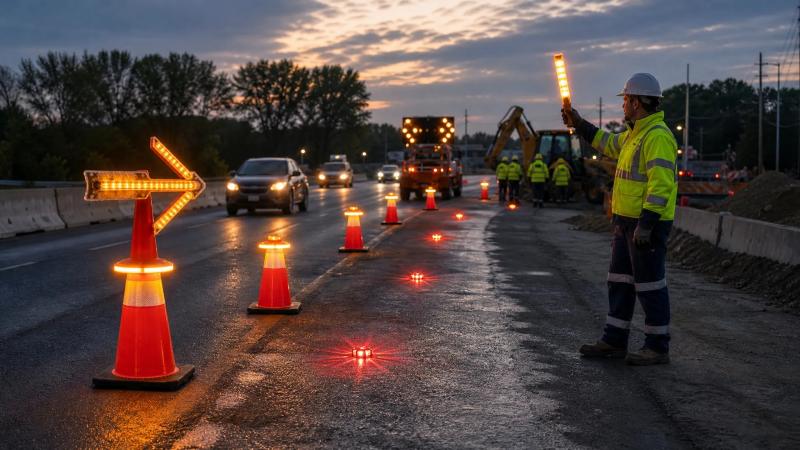
A temporary road construction zone may need illuminated traffic cones and directional arrow lights. A roadside breakdown may require portable magnetic road flares that can be deployed in seconds. A traffic-control team may need a handheld LED traffic baton for directing vehicles or pedestrians.
This guide explains the main types of road safety warning systems, where they are used, and what B2B buyers should evaluate before purchasing in bulk.
Quick answer: The best road safety warning system depends on the scenario. Use cone-mounted lights for marked work zones, portable road flares for roadside hazards and emergency deployment, arrow warning lights for directional guidance, and LED traffic batons for close-range traffic or pedestrian control.
What Is a Road Safety Warning System?
A road safety warning system is a group of visual warning devices used to increase the visibility of hazards, work areas, vehicles, traffic-control points, or emergency incidents.
Depending on the application, a system may include:
- LED warning lights
- Road flares
- Traffic cone lights
- Arrow warning lights
- LED traffic batons
- Reflective traffic equipment
- Vehicle-mounted warning devices
- Portable warning-light kits
- Charging and carrying cases
The important point is that these products perform different functions.
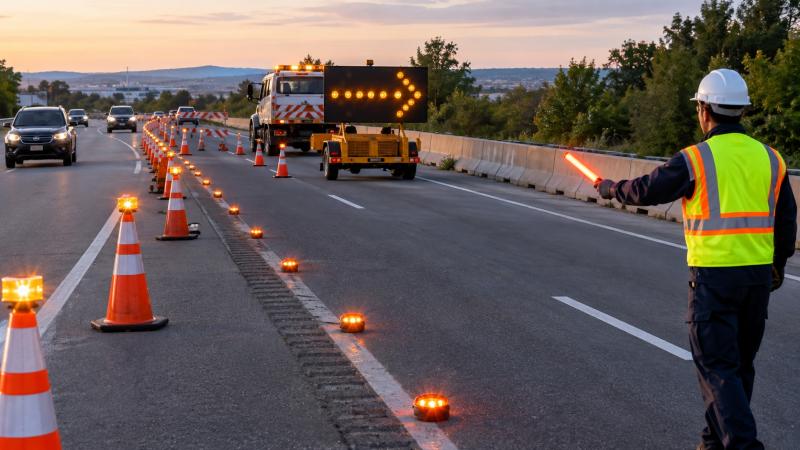
A warning light can make a hazard visible, but it may not tell a driver where to go. An arrow light can provide directional information, while a traffic baton can help a person actively control vehicle or pedestrian movement.
For B2B procurement, the question should therefore be:
What safety action does the equipment need to support?
How Should Buyers Choose a Road Safety Warning System?
Start with the application instead of starting with the product catalog.
A useful selection process should answer five questions:
| Buyer Question | What to Evaluate |
|---|---|
| What needs to be visible? | Vehicle, cone, worker, hazard, road closure or emergency area |
| Where will it be used? | Highway, construction site, parking area, roadside, industrial site |
| What action should drivers take? | Slow down, stop, avoid, merge, follow a direction |
| How quickly must it be deployed? | Seconds, minutes or planned installation |
| How long must it operate? | Short emergency response, full work shift or extended deployment |
This approach helps prevent a common purchasing mistake: selecting equipment because it looks bright in a product photo without considering how it will actually be deployed.
1. Define the warning objective
Different warning systems solve different problems.
If the objective is to mark the boundaries of a temporary work zone, cone-mounted warning lights may be appropriate.
If the objective is to mark a disabled vehicle or accident scene, portable road flares may be more practical.
If traffic needs to be guided in a specific direction, an arrow warning light can provide clearer visual information.
If a person needs to actively direct traffic, a handheld LED traffic baton may be more suitable.
2. Consider the viewing direction
A warning device should be evaluated according to where approaching road users will see it.
For example:
- 360° warning can be useful around a temporary hazard.
- Directional lighting can be useful when traffic needs to follow a specific path.
- A handheld baton is intended for direct, close-range signaling.
- An arrow light combines visibility with directional information.
The goal is not simply maximum brightness. The goal is clear recognition in the actual viewing environment.
3. Consider the deployment method
Portable equipment can reduce setup time during emergency response or temporary traffic control.
Useful deployment methods include:
- Cone mounting
- Magnetic mounting
- Vehicle mounting
- Handheld use
- Portable carrying cases
- Foldable designs
For teams that frequently move equipment between vehicles or job sites, the storage and deployment system can be just as important as the light itself.
4. Evaluate power and operating time
Rechargeable systems can be useful for fleets, contractors, emergency teams, and other users who repeatedly deploy warning equipment.
When comparing products, buyers should check:
- Battery capacity
- Charging method
- Charging time
- Runtime under different modes
- Automatic shutoff
- Charging-case design
- Spare battery or replacement options
Do not compare battery capacity alone. A larger battery does not automatically mean a better product if the equipment is difficult to charge, transport, or deploy.
What Are the Main Types of Road Safety Warning Systems?
The four categories below cover several common B2B applications:
- LED traffic cone lights
- LED road flares
- LED arrow warning lights
- LED traffic batons
Each one addresses a different part of the traffic-safety problem.
1. LED Traffic Cone Lights
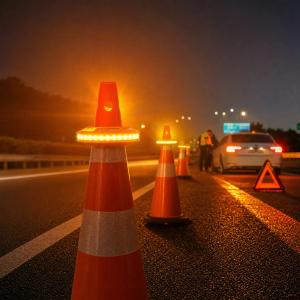
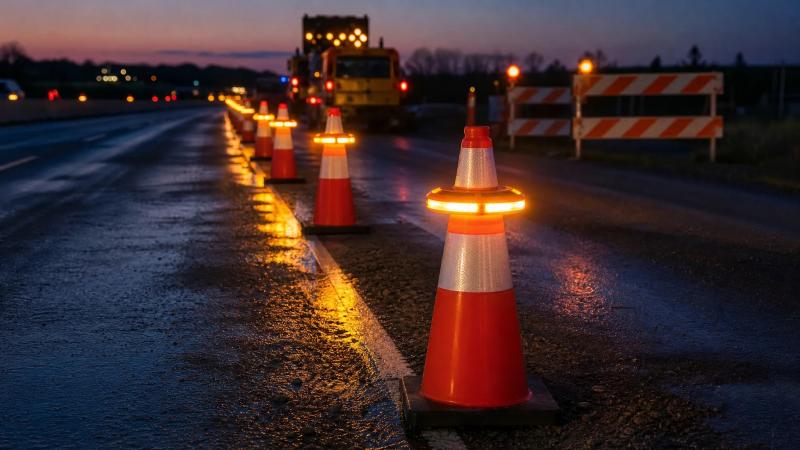
LED traffic cone lights are designed to turn standard traffic cones into illuminated warning points.
They are particularly useful for:
- Road construction
- Lane closures
- Temporary work zones
- Traffic diversion
- Parking-area control
- Emergency roadside zones
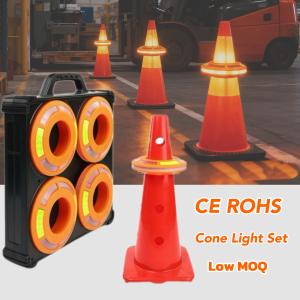
For example, Superflare's HL76907B 8-pack LED traffic cone light system uses rechargeable lights that can be mounted on traffic cones or attached magnetically to metal surfaces. The system supports wireless synchronization within 10 meters and automatic activation when the units are removed from the charging case. :contentReference[oaicite:0]{index=0}
See the LED Traffic Cone Lights 8-Pack
The main advantage of a cone-light system is that the warning point is elevated and visually associated with the traffic-control device.
For larger work zones, synchronized multiple lights can also create a more consistent visual pattern than individual warning lights operating independently.
What should B2B buyers check?
When sourcing LED traffic cone lights, evaluate:
- Compatibility with the traffic cones used by your customers
- 360° visibility
- Wireless synchronization
- Battery runtime
- Charging-case capacity
- Waterproof rating
- Mounting method
- Flashing modes
- Color options
- OEM packaging
- MOQ and lead time
For example, the HL76907B page specifies IPX7 protection, a 3.7V 2200mAh battery, 5–6 flashing modes, 10-meter synchronization range, and an 8-piece rechargeable charging case. :contentReference[oaicite:1]{index=1}
These specifications should be evaluated against the actual deployment requirements rather than treated as standalone indicators of product quality.
2. LED Road Flares
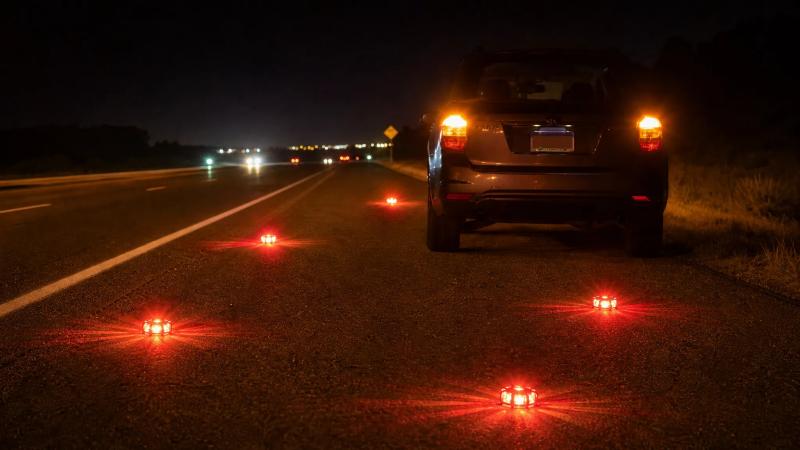
LED road flares are portable warning devices designed to mark hazards directly on the road surface or attach to metal vehicle surfaces.
They can be useful for:
- Vehicle breakdowns
- Roadside emergencies
- Accident scenes
- Traffic management
- Emergency response
- Construction hazards
- Parking and event areas
Unlike a cone-mounted light, a road flare does not require a traffic cone. This makes it useful when a warning device needs to be deployed immediately around a disabled vehicle or incident location.
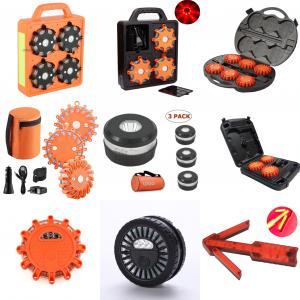
Superflare's HL75011 8-pack LED road flare system is designed for portable deployment and includes magnetic mounting, automatic activation, wireless synchronization, and a rechargeable carrying case. The product page lists up to 60 hours of battery life, IPX7 protection, a 10-meter sync range, and a 3-ton crush-resistance specification. :contentReference[oaicite:2]{index=2}
See the LED Road Flares 8-Pack
Why use road flares instead of cone lights?
The choice usually comes down to the deployment scenario.
| Requirement | Road Flare | Cone Light |
|---|---|---|
| Traffic cone required | No | Yes |
| Direct ground placement | Yes | No |
| Magnetic vehicle mounting | Yes | Yes, depending on model |
| Work-zone marking | Suitable | Especially suitable |
| Roadside breakdown | Especially suitable | Suitable when cones are available |
| Rapid deployment | Very suitable | Suitable |
| Directional traffic guidance | Limited | Limited to moderate |
| Large cone-based work zone | Less suitable | Especially suitable |
For emergency teams and roadside service fleets, a compact road flare can provide a fast way to establish a visible warning area before additional traffic-control equipment is installed.
3. LED Arrow Warning Lights
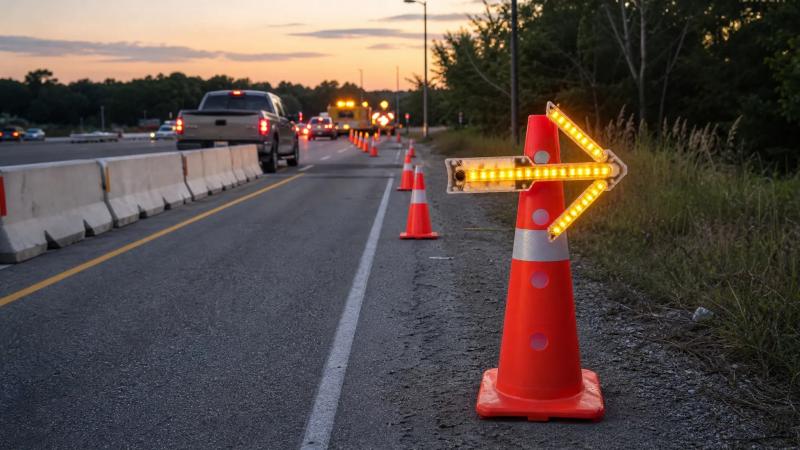
An arrow warning light performs a different function from a conventional warning beacon.
Instead of simply saying:
“There is a hazard here.”
an illuminated arrow can communicate:
“Traffic should move in this direction.”
This makes arrow warning lights useful for:
- Temporary lane changes
- Traffic diversion
- Roadside assistance
- Construction zones
- Vehicle breakdowns
- Emergency response
- Traffic-control operations
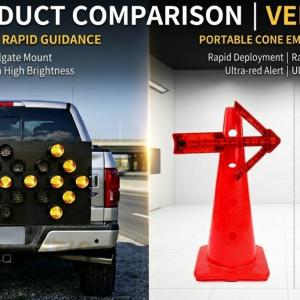
Superflare's rechargeable LED arrow warning light uses a folding design with magnetic and cone mounting options. The product page describes multiple flashing modes, USB-C/Type-C charging, and directional arrow signaling for roadside and traffic-control applications. :contentReference[oaicite:3]{index=3}
See the Rechargeable LED Arrow Warning Light
When should buyers choose an arrow warning light?
Choose an arrow warning light when directional communication is an important part of the safety requirement.
For example:
Work zone:
A series of warning lights can make the work area visible, while an illuminated arrow can reinforce the intended direction of traffic movement.
Vehicle breakdown:
A portable arrow light can help communicate that approaching traffic should move away from the disabled vehicle.
Emergency response:
An arrow can provide additional visual information when responders need to establish a temporary traffic path.
This is why arrow lights should not be evaluated only by brightness. The information communicated by the light is equally important.
4. LED Traffic Batons
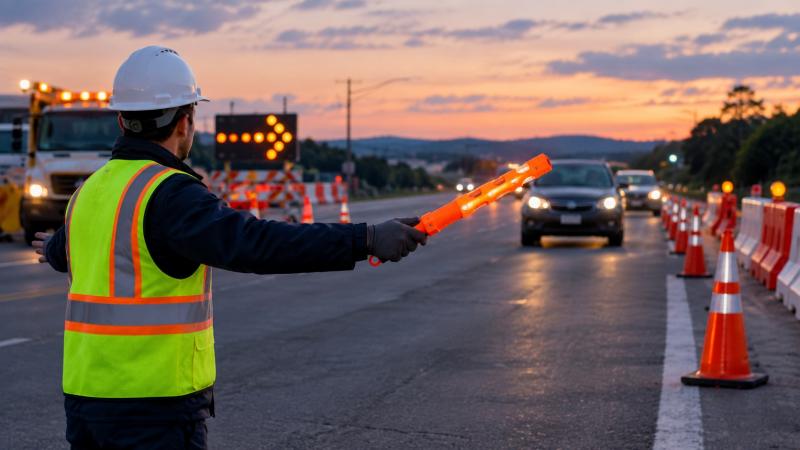
An LED traffic baton is designed for situations where a person needs to actively direct traffic or movement.
Typical applications include:
- Traffic control
- Parking management
- Event access control
- Emergency response
- Security operations
- Vehicle and pedestrian guidance
- Industrial traffic management
A traffic baton differs from a road flare or cone light because the person using it becomes part of the signaling system.
The equipment therefore needs to be:
- Easy to hold
- Easy to see
- Lightweight enough for extended use
- Clearly visible from the intended direction
- Simple to operate
- Rechargeable for repeated deployment
See the LED Traffic Baton Wholesale Product
Road Flare vs Cone Light vs Arrow Light vs Traffic Baton
There is no single warning product that is best for every situation.
The better approach is to match the product to the safety function.
| Product Type | Primary Function | Typical Deployment | Best Fit |
|---|---|---|---|
| LED Traffic Cone Light | Illuminate a traffic-control point | On top of a cone | Work zones and lane closures |
| LED Road Flare | Mark a roadside hazard | Ground or vehicle | Breakdowns and emergency scenes |
| LED Arrow Light | Provide directional guidance | Vehicle, cone or portable position | Traffic diversion and lane guidance |
| LED Traffic Baton | Direct movement manually | Handheld | Traffic and pedestrian control |
The key distinction is:
Cone lights and road flares mainly improve hazard visibility. Arrow lights add directional information. Traffic batons allow a person to actively control movement.
This distinction is useful when building a complete road safety equipment package instead of purchasing individual lights without a deployment plan.
How Can These Products Work Together?
For larger roadwork or emergency-response applications, combining different warning devices can create a more complete warning system.
For example:
Example 1: Road Construction Work Zone
A work zone could combine:
- Traffic cones
- LED cone lights
- Arrow warning lights
- Additional reflective equipment
The cone lights establish the visible boundary of the work area, while the arrow light provides directional information.
For a broader overview of equipment selection, see:
Work Zone Traffic Control Equipment: Types, Uses & Selection Guide
Example 2: Roadside Breakdown
A roadside emergency kit could combine:
- LED road flares
- Warning triangle or reflective equipment
- Portable work light
- High-visibility vest
The road flares can establish a visible warning area quickly, especially where traffic cones are not immediately available.
Example 3: Traffic Diversion
A temporary traffic diversion may require:
- Traffic cones
- Cone lights
- Arrow warning lights
- Handheld traffic batons
The combination creates several layers of visual communication:
Mark the area → make it visible → indicate direction → actively guide traffic.
This is often more effective than expecting one type of warning light to perform every function.
How Do You Build a Road Safety Equipment Package?
A useful way to plan a B2B warning-light package is to work backward from the scenario.
Step 1: Define the hazard
Ask:
- Is it a disabled vehicle?
- A roadwork area?
- A temporary lane closure?
- A traffic-control point?
- A pedestrian area?
- An emergency response scene?
Step 2: Define the required safety message
Does the equipment need to communicate:
- “Hazard ahead”
- “Area closed”
- “Slow down”
- “Move this way”
- “Vehicle or worker present”
- “Traffic is being controlled”
Step 3: Select the appropriate equipment
Match the safety message with the product.
Hazard visibility → road flare or cone light
Work-zone boundary → cone light
Directional guidance → arrow warning light
Active human control → traffic baton
Step 4: Consider deployment time
Emergency equipment should be quick to remove, position, activate, and store.
Automatic activation and charging cases can reduce setup steps for repeated deployment.
Step 5: Consider procurement requirements
For distributors, importers, fleet operators, and safety-equipment brands, also evaluate:
- MOQ
- Sample availability
- OEM/private label
- Packaging
- Battery documentation
- Certifications
- Lead time
- Inspection process
- Spare parts
- After-sales support
A technically suitable product may still be unsuitable for a B2B program if the supplier cannot support consistent production and packaging requirements.
What Should B2B Buyers Check Before Bulk Purchasing?
A warning light may look suitable in a catalog, but bulk procurement requires a broader evaluation.
1. Test samples in the intended scenario
Sample testing should focus on actual use rather than only bench testing.
Depending on the product, evaluate:
- Visibility
- Flash pattern
- Battery runtime
- Charging time
- Mounting stability
- Waterproof performance
- Physical durability
- Ease of deployment
- Storage and transport
For example, a light that performs well indoors may need additional evaluation when used outdoors during daylight, rain, or poor weather.
2. Check batch consistency
For distributors and brand owners, consistency across hundreds or thousands of units is critical.
Ask the supplier about:
- Incoming material inspection
- Production inspection
- Final inspection
- Battery testing
- Waterproof testing
- Function testing
- Pre-shipment inspection
A sample that performs well is not enough. The supplier should also demonstrate how production quality is controlled.
3. Confirm battery and shipping requirements
Rechargeable warning lights contain lithium batteries, so B2B buyers should confirm the relevant battery documentation and shipping requirements before placing large orders.
Depending on the market and product configuration, buyers may need documentation such as:
- Battery test reports
- UN38.3 documentation
- Product certifications
- Packaging information
- Transport-related documentation
The exact requirements should be confirmed according to the destination market, battery configuration, and shipping method.
4. Check OEM/ODM capability
OEM/ODM should involve more than adding a logo.
Depending on the project, customization may include:
- Product color
- LED color
- Flashing modes
- Battery capacity
- Housing
- Logo printing
- Laser engraving
- Packaging
- User manuals
- Labels
- Carrying cases
- Accessories
For B2B buyers, the supplier's ability to manage these details can be as important as the product specification itself.
What Makes a Reliable Road Safety Warning Light Supplier?
Price is important, but it should not be the only supplier-selection factor.
A reliable supplier should be able to provide evidence of:
Product capability
- Stable product specifications
- Consistent battery performance
- Reliable charging systems
- Appropriate waterproof protection
- Durable materials
- Repeatable flashing functions
Manufacturing capability
- Production capacity
- Quality-control procedures
- Product testing
- Engineering support
- Mold or tooling capability
- OEM/ODM support
Procurement capability
- Sample support
- Clear MOQ
- Stable lead times
- Packaging customization
- Inspection support
- Battery documentation
- After-sales communication
For distributors and brand owners, the supplier should be evaluated as a long-term manufacturing partner rather than simply as the lowest-price source.
How Do You Choose Between Different Road Safety Warning Products?
Use the following decision framework:
If you need to illuminate a traffic cone:
Choose an LED traffic cone light.
If you need to mark a roadside emergency without depending on a cone:
Choose an LED road flare.
If you need to communicate a traffic direction:
Choose an LED arrow warning light.
If a person needs to actively control traffic or pedestrians:
Choose an LED traffic baton.