Warning Light Placement Distance for Nighttime Highway Repair: Safety Setup Guide
When planning nighttime highway shoulder repair, warning light placement distance is one of the most important factors for protecting workers and guiding drivers safely.
Many buyers ask:
“How far away can a warning light be seen?”
However, visibility distance and warning light placement distance are not the same thing.
A warning light may be visible from a long distance in ideal conditions, but the correct placement depends on multiple factors:
- Vehicle speed
- Road type
- Sight distance
- Weather conditions
- Curve or hill conditions
- Work-zone length
- Local traffic-control requirements
For distributors, contractors, and road safety equipment suppliers, the best approach is to recommend warning lights as part of a complete traffic safety system — not as a single brightness specification.
Why Warning Light Placement Distance Is Not a Fixed Number
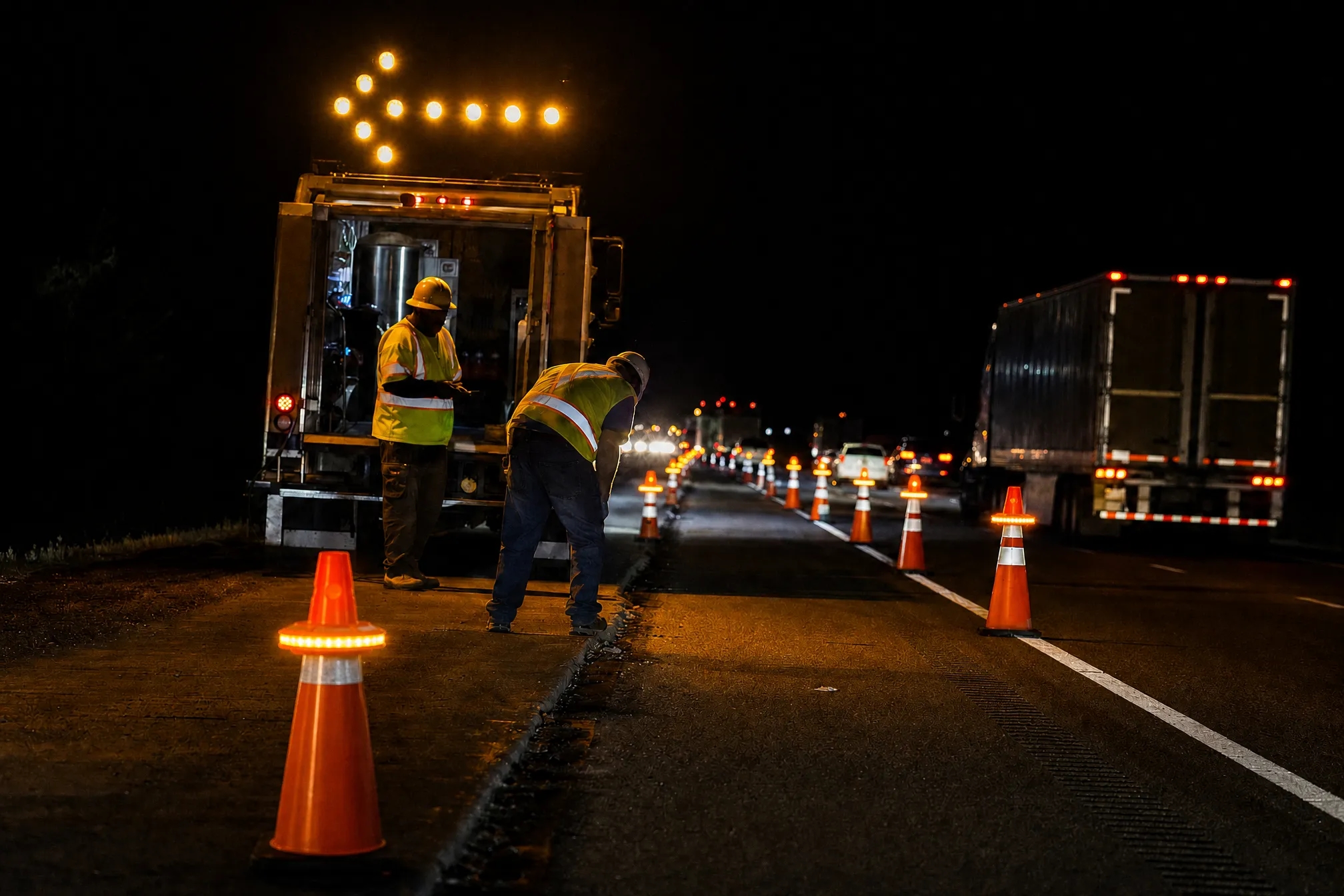
Nighttime highway work creates several challenges:
- Drivers have less reaction time
- Visibility is reduced
- Road workers are close to moving traffic
- Vehicle headlights can create glare
- Rain, fog, and dust can reduce visibility
Because every work zone is different, there is no universal placement distance that works for every situation.
A highway repair area on a straight road with clear visibility is different from:
- A curved highway ramp
- A tunnel entrance
- A rainy construction zone
- A high-speed expressway shoulder repair area
The correct warning setup should always consider the complete traffic-control plan and local regulations.
Visibility Distance vs Warning Light Placement Distance
One common mistake in product selection is confusing these two concepts.
| Question | Meaning | Importance |
|---|---|---|
| How far can the warning light be seen? | Product visibility performance | Helps compare products |
| Where should the warning light be placed? | Traffic-control decision | Depends on road conditions |
| How many warning devices are needed? | Safety zone planning | Depends on work area risk |
A brighter LED warning light can improve visibility, but it cannot replace:
- Advance warning signs
- Traffic cones
- Reflective equipment
- Vehicle warning beacons
- Proper work-zone layout
Professional safety setups use multiple warning layers to guide drivers step by step.
How Should Distributors Explain Warning Light Placement Distance to Buyers?
For distributors and safety equipment suppliers, product recommendations should start with application questions.
Before recommending a warning light model, ask:
1. What type of road is the customer working on?
Examples:
- Highway shoulder repair
- Construction zone
- Emergency roadside breakdown
- Lane closure
- Parking or facility traffic control
Different environments require different warning solutions.
2. What is the traffic speed?
Higher-speed roads usually require earlier driver awareness.
A warning system should give drivers enough time to:
- Notice the warning
- Understand the hazard
- Adjust driving direction safely
3. Is visibility affected by weather?
Rain, fog, snow, and dust can reduce effective visibility.
For these conditions, buyers should consider:
- Higher visibility LED output
- Multiple warning points
- Waterproof construction
- Reliable battery performance
4. How long does the work zone operate?
Night maintenance projects often require warning equipment that can operate throughout an entire shift.
Important features include:
- Long runtime
- Rechargeable batteries
- Stable mounting
- Weather resistance
What Features Matter Most in Professional Warning Lights?
For nighttime highway repair applications, buyers should evaluate warning lights based on real working conditions.
1. Flash Pattern and Synchronization
A single flashing light may attract attention, but multiple synchronized lights create a clearer warning path.
Sequential flashing systems help drivers recognize:
- Direction changes
- Work-zone boundaries
- Hazard areas
For example, Superflare rechargeable LED warning systems are designed for coordinated warning applications, helping create organized safety zones for roadside operations.
2. Waterproof and Weather Resistance
Roadside equipment must work in unpredictable environments.
Important considerations:
- Rain protection
- Dust resistance
- Outdoor durability
Superflare rechargeable traffic cone lights use durable housing designed for outdoor safety applications, including road construction and emergency roadside deployment. :contentReference[oaicite:1]{index=1}
3. Fast Deployment and Stable Mounting
During emergencies or temporary repairs, setup speed matters.
Useful mounting options include:
- Traffic cone mounting
- Magnetic mounting
- Vehicle mounting
A warning light that is easy to deploy helps reduce setup time and improves operational efficiency.
Recommended Warning Light Solutions for Highway Safety Applications
Different applications require different warning devices.
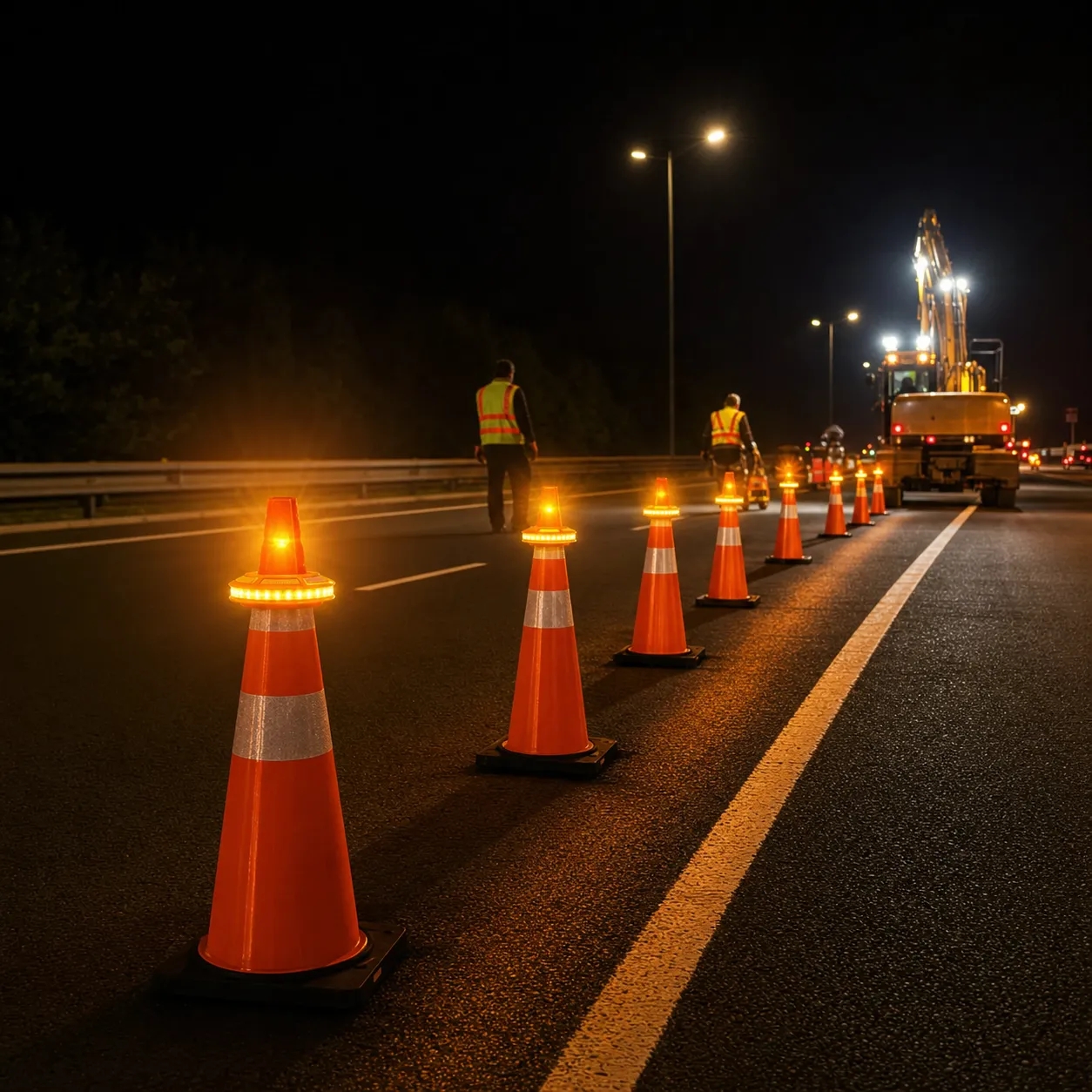
Traffic Cone Warning Lights for Work Zones
For construction areas, lane closures, and traffic control, cone-mounted warning lights provide a clear visual boundary.
Superflare's rechargeable traffic cone light system provides:
- 360° warning visibility
- Multiple flashing modes
- Wireless synchronization
- Rechargeable operation
- Cone-top installation
- Magnetic mounting options
Product:
Rechargeable Traffic Cone Ring Light 8-Pack
This type of solution is suitable for:
- Highway construction
- Temporary traffic control
- Road maintenance zones
- Parking management
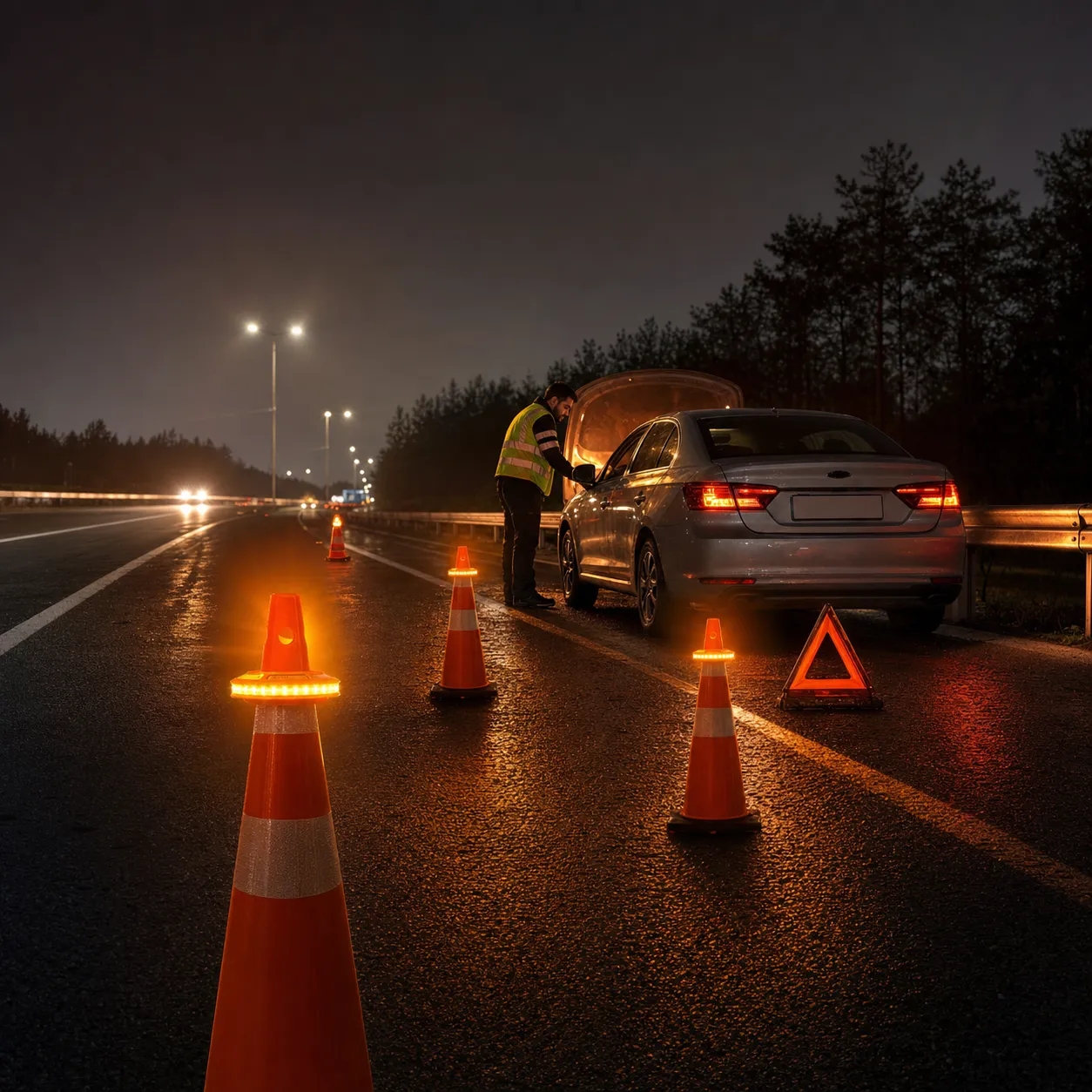
Portable LED Road Flares for Emergency Applications
For roadside breakdowns, towing operations, and emergency response, portable LED road flares provide flexible deployment.
Compared with fixed cone-mounted systems, portable warning flares can be placed:
- On the road surface
- Near disabled vehicles
- Around emergency scenes
Product:
8-Pack Auto Sync Rechargeable LED Amber Road Flares
These systems are designed for professional users who need fast deployment and coordinated warning signals.
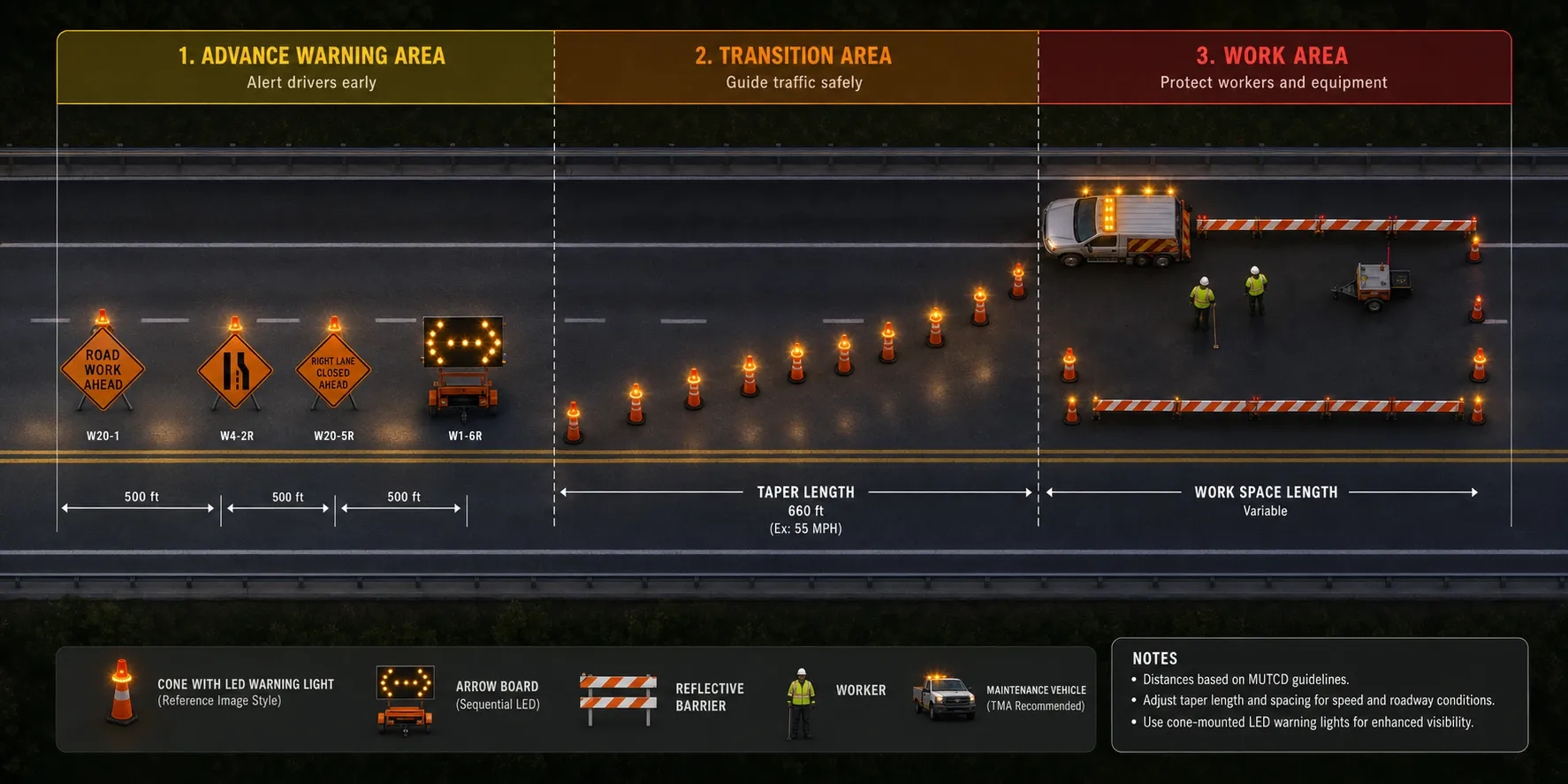
Think in Safety Layers, Not One Warning Light
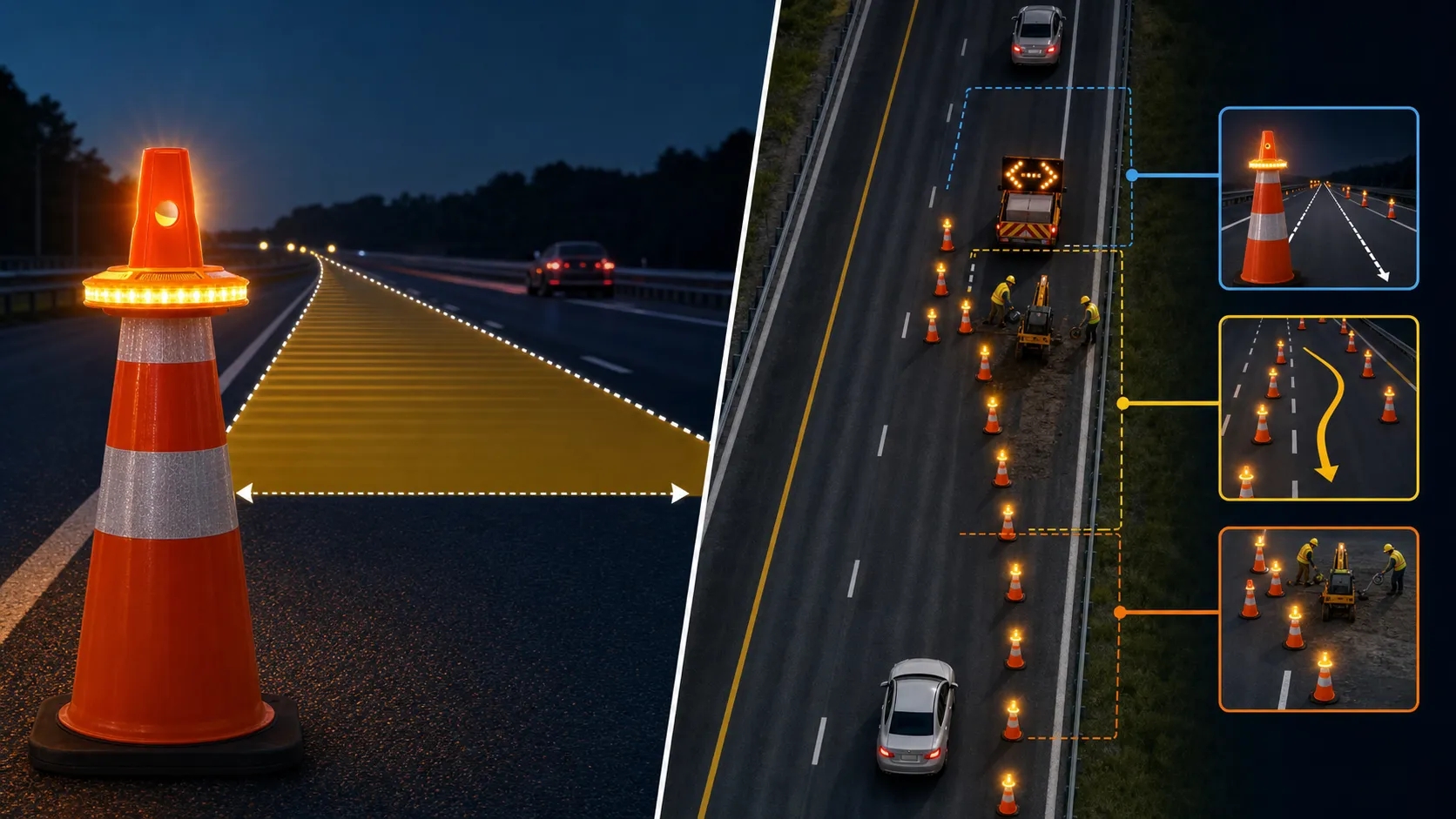
A safer nighttime highway repair setup usually includes several warning elements.
1. Advance Warning Area
Purpose:
Alert drivers that a hazard is ahead.
Possible equipment:
- Warning signs
- Early warning lights
- Vehicle-mounted beacons
2. Transition Area
Purpose:
Guide vehicles away from the hazard.
Possible equipment:
- Traffic cones
- Sequential LED warning lights
- Directional warning devices
3. Work Area
Purpose:
Protect workers and vehicles.
Possible equipment:
- Work lights
- Warning lights
- Reflective barriers
- Safety equipment
The exact distance between these areas depends on local standards and site conditions.
Common Mistakes When Selecting Warning Lights
Distributors can help buyers avoid these common problems:
Choosing Only Based on Brightness
Brightness is important, but it does not determine the complete safety setup.
Using Too Few Warning Devices
One warning light may not create enough visual guidance for approaching drivers.
Ignoring Runtime Requirements
Night operations require reliable battery performance.
Selecting the Wrong Mounting Method
Different applications may require:
- Cone mounting
- Magnetic mounting
- Vehicle installation
Overpromising Visibility Distance
Professional suppliers should avoid claiming one fixed placement distance for every situation.
A better approach is explaining:
- Visibility performance
- Application conditions
- Recommended setup methods
Related Road Safety Resources
For more information about warning light applications:
Frequently Asked Questions
Is warning light visibility distance the same as placement distance?
No.
Visibility distance describes how far a light may be detected.
Placement distance describes where the warning device should be installed in a safety setup.
Can one brighter warning light replace multiple warning devices?
Usually no.
Professional roadside safety requires a combination of warning devices, signs, cones, and traffic-control methods.
What warning lights are suitable for highway shoulder repair?
Suitable warning lights should provide:
- Strong LED visibility
- Reliable flashing patterns
- Long battery runtime
- Weather resistance
- Stable mounting
The best choice depends on the application.
What should distributors consider before recommending warning lights?
Distributors should understand:
- Road type
- Working environment
- Weather conditions
- Required operating time
- Local safety requirements
Application-based recommendations usually provide better long-term results.
Conclusion
Warning light placement distance for nighttime highway repair is not a single number.
The correct setup depends on:
- Traffic speed
- Visibility conditions
- Road layout
- Work-zone design
- Local regulations
For distributors and professional buyers, warning lights should be selected as part of a complete safety system.
Superflare provides rechargeable LED warning light solutions for traffic control, roadside emergency, and professional safety applications, including OEM and customized solutions for global partners.
Contact Superflare to discuss the right warning light configuration for your market.