How to Customize an OEM LED Road Flare — From Logo to Tooling
An OEM LED road flare sounds simple until you try to make it match your market, brand, price point, certification path, and delivery schedule. Many buyers ask, "Can we customize it?" Then the project gets stuck because nobody has defined how deep the customization really needs to go.
You can customize an LED road flare from simple logo printing and packaging changes to deeper adjustments like housing color, rubber coating, flash patterns, magnet position, battery setup, and even tooling-level design. The real limit depends on your order quantity, certification needs, existing mold options, factory capability, budget, and lead time.
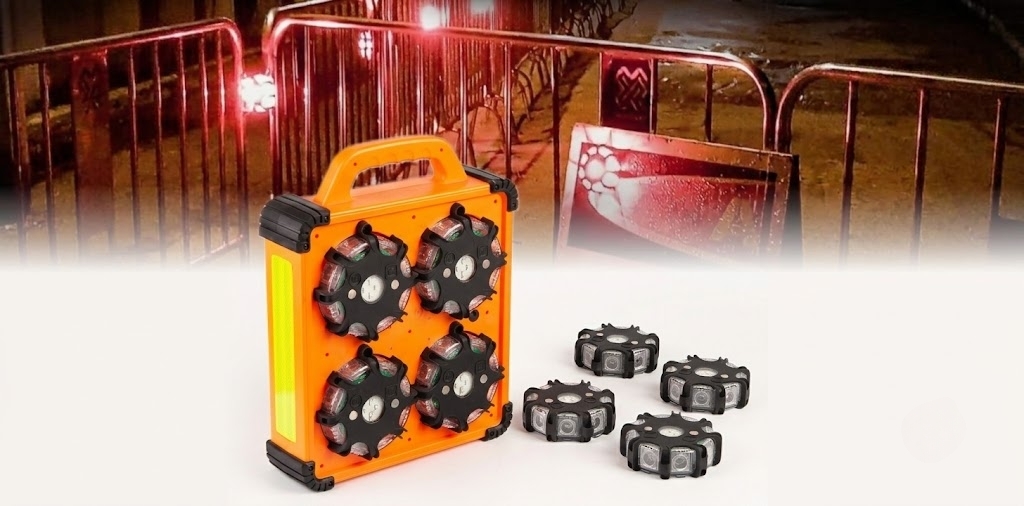
From my side as a B2B sales person at Superflare, I see this question often from wholesalers and small brand owners. The better question is not only "Can you customize?" It is, "Which parts should we customize, and which parts should we leave alone?"
What Counts as OEM Customization for an LED Road Flare?
Many buyers ask to customize the product, but they often mean different things. One buyer wants a logo. Another wants a new flash pattern. Another wants a completely different housing.
If these requests are treated the same, the quotation becomes confusing fast.
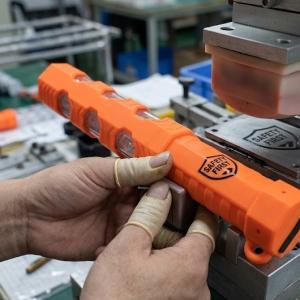
Customizing an LED road flare can mean surface-level OEM, function-level changes, or tooling-level development. Logo, color, and packaging are usually easier. Flash modes, runtime, brightness, and battery choices need more checking. Housing shape, lens design, and internal structure usually require molds, higher MOQ, and longer lead time.
The first mistake is mixing all customization into one box
In real inquiries, I often hear a buyer say something like:
"We need a custom LED flare. Can you do it?"
My first response is usually not "yes" or "no." I need to understand what they mean by custom. A custom carton is not the same project as a custom PCB. A private label sticker is not the same project as a new lens angle.
I usually divide customization into three practical layers.
| Customization layer | Common changes | Buyer decision impact | Typical difficulty |
|---|---|---|---|
| Surface-level OEM | Logo, label, color box, manual, barcode, carton mark | Helps brand identity and retail presentation | Low |
| Configuration-level | Flash mode, LED color, battery option, magnet strength, rubber coating color | Affects user experience and SKU positioning | Medium |
| Tooling-level ODM | New housing, new lens, new magnet position, new case design | Creates real differentiation but raises cost and MOQ | High |
Surface-level OEM is often enough for wholesale buyers
For many wholesalers, a custom flare does not need a new body. It needs a consistent brand look. That may include:
- Logo printing on the product
- Custom color box
- Custom instruction manual
- Product label and barcode
- Outer carton shipping mark
- Set packaging for roadside emergency kits
We have done practical projects around rubber coating customization and box color customization for buyers ordering in the low thousands of units — not full-container volume. These changes are useful because they help a buyer create a more unified shelf product without jumping into expensive tooling.
This is often the best starting point for a small brand. It keeps MOQ lower and avoids unnecessary technical risk.
Function changes need more conversation
The next layer includes changes like flash frequency, light color, runtime, charging method, or magnet strength. These sound small, but they can affect compliance, battery performance, and production testing.
For example, if a buyer says, "We need a different flashing pattern for Japan," I will not treat that as the same as changing a logo. One of our shipped programs involved adjusting the LED flash frequency for a Japan-based partner specifically to support their Japan Radio Law-related certification review. But this kind of point should always be checked project by project with a compliance consultant or testing body.
This is where a reliable supplier should slow down the conversation. A supplier who says "everything is easy" may not be thinking about certification, documentation, or repeat production.
Runtime is a good example of why flash mode changes deserve real testing, not a guess. On our current platform, tested runtime varies significantly by mode:
| Flash Mode | Runtime |
|---|---|
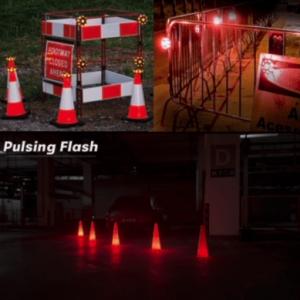
| Pulsing Flash (Waveform) | 12 h |
| Single Flash | 60 h |
| Slow Flash | 30 h |
| Fast Flash | 48 h |
| Slow Double Flash | 50 h |
| Fast Double Flash | 30 h |
A buyer asking for a custom flash pattern is really asking for a different point on this table — sometimes trading runtime for visibility, or the reverse. That trade-off should be part of the customization conversation, not an afterthought after tooling is already locked in.
Tooling-level customization is a business decision, not just a design decision
A new shape feels attractive. It can make your product stand out from other options on the shelf. But it also changes the business equation.
New tooling may involve:
- Mold cost
- 3D drawing confirmation
- Sample rounds
- Structure testing
- Production fixture adjustment
- Packaging redesign
- Possible compliance retesting
For a buyer ordering 200 or 500 pieces, this usually does not make sense. For a buyer building a long-term product line, it may be reasonable.
That is why I always try to connect customization back to the buyer's actual sales plan. If the buyer sells into automotive emergency kits, a better package and stable quality may matter more than a new shell. If the buyer wants an exclusive branded product for several years, tooling may be worth discussing.
Which Customizations Work at Low MOQ?
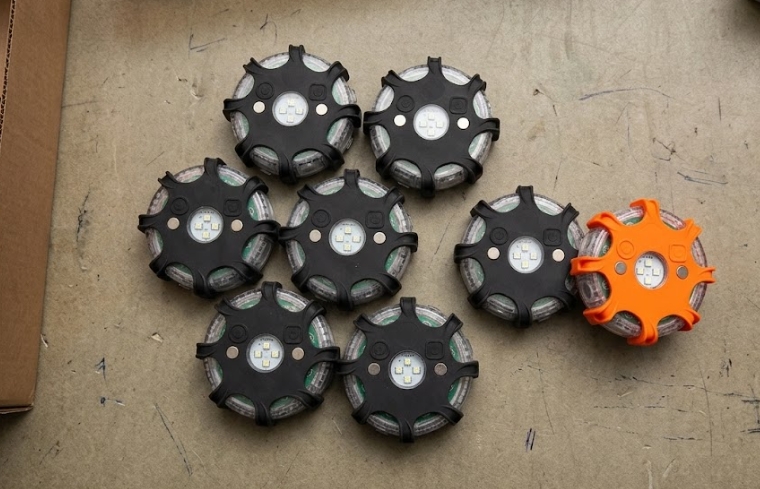
Low MOQ customization is possible for an OEM LED road flare, but it works best when the buyer stays within an existing product platform, such as our Sequential LED Road Flares line. Small orders can usually support branding, packaging, color options, manuals, and some configuration changes. They usually cannot support new molds or heavy structural changes.
For low MOQ buyers, the smartest approach is controlled customization. You keep the proven base product and adjust the parts that create brand value, such as logo, box design, product color, rubber finish, kit combination, or selected flash modes.
Low MOQ does not mean "no customization"
Some buyers hear "low MOQ" and think they must accept a fully stock item. That is not always true. Low MOQ usually means the customization must be practical.
At Superflare, many inquiries come from smaller wholesalers or brand owners who do not want to buy a container in the first order. They may want to test the market with a few hundred or a few thousand units. In that situation, I usually guide them toward options that do not disturb the validated product structure.
Good low MOQ options include:
- Logo printing on the flare or packaging
- Color box design for retail or online sales
- Instruction manual customization
- Sticker and barcode customization
- Outer carton marks
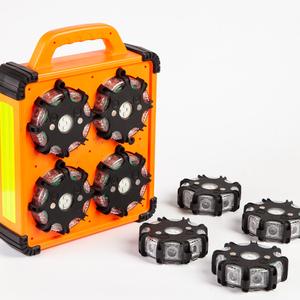
- Product set combinations
- Existing housing color options
- Rubber coating color changes, when the material and production process allow it
- Flash mode selection, if the existing software supports it
These changes can still make the product feel private-label. They also reduce risk because the base product already has production experience.
What low MOQ buyers should avoid
A small brand should be careful with changes that sound simple but affect the whole structure.
For example:
| Request | Why it may be difficult at low MOQ |
|---|---|
| New housing shape | Requires mold investment and engineering time |
| New lens geometry | May change visibility angle and testing needs |
| New PCB layout | May affect stability and certification documents |
| New battery compartment | May affect waterproofing and safety |
| New magnet position | May require new internal support structure |
| Exclusive product design | Usually requires volume commitment |
I do not say these changes are impossible. I say they need the right business case. If a buyer wants 300 pieces for a market test, a new mold is usually too heavy. If a buyer has a yearly plan of 20,000 or 50,000 units, the conversation changes.
The best low MOQ strategy is "platform plus identity"
I like to explain low MOQ customization with this simple idea:
Keep the platform stable. Customize the identity.
The platform is the proven product base. It includes the housing, PCB, battery layout, waterproof structure, lens, magnet, and production process. The identity is how the product appears to your customers — color, packaging, brand name, manual, SKU code, and kit format.
This strategy works well for:
- Amazon sellers testing emergency roadside kits
- Auto accessory wholesalers
- Safety product distributors
- Small tool and equipment brands
- Promotional safety kit suppliers
- Regional importers serving police, towing, or fleet customers
For these buyers, the end customer often cares about reliability, visibility, packaging clarity, and trust. A completely new shape may not increase sales enough to justify the cost.
One practical example: packaging can change the whole positioning
A stock-looking flare in a plain white box feels like a commodity. The same flare in a clear, branded safety kit box can feel like a retail product.
If the box explains use cases, battery information, flash modes, and safety warnings clearly, the buyer's sales team has an easier time. That is why I never dismiss packaging as "only surface customization." For B2B buyers, packaging can decide whether the product fits:
- A roadside emergency kit
- A truck fleet safety pack
- A retail auto accessory shelf
- A construction site safety bundle
- A branded promotional item
If your order quantity is limited, packaging may give you the highest return for the lowest risk.
When Does Customization Require New Tooling?
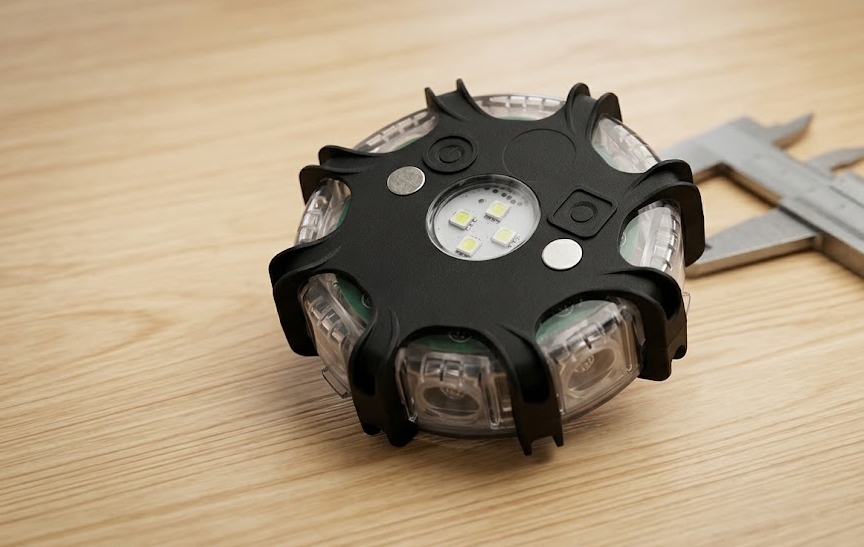
Customization usually requires new tooling when you change the physical structure, not just the appearance. A new housing shape, lens design, magnet position, battery compartment, hook design, or waterproof structure can all trigger mold work, sample rounds, and higher MOQ.
New tooling becomes necessary when the existing platform cannot support the buyer's functional or branding goal. If the request changes how the flare is assembled, sealed, mounted, viewed, or held, the supplier may need a new mold or modified mold instead of simple OEM customization.
Tooling starts when the body is no longer the same product
A buyer may say, "We only want to move the magnet." On paper, that looks small. In production, it may affect the internal support, screw posts, plastic thickness, waterproof sealing, and balance of the product.
This is why tooling-level customization needs more discipline. The buyer and supplier should confirm:
- Which part changes?
- Does the change affect assembly?
- Does the change affect water resistance?
- Does the change affect drop resistance?
- Does the change affect the light output angle?
- Does the change affect certificates or test reports?
- What annual volume supports the tooling cost?
If these questions are skipped, the project may move forward too fast and then stop later.
Common tooling-level changes
Here are the changes that usually push the project toward tooling or mold modification.
| Tooling-level request | Why buyers ask for it | Main risk |
|---|---|---|
| New outer housing | Brand differentiation | Mold cost and sample time |
| New lens shape | Better visibility or unique look | Optical performance may change |
| New magnet position | Different mounting scenario | Internal structure may need redesign |
| New hook or hanging point | Construction or fleet use | Strength testing may be needed |
| New battery compartment | Different battery format | Safety and sealing concerns |
| New rubber overmold design | Better grip or premium feel | Material and mold complexity |
| New charging port position | Easier use in a kit | Waterproofing may change |
The MOQ question is really a payback question
Buyers often ask, "What is the MOQ for a new mold?" That is a fair question, but the better question is, "How many units can I sell from this design over time?"
A mold cost may be acceptable if the buyer has:
- A strong distribution channel
- A clear product roadmap
- Repeat annual orders
- A brand strategy
- A margin that supports development cost
- A need for exclusivity
For a one-time promotional order, tooling usually does not make sense. For a long-term SKU, it can make sense.
Do not build a custom shape before proving the market
I have seen buyers spend too much time at the design stage before confirming basic market demand. This is risky. A custom shell may look attractive, but it does not automatically solve the buyer's real selling problem.
Before going into tooling, I suggest buyers answer these questions:
- Does the current market already accept this product type?
- What complaint are we solving with the new design?
- Will customers pay more for this difference?
- Will the new design reduce returns or increase sales?
- Can we use packaging or configuration first to test demand?
- Do we have enough order forecast to support mold cost?
A staged approach is often safer:
- Start with an existing platform, such as our current road flare line.
- Customize logo, packaging, and kit format.
- Test customer response.
- Adjust function if needed.
- Move into tooling only after repeat demand is clear.
This approach is not as exciting as jumping straight into a new design, but it protects cash flow.
Tooling also affects timeline
A simple private label order may move quickly if materials are ready. A tooling project can take much longer because the process includes drawing, mold opening, trial samples, modification, confirmation samples, packaging fit check, and then mass production.
The timeline can also grow if the product needs certification review. For CE, RoHS, or market-specific requirements, buyers should verify the exact rules with their compliance consultant or testing partner. Requirements vary by market, product use, and product category.
How Certifications Limit What You Can Change
Certifications can limit customization because changes to light output, flash pattern, electronics, battery, lens, housing, or labeling may affect previous test reports. A product that was compliant in one configuration may need review or retesting after a major change.
Certification-sensitive customization should be handled carefully. Buyers should confirm target markets first, then ask suppliers which changes are within the existing approved design and which changes may require updated testing, documentation, or consultant review.
Certification is not just a sticker on the box
Some buyers treat certification as a checkbox. They ask, "Does it have CE?" But certification depends on the product configuration and market rules.
I am not a compliance consultant, so I do not give legal certification advice. However, from sales-side project discussions, I know this: when you change the product too deeply, old documents may not automatically apply.
Buyers should verify requirements with a qualified consultant or testing lab, especially for markets such as:
- United States
- European Union
- United Kingdom
- Japan
- Australia
- Brazil
- Russia and EAEU-related markets
For U.S. highway and roadside applications specifically, it's worth checking your product against the Manual on Uniform Traffic Control Devices (MUTCD), which sets the federal visibility and device standards that many state DOTs reference.
Changes that may affect compliance
Some customization points are more sensitive than others.
| Customization change | Possible compliance concern | Buyer action |
|---|---|---|
| Flash pattern or frequency | May affect visibility rules or market-specific requirements | Verify before confirming mass production |
| LED color | Some uses may restrict colors | Check target application |
| Battery type | May affect transport and safety documents | Confirm shipping and test needs |
| Charger or USB port | May involve electrical safety concerns | Check certificate coverage |
| Lens design | May affect light distribution | Ask if retesting is needed |
| Housing material | May affect RoHS/REACH or durability claims | Confirm material documentation |
| Labeling and manual | May need local language or warnings | Review with importer or consultant |
For example, one of our Japan-based partners needed the flash frequency adjusted specifically to support their own Japan Radio Law-related certification review. That does not mean every product automatically qualifies. It means the supplier and buyer need to define the target early and prepare the right version.
A "small" change can create a big document problem
Let's say a buyer wants a brighter flare for highway safety kits. The supplier may be able to increase brightness. But that change may affect:
- Runtime
- Heat performance
- Battery drain
- Light intensity claims
- Test report consistency
- Packaging specifications
If the old report says one specification and the new product performs differently, the buyer may have a documentation gap. That gap can become a customs issue, a retail approval issue, or a liability issue.
This is why I prefer to ask buyers about certificates early. It saves time later. (Exact certificate numbers and current test data for a specific configuration are available on request.)
Ask your supplier these certification questions
Before you request a custom road flare, ask:
- Which markets will this product enter?
- Will it be sold as an emergency warning device, auto accessory, or general safety light?
- Do you need CE, RoHS, REACH, UKCA, or other market documents?
- Are current reports based on the same model and same configuration?
- Will the custom flash pattern change the report scope?
- Will the custom battery affect transport documents?
- Do you need local language manuals or warning labels?
The supplier may not be able to answer every legal question. That is normal. A good supplier should still help you identify which parts need checking.
Do not over-customize before compliance is clear
This is one of the biggest buyer risks. A buyer may spend weeks discussing product changes, then discover that the chosen flash mode or label claim is not suitable for the target market.
A safer process is:
- Define target country.
- Define product use case.
- Confirm mandatory documents with a consultant.
- Select an existing product platform.
- Check what customization is allowed within that platform.
- Only then confirm artwork, samples, and mass production.
This process may feel slower at first. In practice, it often saves weeks.
Briefing Your Supplier for an OEM LED Road Flare Project
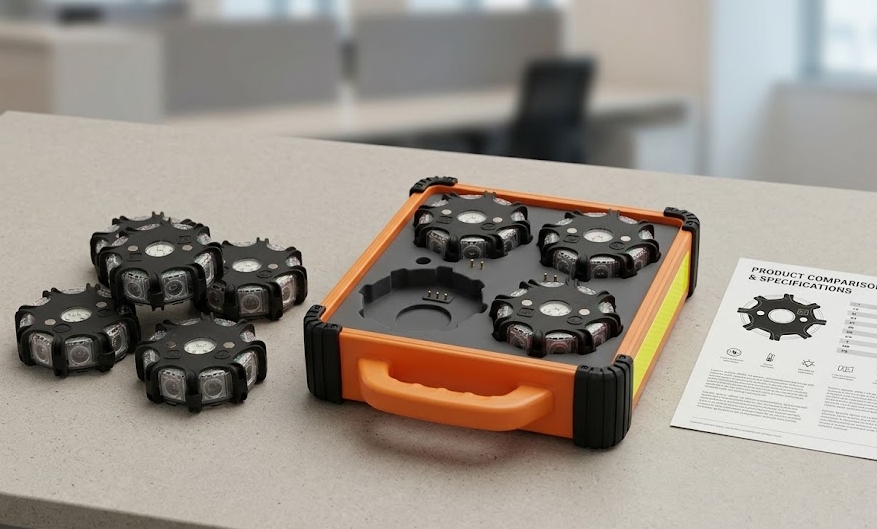
A buyer should brief a supplier on the use case, target market, order quantity, required certificates, preferred customization layer, packaging needs, price target, and timeline. A clear brief helps the supplier recommend realistic customization instead of giving a vague "yes, we can do it."
The best OEM LED road flare customization brief explains why the change matters. Suppliers can then separate must-have requirements from nice-to-have ideas and suggest the lowest-risk path, whether that is OEM branding, configuration changes, or a deeper ODM project.
A good brief saves both sides time
When I receive a clear brief, I can move much faster. When I receive only a photo and the sentence "Please quote custom flare," I have to ask many follow-up questions.
A useful buyer brief does not need to be long. It should answer the commercial and practical points first. Here is a simple structure I like:
| Brief item | What to include | Why it matters |
|---|---|---|
| Target market | US, EU, Japan, etc. | Affects certificates and labeling |
| Use case | Roadside kit, fleet, construction, emergency responder | Affects brightness, durability, packaging |
| Order quantity | Trial order and annual forecast | Affects customization depth |
| Required changes | Logo, color, flash mode, rubber coating, packaging, tooling | Helps supplier classify the project |
| Certificate needs | CE, RoHS, FCC, Japan-related, etc. | Prevents late-stage compliance problems |
| Price target | FOB target or landed cost target | Helps balance specs and budget |
| Timeline | Sample date and delivery deadline | Helps avoid impossible development plans |
| Sales channel | Retail, online, wholesale, tender, fleet supply | Affects packaging and documentation |
You can see our current product range and specs in the Superflare product catalog before drafting your brief — it's often faster to start from an existing platform than a blank page.
Tell the supplier the business reason
A customization request becomes clearer when the buyer explains the reason behind it. For example:
- "We need orange rubber coating because our whole tool line uses orange."
- "We need a compact box because this goes inside a roadside emergency kit."
- "We need a stronger magnet because customers mount it on service trucks."
- "We need a special flash frequency because this project is for Japan certification review."
- "We need a premium color box because this product will sell in retail stores."
These reasons help the supplier suggest alternatives. Maybe the buyer does not need a new mold. Maybe a rubber coating color, packaging redesign, and selected flash pattern can achieve the same market goal.
Separate must-have from nice-to-have
This is especially important for small and medium buyers. If every idea becomes a must-have, the project may become too expensive.
I suggest using three levels:
- Must-have: The product cannot sell without this.
- Important: This improves competitiveness but can be adjusted.
- Nice-to-have: This is good if cost and MOQ allow it.
Here is a simple example for a roadside emergency kit buyer:
| Requirement | Priority | Comment |
|---|---|---|
| Red warning light | Must-have | Core use case |
| Custom logo on box | Must-have | Brand requirement |
| Compact 3-pack package | Important | Helps fit kit design |
| Rubber coating in brand color | Important | Strong branding value |
| New housing shape | Nice-to-have | Consider after market test |
| Exclusive mold | Nice-to-have | Only if annual volume supports it |
This kind of ranking helps both sides protect the project from cost creep.
Ask for a realistic option, not only your ideal option
A good supplier should not only quote the dream version. They should also suggest a realistic version. I like to present options when possible:
- Option A: Low MOQ OEM version
- Option B: Function-adjusted version
- Option C: Tooling-level ODM version
For example:
| Option | Best for | Cost level | MOQ level | Risk |
|---|---|---|---|---|
| Logo + color box | Market test | Low | Low | Low |
| Logo + box + rubber color + flash mode | Brand differentiation | Medium | Medium | Medium |
| New housing + new lens + custom electronics | Long-term exclusive SKU | High | High | High |
This comparison prevents a common problem: the buyer asks for deep customization, sees the cost, and then loses interest. A staged option keeps the project alive in a realistic way.
Samples should confirm more than appearance
When samples are ready, buyers should not only check the logo and box color. They should also test the product like the end user will use it. Check:
- Flash mode sequence
- Brightness in real conditions
- Magnet holding strength
- Battery runtime across all flash modes (see runtime table earlier in this article — confirm the sample matches these figures for your specific configuration)
- Charging or battery replacement
- Waterproof feel and sealing (current platform tests to IPX7 — confirm certificate number for your batch)
- Drop resistance in normal use
- Packaging fit
- Manual clarity
- Barcode and carton label accuracy
For B2B orders, a sample is not a souvenir. It is a decision tool. If the sample review is too casual, the mass production order may carry avoidable mistakes.
Frequently Asked Questions
Can I customize an LED road flare with only 200 pieces?
Yes, but the customization will likely be limited to low MOQ options such as logo, label, packaging, manual, barcode, and possibly available color choices. New tooling, new lens design, or major electronic changes usually require higher volume and a stronger long-term order plan.
Can the flash pattern of an LED road flare be customized?
Yes, flash patterns can often be customized if the existing platform supports firmware or driver-level adjustment. However, flash changes may affect compliance documents or market requirements. For CE, Japan-related, or other regulated markets, buyers should verify requirements with a compliance consultant before mass production.
Is a custom color box enough for private label sales?
For many wholesalers and small brands, yes. A custom color box can make a stock-based platform look like a proper branded SKU. It also improves retail presentation, kit positioning, and buyer trust without the cost and risk of new tooling.
When should I consider ODM tooling for an OEM LED road flare?
You should consider ODM tooling when you need real structural differentiation and have enough volume to support mold cost. New housing, lens geometry, battery layout, magnet placement, or rubber overmold design may justify tooling if the product will become a long-term SKU.
Do certifications still apply after customization?
Not always. Some surface changes may not affect certification, but changes to electronics, battery, flash pattern, lens, housing, or labeling may require document review or retesting. Requirements vary by country and product category, so you should verify with a qualified compliance consultant or testing body.
Ready to Discuss Your OEM LED Road Flare Project?
If you're weighing a logo-only order against a full tooling program, the fastest way forward is usually to start from a proven platform and add only the layers your market actually needs — not every layer that sounds appealing.
Superflare works with wholesalers, fleet buyers, and brand owners on exactly this kind of staged customization, from surface OEM through Japan Radio Law-related flash adjustments to full ODM tooling.
OEM/private label buyers (logo, color, packaging): custom logo placement, color box design, and rubber coating in your brand color — spec sheet and sample kit available on request: sales001@brilliant-dragon.net
Fleet or wholesale buyers sourcing at volume: share your target market, order quantity, and required certificates through our inquiry page, and we'll come back with a realistic OEM vs. ODM comparison within 24 hours.