How Do Wireless Synchronized Warning Lights Work?
How Do Wireless Synchronized Warning Lights Work? A Complete Guide
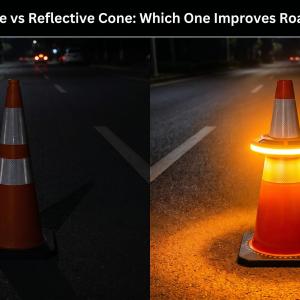
In road construction, road maintenance, vehicle breakdown assistance, and temporary traffic control, warning lights need to do more than simply provide bright signals. Multiple lights may also need to flash in a coordinated pattern to help drivers recognize hazardous areas more easily.
Traditional warning lights often require users to switch on and configure each unit individually. Wireless synchronized warning lights simplify this process by allowing multiple units to flash together or in a preset sequence, helping improve the efficiency of roadside warning deployments.
So, how do wireless synchronized warning lights work? How are they different from conventional independent warning lights? And what should buyers consider when choosing a wireless warning light system?
This guide explains the basic working principle, automatic synchronization process, practical applications, and key purchasing considerations. It also introduces two Superflare wireless synchronized warning light products for professional buyers, distributors, and road safety equipment suppliers.
1. What Are Wireless Synchronized Warning Lights?
Wireless synchronized warning lights are safety lighting devices that allow multiple warning lights to operate in coordinated flashing patterns without wired connections between individual units.
Unlike conventional independent warning lights, wireless synchronized lights can coordinate their operation after deployment. Depending on the product design, multiple units may flash simultaneously or in a preset sequential pattern.
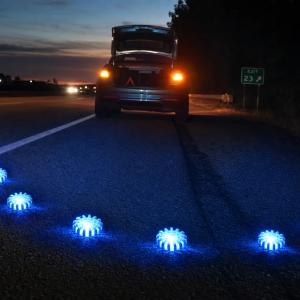
For example, when several warning lights are placed around a roadwork area, they can flash together or illuminate one after another to create a more continuous visual warning.
These products are commonly used for:
- Road construction and maintenance
- Temporary highway traffic control
- Vehicle breakdown and roadside assistance
- Accident scene warning
- Temporary lane guidance
- Construction vehicle and fleet safety equipment
For professional users who need to deploy multiple warning lights quickly, wireless synchronization can reduce individual operating steps and make roadside safety equipment easier to manage.
2. How Do Wireless Synchronized Warning Lights Work?
The main feature of wireless synchronized warning lights is that multiple units can coordinate their flashing patterns wirelessly, without requiring cables to connect each light.
For a rechargeable warning light kit with a charging case, the general operating process may include the following steps.
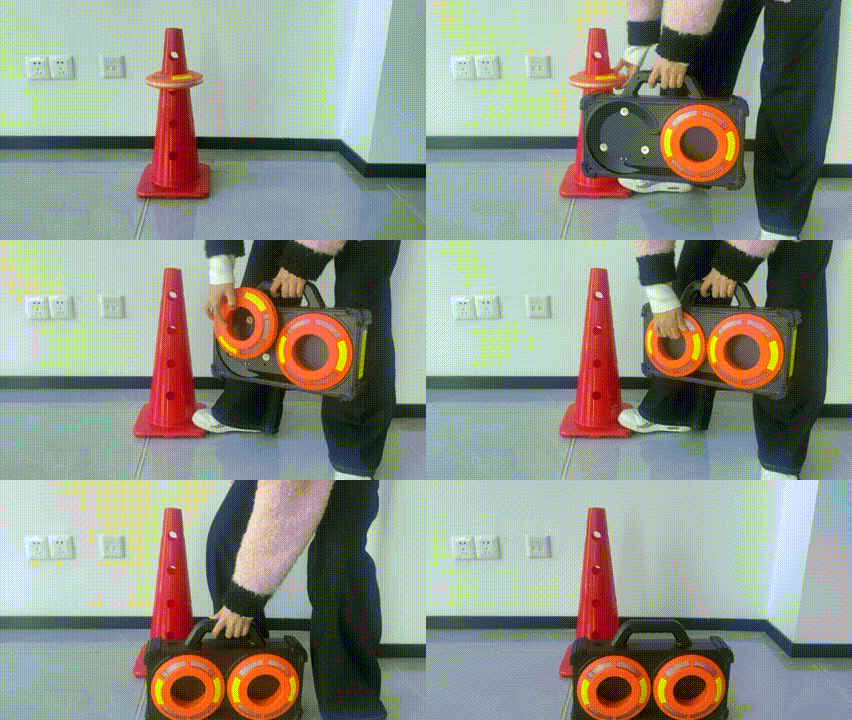
Step 1: Remove the Warning Lights from the Charging Case
Some products feature automatic activation. When a warning light is removed from its charging case, it can automatically turn on or enter its preset operating state.
This reduces the need to locate and operate the switch on every individual unit, making deployment more convenient for roadwork teams.
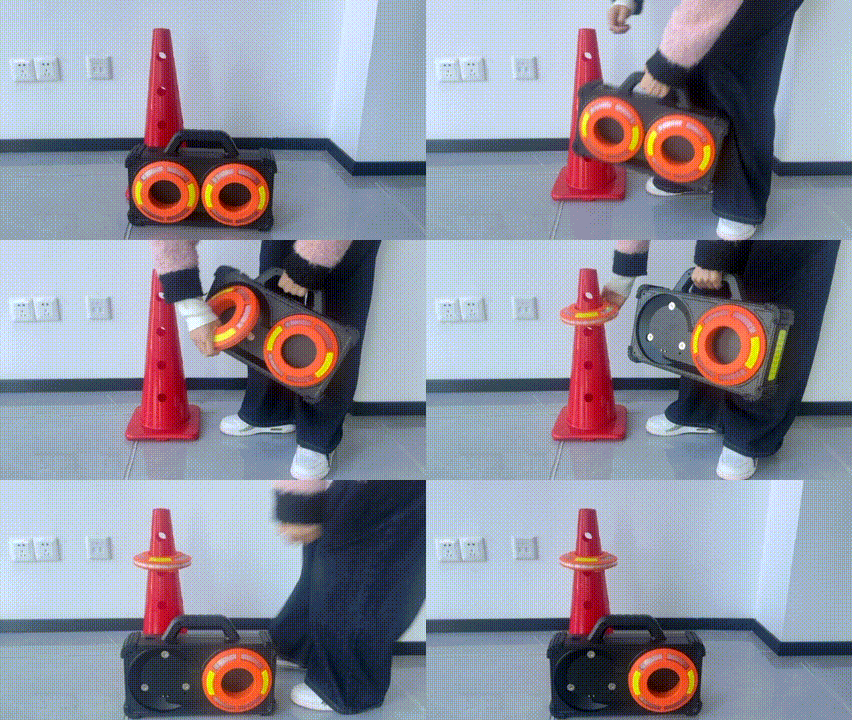
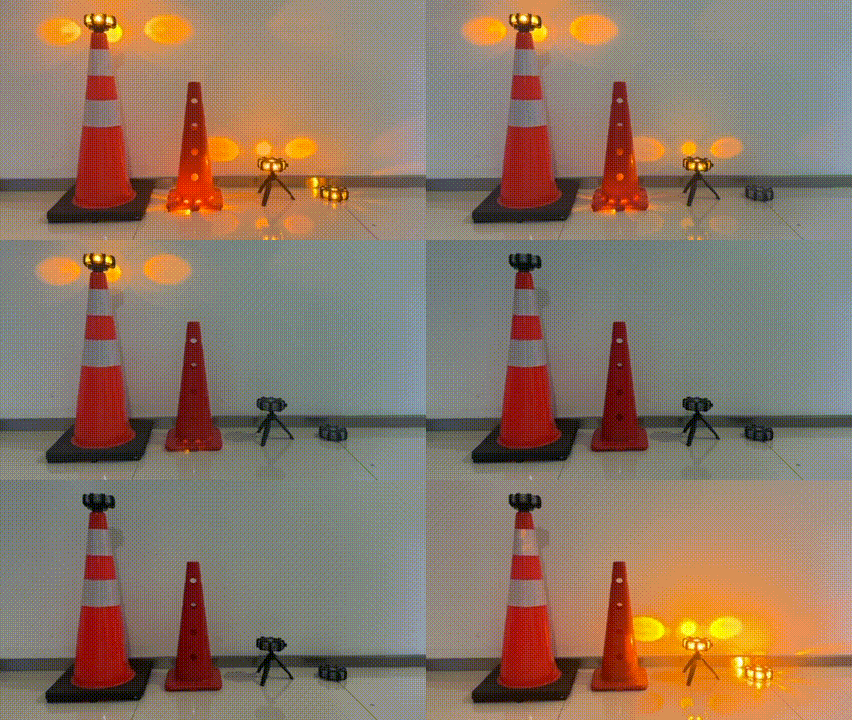
Step 2: Allow Multiple Lights to Synchronize
When multiple lights operate within the specified synchronization range, they can establish a wireless synchronized operating state.
For example, the Superflare HL75011 Road Flare and HL76907B Traffic Cone Ring Light both specify a wireless synchronization range of up to 10 meters.
Users do not need to connect each light with a cable. Multiple units can coordinate their flashing patterns within the specified range.
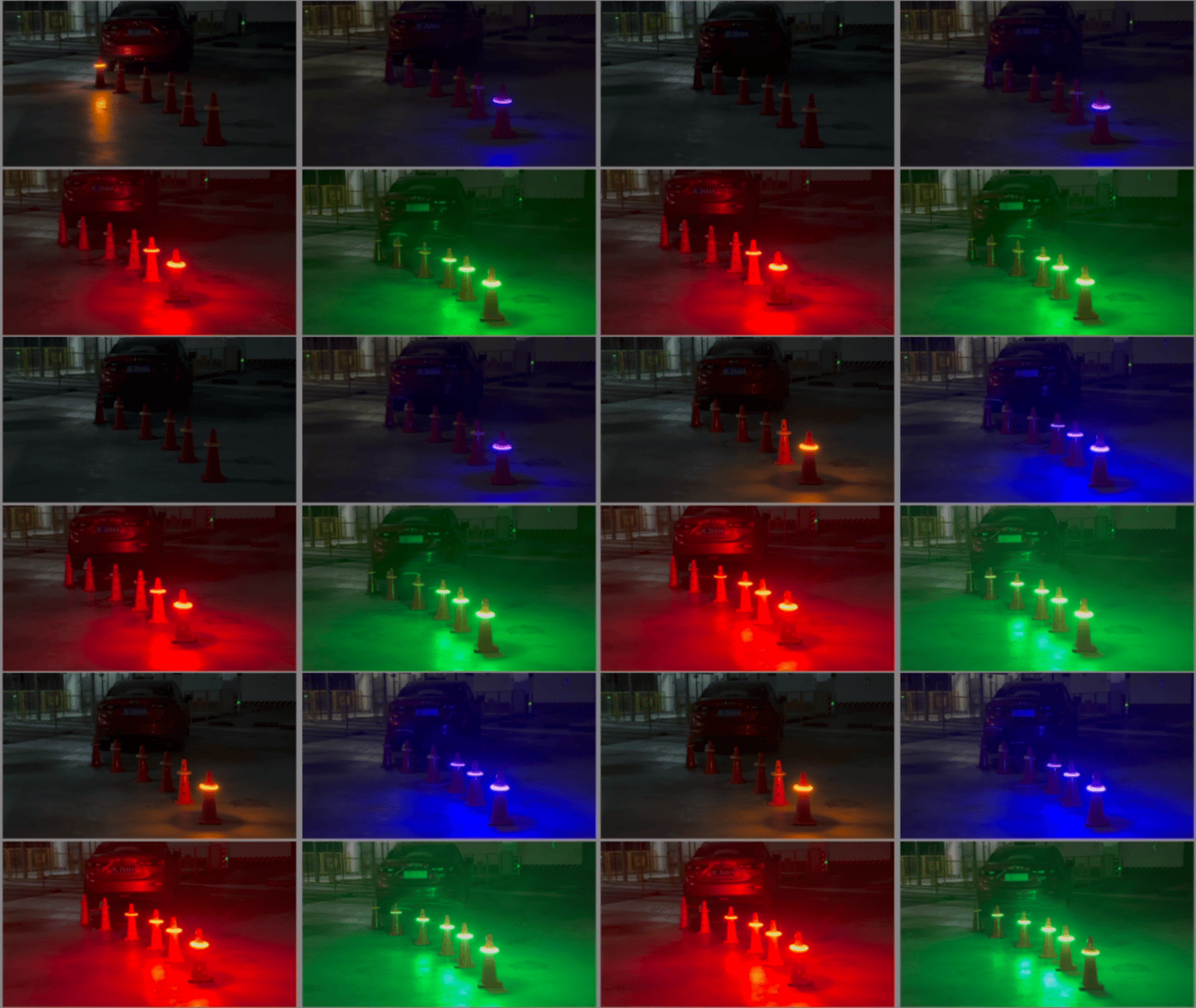
HL75011
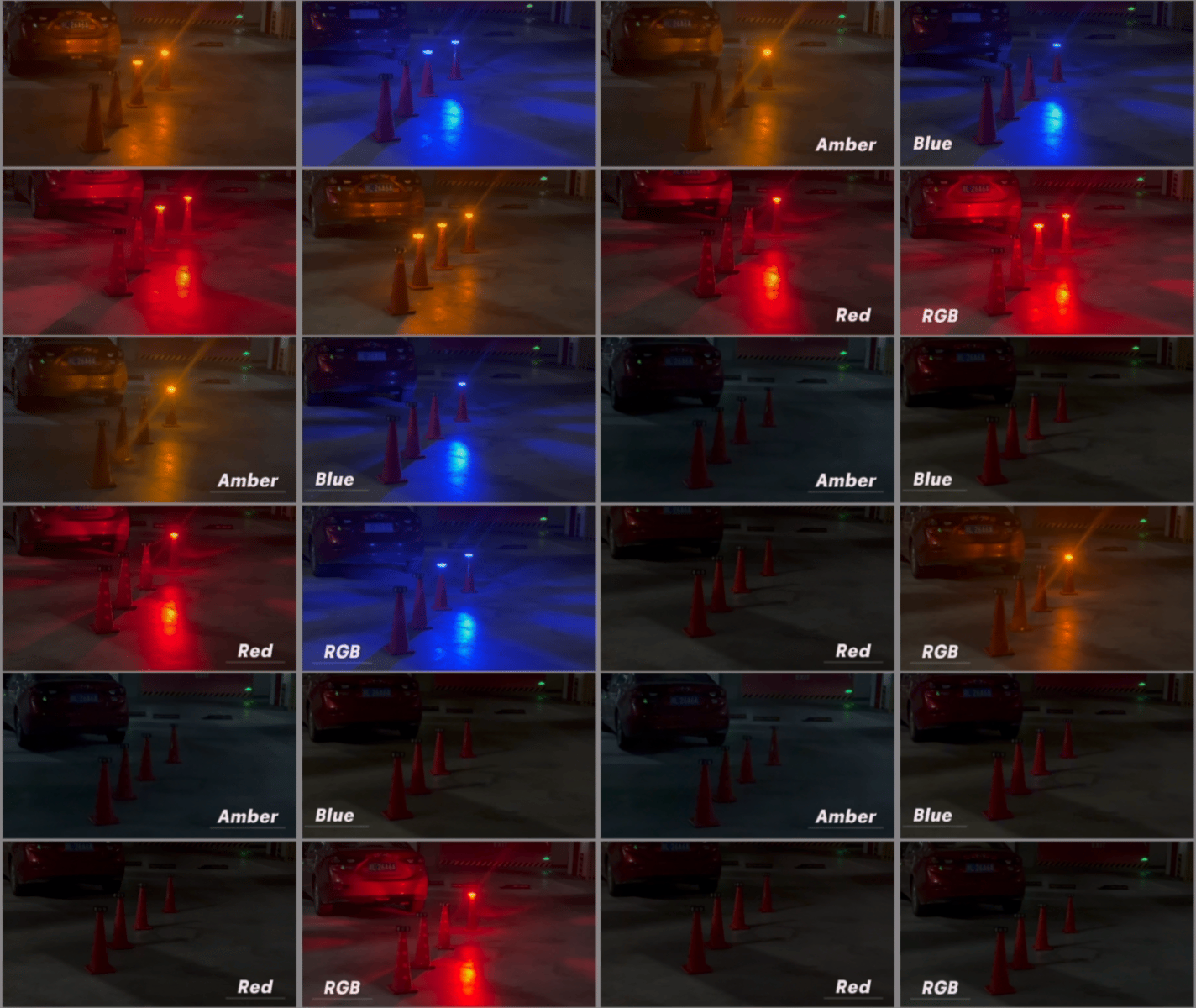
Step 3: Operate in Coordinated Flashing Patterns
After synchronization, multiple warning lights can operate according to the flashing functions supported by the product.
Common operating patterns include:
- Synchronous flashing: Multiple lights flash at the same time.
- Sequential flashing: Multiple lights flash one after another in a preset sequence.
- Multiple warning modes: Users can select different flashing effects according to the product design.
The number and types of available modes vary by model. Buyers should always check the specifications of the specific product.
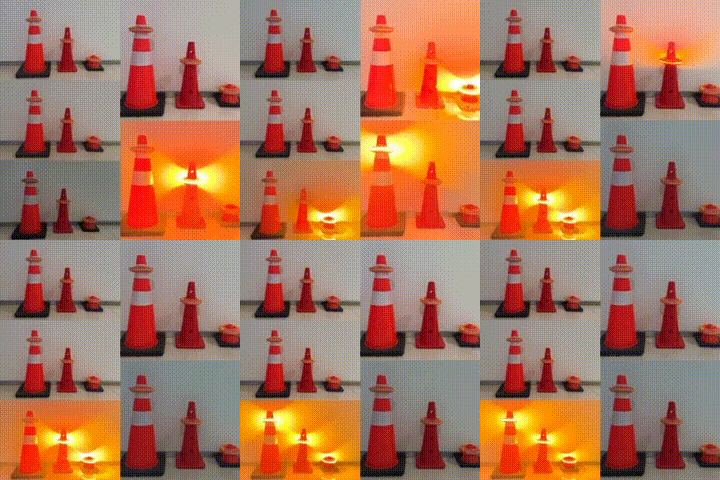
Step 4: Return the Lights to the Charging Case
Some wireless warning light kits feature automatic switching functions.
When a light is removed from the charging case, it may turn on automatically. After use, returning it to the case can automatically turn it off and recharge the unit.
This design simplifies equipment management and helps reduce unnecessary battery consumption caused by forgetting to switch off the lights.
The exact automatic functions depend on the product model and configuration.
3. What Is the Difference Between AUTO ON, AUTO SYNC, and AUTO OFF?
When choosing wireless synchronized warning lights, buyers may come across terms such as AUTO ON, AUTO SYNC, and AUTO OFF.
These terms describe different functions:
| Function | Meaning | Practical Benefit |
|---|---|---|
| AUTO ON | Automatic activation | The light turns on when removed from the case |
| AUTO SYNC | Automatic synchronization | Multiple lights automatically enter a coordinated operating state |
| AUTO OFF | Automatic shutdown | The light turns off when returned to the charging case |
These functions can work together to make warning light deployment and collection more convenient.
For example, a road maintenance team may need to place several warning lights around a work zone. Workers can remove the lights from the charging case and position them at designated locations. After activation and synchronization, the lights operate in their selected patterns. Once the work is completed, the lights can be returned to the charging case.
For teams that frequently deploy and collect warning equipment, this operating process can reduce repetitive manual steps.
Please note that not every wireless warning light includes all three functions. Buyers should confirm the actual configuration of each model.
4. Why Is the Synchronization Range Important?
The synchronization range is one of the key specifications to consider when choosing wireless synchronized warning lights. It indicates the distance within which multiple units are designed to coordinate wirelessly.
For example, the Superflare HL75011 Road Flare and HL76907B Traffic Cone Ring Light both specify a synchronization range of up to 10 meters.
When using these products, consider the following points:
- Plan the spacing between lights: Arrange the units according to the specified synchronization range.
- Consider the site layout: Roadwork areas may contain vehicles, equipment, and other obstacles. Test the lights in the actual deployment environment.
- Check synchronization before use: Before starting work, test the complete set to confirm that the lights operate in the expected patterns.
- Choose a suitable kit size: Different work zones require different numbers of warning lights and deployment arrangements.
The stated synchronization range is a product specification. Actual performance may vary depending on the surrounding environment and the way the lights are positioned.
5. Where Are Wireless Synchronized Warning Lights Used?
Wireless synchronized warning lights are suitable for applications that require multiple coordinated warning points. Compared with using a single warning light, multiple units operating in synchronized or sequential patterns can create a more continuous visual warning.
5.1 Road Construction and Maintenance
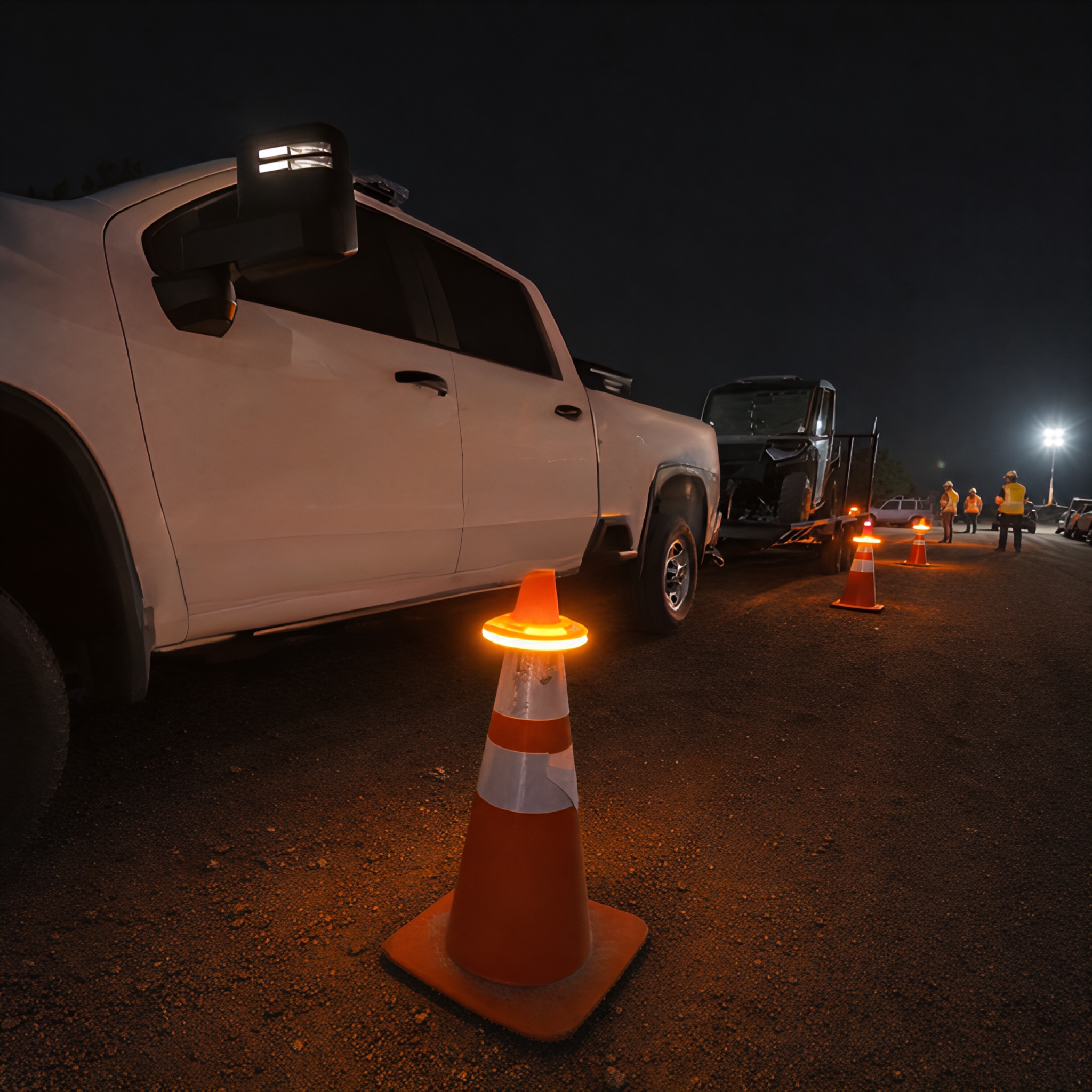
Road construction and maintenance teams often need to place multiple warning points around a work zone to alert approaching drivers to slow down and take care.
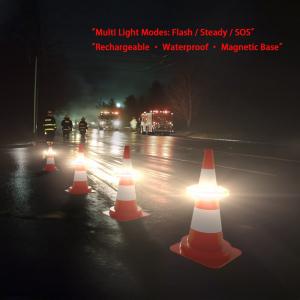
Wireless synchronized warning lights can be positioned around the work area and operated in synchronized or sequential flashing patterns to create a more continuous warning arrangement.
5.2 Vehicle Breakdown and Roadside Assistance
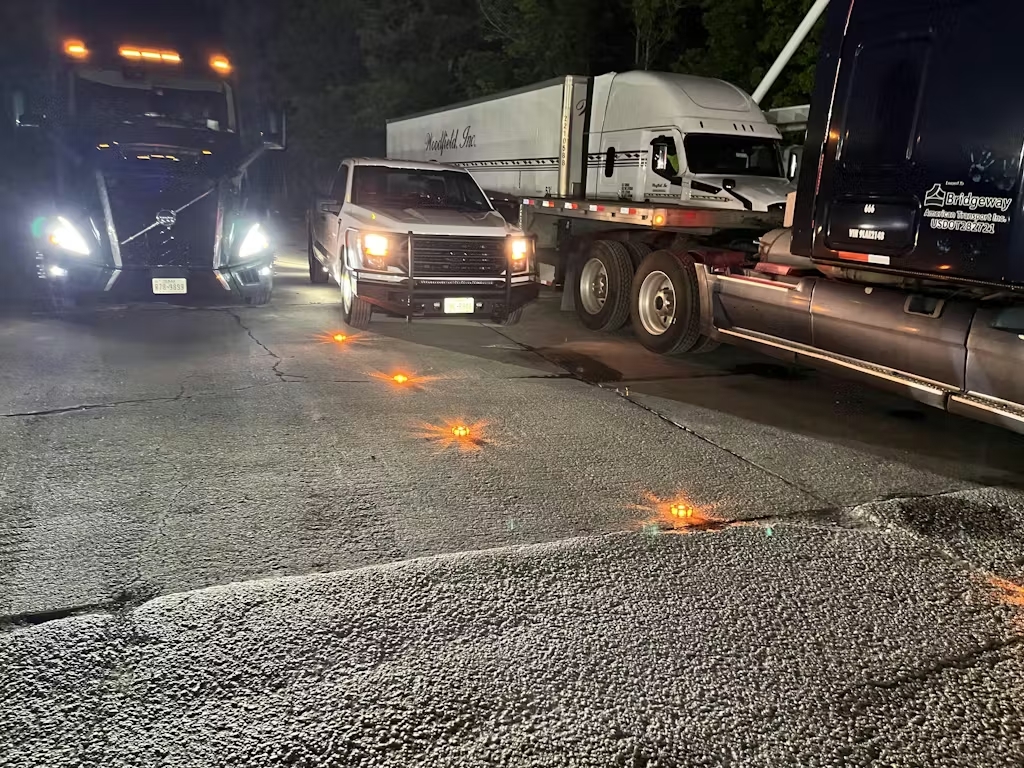
When a vehicle breaks down on the road, roadside assistance personnel may use portable warning lights to establish a warning area around the vehicle.
Wireless synchronization allows multiple lights to operate in coordinated patterns, helping other road users identify the area around the disabled vehicle.
5.3 Temporary Traffic Control
During temporary road closures, lane changes, and accident response operations, workers may need to deploy several warning points quickly.
Wireless synchronized warning lights do not require wired connections between individual units, helping simplify equipment setup.
5.4 Fleet and Construction Vehicle Safety
For road maintenance fleets, construction vehicles, and professional roadside assistance teams, portable wireless synchronized warning lights can be included as part of a vehicle safety equipment kit.
Multi-light kits with charging cases also make storage, transportation, and recharging more convenient.
6. What Should Buyers Consider When Purchasing Wireless Synchronized Warning Lights?
For importers, distributors, wholesalers, and road safety equipment suppliers, purchasing decisions should involve more than the product price. Buyers should also evaluate the product's functions, performance, and kit configuration.
| Purchasing Factor | What to Check | Why It Matters |
|---|---|---|
| Synchronization range | Wireless operating distance | Helps determine suitable light placement |
| Flashing modes | Synchronous, sequential, and other modes | Supports different warning requirements |
| Automatic functions | AUTO ON, AUTO SYNC, AUTO OFF | Can reduce manual operation |
| Battery capacity | Battery voltage and capacity | Helps evaluate battery configuration |
| Runtime | Operating time in different modes | Helps determine suitability for field use |
| Charging method | Type-C, USB, AC/DC, etc. | Affects daily charging and equipment management |
| IP rating | Water and dust protection rating | Helps buyers understand product protection |
| Mounting options | Magnets, traffic cone mounting, etc. | Supports different deployment environments |
| Kit configuration | Number of lights and charging case | Helps buyers select the right package |
B2B buyers should also consider product certifications, quality inspection, OEM/ODM capabilities, packaging options, and bulk supply capacity.
Before placing a bulk order, it is recommended to confirm the complete product specifications and test samples under the intended application conditions.
7. Superflare Wireless Synchronized Warning Light Solutions
Superflare offers a range of road safety warning lights for different applications and customer requirements.
The following products are designed for wireless synchronized warning applications.
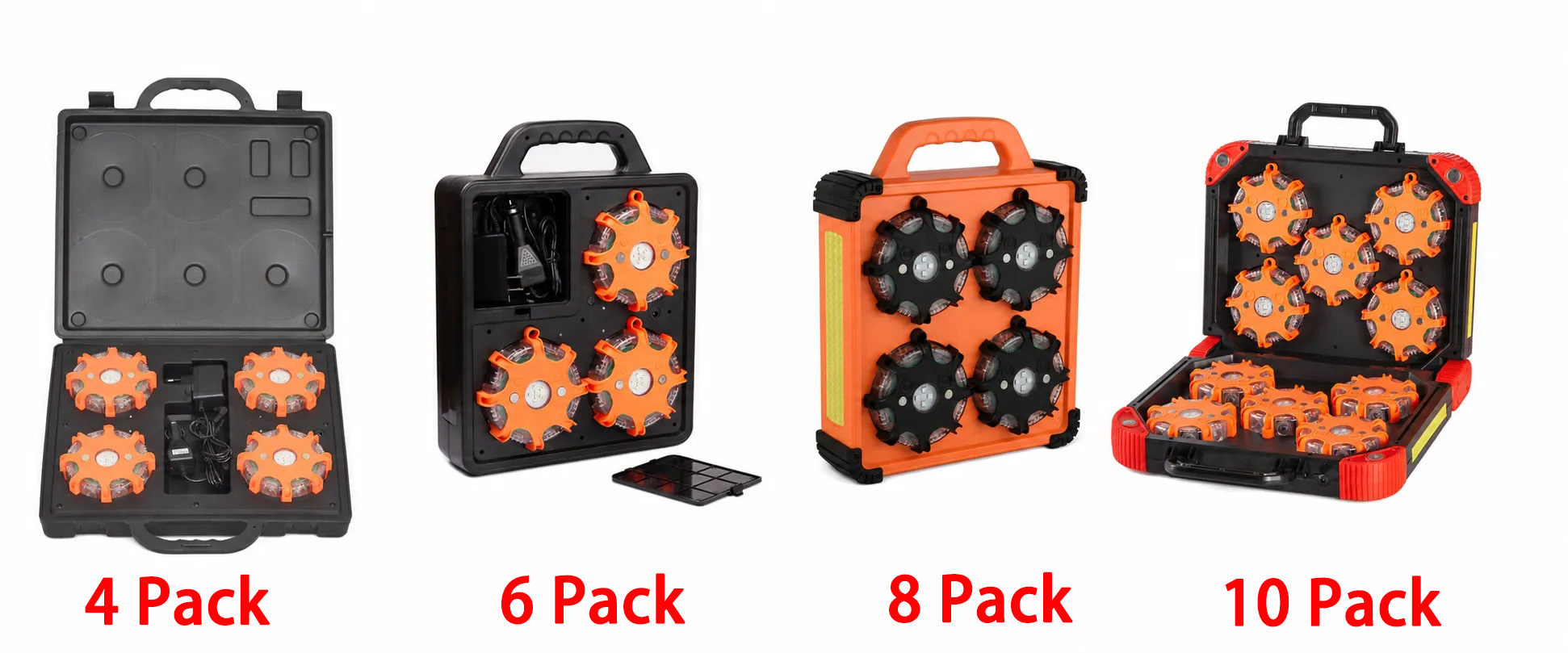
7.1 HL75011 Wireless Synchronized Road Flare
The HL75011 is a portable wireless synchronized LED Road Flare designed for roadside assistance, vehicle breakdown warning, road construction, and temporary traffic control.
Multiple units can coordinate within the specified synchronization range, helping users establish a warning area more efficiently.
Key Product Features:
- Battery: 3.7V 3000mAh
- Runtime: Up to 60 hours, depending on the operating mode
- 6 flashing modes per light
- Strong magnetic base
- Magnetic force: Approximately 2,200 GS per unit
- Wireless synchronization range: Up to 10 meters
- Material: ABS + TPR
- Protection rating: IPX7
- Crush resistance: 3 tons
- Available colors: Amber, Red, Blue, and RGB Mix
- Rechargeable carrying case for storage and charging
- Charging input: AC 100–240V / DC
Typical Applications:
- Roadside assistance
- Vehicle breakdown warning
- Road construction
- Accident scene warning
- Construction vehicle safety
The HL75011 combines portable warning lighting with wireless synchronization, making it suitable for professional users who need to deploy multiple warning lights quickly.
7.2 HL76907B Wireless Synchronized Traffic Cone Ring Light
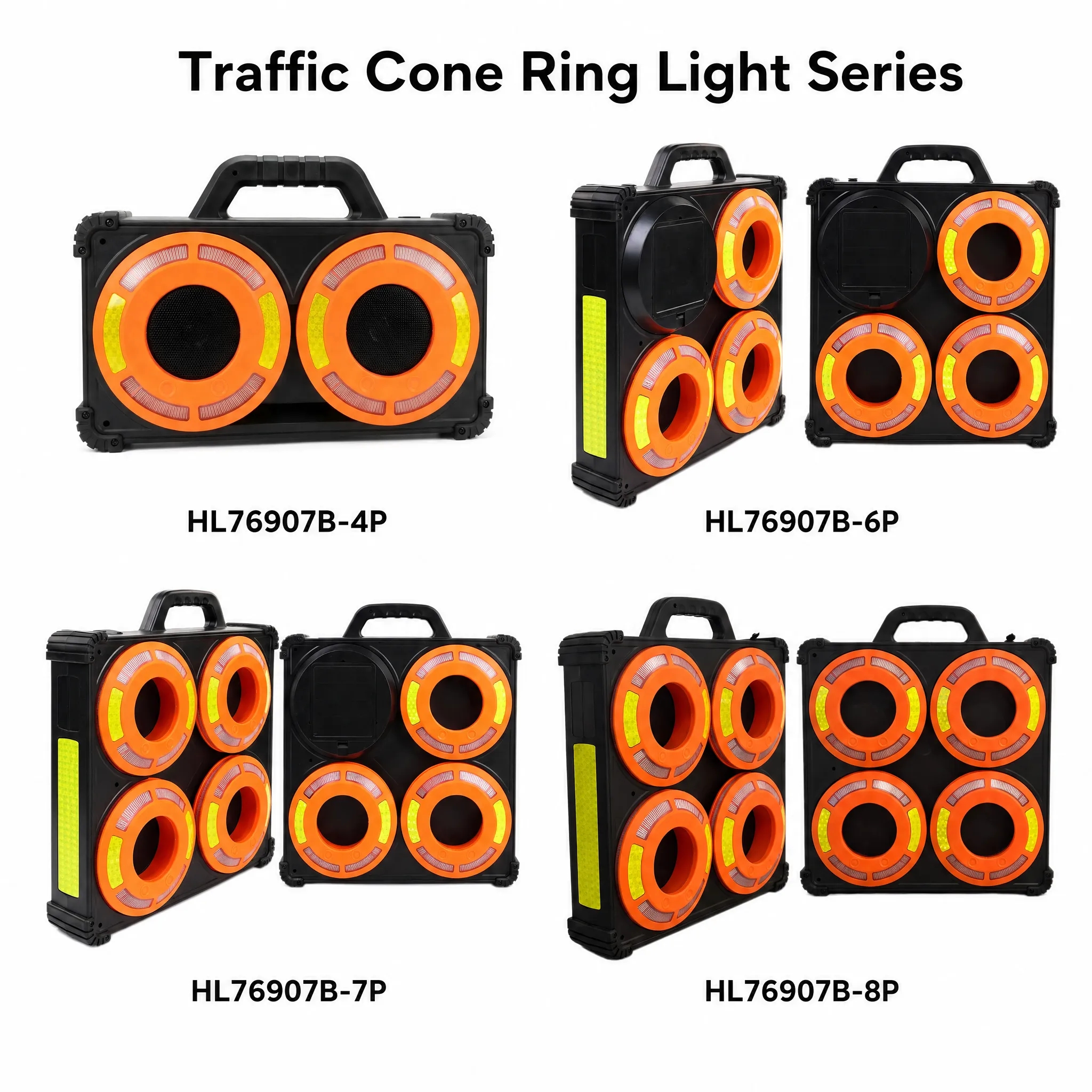
The HL76907B is a rechargeable LED Traffic Cone Ring Light designed for road construction, traffic control, and road maintenance applications.
The light can be mounted on top of a traffic cone. It also features magnets on the back for attachment to suitable metal surfaces, providing additional flexibility for different deployment situations.
Single-Light Specifications:
- LED source: 30 pcs 2835 SMD
- Power: 15W
- Battery: 3.7V 2200mAh
- Material: TPR + PC
- Size: 173 × 173 × 43mm
- 3 magnets on the back
- 2 reflective strips on the front
- Charging port: Type-C
- Protection rating: IPX7
- Wireless synchronization range: Up to 10 meters
- 5 synchronized flashing modes
- 6 single-light operating modes
- Runtime: 8–50 hours, depending on the operating mode
- Charging time: Approximately 6–7 hours
Kit Configuration:
- 8 warning lights
- Rechargeable carrying case
- Case dimensions: 389 × 79 × 440mm
- AC/DC charging support
Key Product Features:
- Designed for mounting on top of traffic cones
- Rear magnets for attachment to suitable metal surfaces
- Wireless synchronization and multiple flashing modes
- Reflective strips for additional visual identification
- Portable carrying case for convenient storage and charging
The HL76907B is suitable for road construction teams, traffic safety equipment distributors, and professional buyers looking for traffic cone warning light kits.
7.3 What Is the Difference Between HL75011 and HL76907B?
Both products support wireless synchronization, but they have different designs and primary applications.
| Comparison | HL75011 Road Flare | HL76907B Traffic Cone Ring Light |
|---|---|---|
| Product Type | Portable Road Warning Light | Traffic Cone Ring Light |
| Kit Quantity | 8 lights | 8 lights |
| Battery | 3.7V 3000mAh | 3.7V 2200mAh |
| Runtime | Up to 60 hours | 8–50 hours |
| Material | ABS + TPR | TPR + PC |
| Protection Rating | IPX7 | IPX7 |
| Single-Light Modes | 6 flashing modes | 6 single-light modes |
| Synchronized Modes | Wireless synchronization | 5 synchronized modes |
| Synchronization Range | Up to 10 meters | Up to 10 meters |
| Mounting | Magnetic mounting | Traffic cone mounting and magnetic mounting |
| Charging | Rechargeable charging case | Type-C charging and AC/DC charging case |
For customers who need portable road warning lights for vehicle breakdowns, roadside assistance, and temporary warning applications, the HL75011 may be a suitable option.
For customers whose main applications involve road construction, traffic cone deployment, and temporary traffic control, the HL76907B may be a better fit.
The final product selection should be based on the intended application, required number of lights, mounting method, and charging requirements.
8. Testing and Quality Checks for Wireless Synchronized Warning Lights
Road safety warning equipment needs to provide the required functions and operate reliably in its intended applications.
When evaluating wireless synchronized warning lights, buyers can pay attention to the following checks:
1. Wireless Synchronization Test
Turn on multiple units and check whether they synchronize or flash sequentially according to the product's specified functions.
2. Automatic Activation and Shutdown Test
For products with automatic switching functions, check whether the lights activate when removed from the charging case and switch off as designed when returned.
3. Battery and Charging Test
Check that the lights charge correctly. Test the runtime in different operating modes according to the product specifications.
4. Protection Performance Verification
Review the IP protection rating specified for the product and confirm the corresponding protection requirements and test standards.
5. Appearance and Structural Inspection
Inspect the light housing, magnets, reflective strips, charging ports, and carrying case to make sure the product structure and accessories meet the agreed requirements.
For bulk purchasing projects, buyers are advised to confirm product specifications, testing standards, and inspection requirements before order confirmation.
9. Frequently Asked Questions (FAQ)
Q1: What are wireless synchronized warning lights?
Wireless synchronized warning lights are devices that allow multiple warning lights to flash in coordinated patterns without wired connections between individual units. They are commonly used for road construction, roadside assistance, and temporary traffic control.
Q2: Do wireless synchronized warning lights need wired connections?
No. Individual lights do not need to be connected to each other with cables. Products with wireless synchronization functions can coordinate within their specified operating range.
Q3: What is the synchronization range of wireless warning lights?
The synchronization range depends on the product model. The Superflare HL75011 and HL76907B product pages specify a range of up to 10 meters. Actual performance should be checked in the intended operating environment.
Q4: What do AUTO ON and AUTO OFF mean?
AUTO ON means the light turns on automatically when removed from the charging case. AUTO OFF means the light switches off automatically when returned to the case. The exact functions depend on the product model.
Q5: Can wireless synchronized warning lights flash at the same time?
Yes. Products that support synchronous flashing can make multiple lights flash in the same operating rhythm. Some models also support sequential flashing patterns.
Q6: Are wireless synchronized warning lights suitable for road construction?
Yes. Multiple warning lights can be positioned around a work zone and operated in synchronized or sequential patterns to help drivers identify the construction area.
Q7: What is the difference between HL75011 and HL76907B?
The HL75011 is a portable Road Flare designed for roadside assistance, vehicle breakdown warning, and temporary warning applications. The HL76907B is a Traffic Cone Ring Light designed mainly for traffic cone deployment, road construction, and temporary traffic control.
Q8: Does Superflare support OEM/ODM customization?
Superflare provides OEM/ODM cooperation for overseas distributors, importers, wholesalers, and brands. Available customization options, product configurations, packaging, and minimum order quantities can be discussed according to project requirements.
Conclusion: Choose Wireless Synchronized Warning Lights for Your Application
Wireless synchronized warning lights use wireless coordination, synchronized flashing, and, on selected models, automatic operating functions to make multi-light warning deployments more convenient.
For road construction teams, roadside assistance providers, and traffic safety equipment buyers, product selection should involve more than the number of lights and the unit price. Synchronization range, flashing modes, battery capacity, mounting options, protection rating, and charging case configuration should also be considered.
Superflare offers road safety warning products such as the HL75011 Road Flare and HL76907B Traffic Cone Ring Light, with product solutions and OEM/ODM cooperation for different markets and applications.
If you are looking for wireless synchronized warning lights, rechargeable Road Flares, or Traffic Cone Ring Lights, contact Superflare to learn more about product specifications, kit configurations, and bulk purchasing options.
Contact Superflare:
- Website: www.superflare.net
- Email: sales001@brilliant-dragon.net
- Submit a Product Inquiry