Fleet Safety Lighting: A B2B Buyer’s Guide
Fleet Safety Lighting: A B2B Buying Guide for Service Vehicles

Fleet safety lighting helps make service vehicles, roadside incidents, and temporary work areas more visible to approaching road users. For fleet managers, roadside assistance providers, traffic management contractors, and safety equipment distributors, selecting the right equipment involves more than comparing brightness or unit price. The lighting configuration must match the vehicle's role, work environment, deployment method, and procurement requirements.
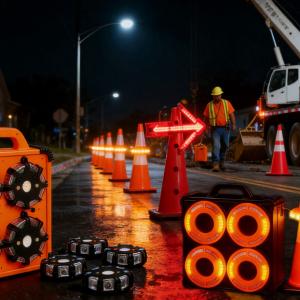
A practical fleet safety lighting setup may combine rechargeable LED road flares, traffic cone lights, directional arrow warning lights, traffic batons, and wearable safety lights. Each product serves a different purpose, from marking a roadside hazard to guiding traffic or improving the visibility of personnel working near vehicles.
For B2B buyers, the objective is to build a suitable warning equipment configuration that can be deployed consistently, stored efficiently, and replenished through a reliable supply channel.
What Is Fleet Safety Lighting?
Fleet safety lighting refers to warning and visibility equipment used around service vehicles, roadside operations, temporary work zones, and traffic management activities.
Depending on the application, a fleet may need equipment to perform four different functions:
- Hazard marking: Identify a stopped vehicle, roadside incident, or temporary hazard.
- Work-zone marking: Make the boundaries of a temporary work area more noticeable.
- Directional signaling: Communicate a direction or provide a visual cue for approaching traffic.
- Personnel visibility: Help make workers easier to notice when they are outside a vehicle or working in low-light conditions.
These functions are related, but they are not interchangeable. A light that marks a hazard does not necessarily provide directional guidance, and a wearable light does not replace a properly planned roadside warning setup.
For procurement teams, identifying the operational task first makes it easier to select the appropriate product category and avoid purchasing equipment that does not fit the intended use.
Which Fleet Safety Lighting Products Should Buyers Consider?
The right product mix depends on where the vehicle operates, how the warning equipment will be deployed, and whether the operator needs to mark a hazard, guide traffic, or improve personal visibility.
1. Rechargeable LED Road Flares for Roadside Incidents
Rechargeable LED road flares are designed to provide portable warning points around vehicles and roadside hazards. Multi-unit kits allow operators to position several lights around an incident rather than relying on a single warning point.
For roadside assistance teams, fleet operators, and emergency equipment distributors, a multi-unit configuration can be useful when the operating procedure calls for multiple warning devices.
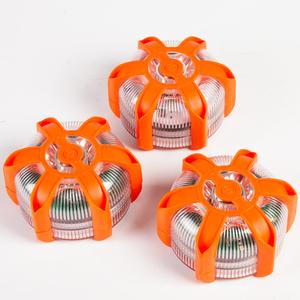
Superflare's 8-Pack Rechargeable LED Road Flares feature rechargeable units, magnetic mounting, and automatic synchronization. The product page lists multiple flashing modes and a battery runtime of up to 60 hours, depending on the mode.
Before purchasing, buyers should confirm the exact model, light color, runtime conditions, charging arrangement, mounting options, and kit contents.
Suitable procurement considerations include:
- Number of warning units required per vehicle
- Storage and charging arrangements
- Flashing modes and synchronization requirements
- Magnetic mounting and ground deployment
- Battery runtime under the intended operating mode
- Replacement, replenishment, and packaging requirements
For a more detailed comparison of product types and purchasing criteria, see the LED Road Flare Buying Guide: Types, Features & B2B Selection.
2. Rechargeable Traffic Cone Lights for Temporary Work Zones
Traffic cone lights can add illuminated warning points to a temporary work area. They are relevant to road maintenance teams, traffic management contractors, utility service providers, and fleets that need to mark work zones or direct attention around roadside activities.
Compared with deploying individual lights on the ground, cone-mounted lights allow warning equipment to be positioned at selected points along a work area. Some models also support magnetic mounting on compatible metal surfaces.
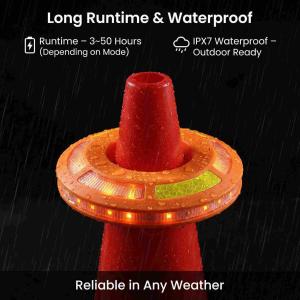
Superflare's 4-Pack Rechargeable LED Traffic Cone Lights use automatic synchronization and sequential warning patterns. The product page specifies a magnetic base, Type-C charging, and an IPX7 waterproof rating.
When evaluating a cone light kit, buyers should check:
- Compatibility with the intended traffic cones
- Whether sequential or synchronized flashing is required
- Mounting stability and deployment time
- Charging and storage arrangements
- Operating runtime for the selected mode
- Suitability for the intended outdoor environment
The number of lights in a kit should be determined by the planned deployment layout and the fleet's operating procedures, rather than by pack size alone.

3. Directional Arrow Warning Lights for Traffic Guidance
Warning and directional signaling solve different problems. A conventional warning light indicates that a vehicle or hazard is present, while an arrow warning light can provide an additional visual indication of direction.
Directional warning equipment may be relevant to temporary lane closures, roadside maintenance, breakdown assistance, and traffic diversion operations. The appropriate device depends on the intended mounting position, the direction that needs to be communicated, and the applicable operating requirements.
Superflare's Rechargeable LED Arrow Warning Light features a folding design and offers magnetic and cone-mounting options.
Before placing a bulk order, buyers should verify the exact model's arrow patterns, operating modes, power source, runtime, mounting accessories, dimensions, and visibility requirements.
The procurement checklist should also confirm that the selected device is appropriate for the intended vehicle or work-zone application. Product selection alone does not establish compliance with local traffic regulations.

4. LED Traffic Batons for Manual Traffic Control
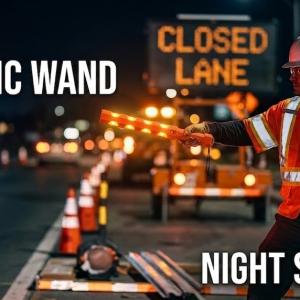
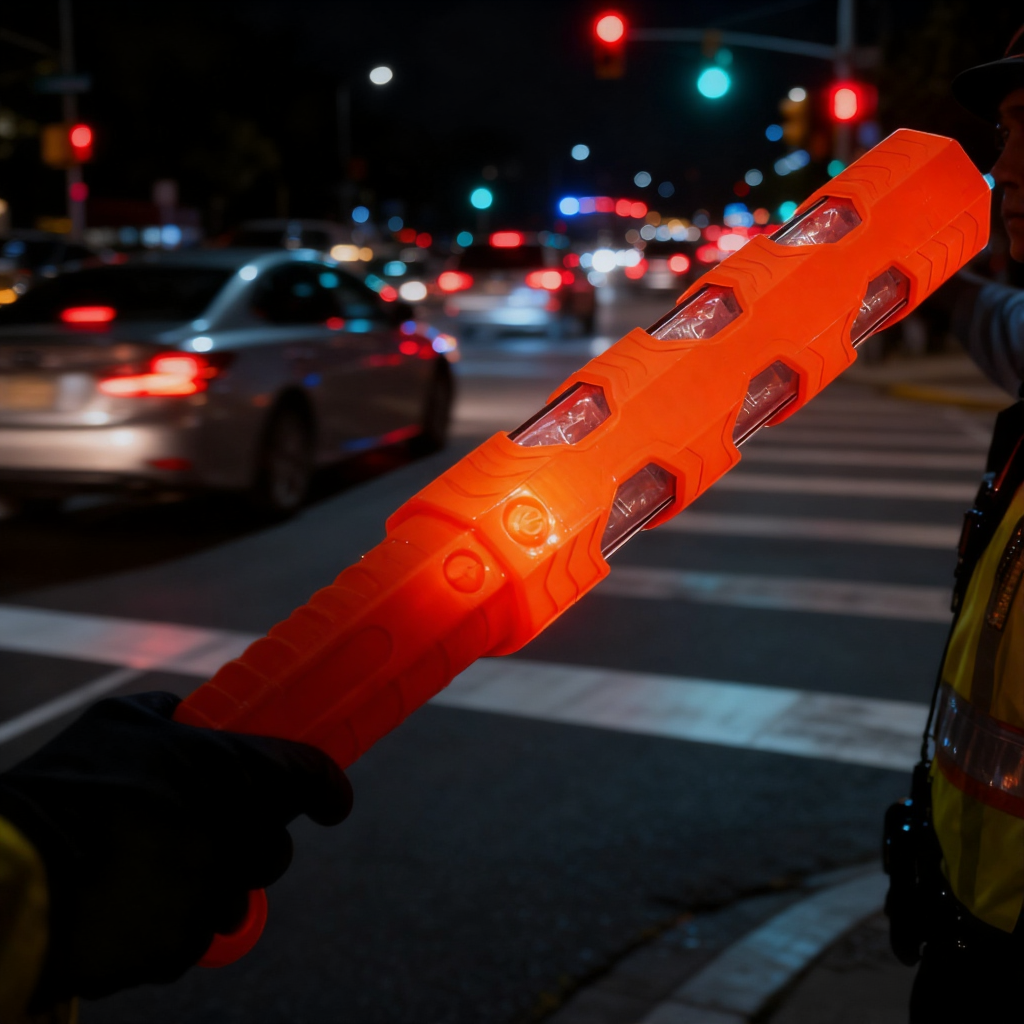
Traffic batons serve a different function from road flares and cone lights. They provide a handheld visual signal that personnel can use when directing vehicles, pedestrians, or movement through a controlled area.
They may be relevant to parking operations, event coordination, checkpoints, loading areas, and temporary traffic control, subject to the user's role and local requirements.
Superflare's Rechargeable LED Traffic Baton includes a rechargeable battery, multiple lighting modes, Type-C charging, a magnetic base, and a top flashlight.
For B2B procurement, consider:
- Whether the baton is intended for single-color or dual-color signaling
- Available lighting modes
- Battery runtime and charging time
- Grip, weight, and storage requirements
- Magnetic mounting needs
- Logo and packaging customization options
Traffic batons should be selected for the specific signaling task. They are not a substitute for a multi-point roadside warning system where one is required.
5. Wearable Safety Lights for Personnel Visibility
Vehicle-mounted and ground-deployed warning devices do not address every visibility need. Workers may also need a portable light attached to clothing, a vest, a strap, or compatible equipment.
Wearable safety lights can support personnel visibility during roadside assistance, field service, parking operations, and other low-light activities. Their role is to help make the wearer more noticeable, rather than to replace vehicle warning lights or work-zone controls.
Superflare's Rechargeable Clip-On Wearable Safety Light features a rotatable clip and magnetic base. The product page lists a 3.7V 1200mAh battery, IP65 protection, and up to 10 hours of runtime, depending on operating conditions.
Buyers should check attachment compatibility, light color, operating mode, runtime, charging arrangements, and whether the light fits the organization's workwear requirements.

For distributors, wearable safety lights may also complement a broader safety equipment range rather than being purchased as a standalone category.
How Should Buyers Combine Fleet Safety Lighting Products?
A practical purchasing strategy starts with the task each product needs to perform. Buying several products without assigning each one a clear role can increase cost and complicate storage, training, and replenishment.
The following table illustrates possible product configurations. It is a planning guide, not a universal deployment prescription.
| Operating situation | Product categories to consider | Procurement priority |
|---|---|---|
| Vehicle breakdown or roadside assistance | Rechargeable LED road flares, wearable safety lights | Portable deployment, storage, charging, and visibility |
| Temporary maintenance work zone | Traffic cone lights, LED road flares | Work-zone layout, mounting, and coordinated warning patterns |
| Directional guidance or temporary diversion | Arrow warning lights, traffic batons where appropriate | Clear signaling, mounting, and operating procedures |
| Nighttime inspection or field service | Wearable safety lights, suitable warning equipment | Hands-free attachment, runtime, and worker visibility |
| Fleet equipment standardization | Selected warning light kits matched to vehicle roles | Consistent specifications, training, replenishment, and packaging |
For example, a roadside assistance operator may need multiple warning points around a stopped vehicle, while a traffic management contractor may place greater emphasis on cone-mounted warning equipment and directional signaling. A personnel visibility requirement may call for wearable lights in addition to the vehicle's existing warning equipment.
The configuration should follow the organization's risk assessment, operating procedure, and applicable requirements. No single product combination is appropriate for every fleet.
What Should B2B Buyers Check Before Placing a Bulk Order?
Once the product categories have been identified, buyers should evaluate the equipment and the supplier's ability to support repeat procurement.
1. Verify Product Specifications
Compare the exact model specifications rather than relying only on a general product name.
Important details may include:
- Battery capacity and charging method
- Runtime under specified lighting modes
- Flashing and synchronization functions
- Waterproof rating and the conditions covered by the rating
- Mounting options and compatible accessories
- Product dimensions, weight, and case contents
- Available light colors and control functions
If two products advertise different maximum runtimes, ask which operating modes and test conditions were used. Maximum runtime figures should not be treated as directly comparable without that context.
2. Request Samples Before Mass Production
Sample evaluation allows purchasing teams to check whether the product suits the intended operation before committing to a larger quantity.
Depending on the product, a sample review may include:
- Activation and control functions
- Charging and battery performance
- Mounting stability
- Flashing patterns and synchronization
- Housing, lens, cable, and accessory quality
- Packaging and storage arrangements
Where waterproofing, impact resistance, or other performance requirements are important, request the applicable test reports or supporting documentation. Do not assume that a specification on one model applies to every product in the range.
3. Confirm Certifications and Market Requirements
Certification and regulatory requirements depend on the product, its intended use, and the destination market.
Buyers should request the relevant documentation for the exact model and confirm its scope, validity, and applicability before making compliance claims or approving the product for a particular use.
A supplier's general statement about certification is not a substitute for reviewing the actual documentation. Where vehicle lighting or traffic-control rules apply, the buyer should verify the local requirements with the appropriate authority or qualified professional.
4. Check OEM/ODM and Private-Label Capabilities
Distributors and private-label brands may require more than standard product supply. Depending on the model and order, purchasing requirements can include:
- Logo printing
- Custom packaging and labeling
- Light color or flashing-mode options
- Accessory configurations
- Product or packaging development
- Sample approval before mass production
Confirm which options are available for the selected model, the minimum order quantity for each customization, the approval process, and the effect on lead time.
5. Evaluate Quality Consistency and Repeat Orders
For recurring fleet procurement, the first sample is only one part of supplier evaluation.
Buyers should clarify how approved samples are documented, how incoming materials and finished products are inspected, how product changes are communicated, and how repeat orders are checked against the approved specification.
It is also useful to confirm packaging details, spare-part availability where applicable, production lead times, and the process for handling quality issues.
These checks help purchasing teams evaluate the supplier relationship as well as the product itself.
How Can Fleet Managers Standardize Warning Equipment Deployment?
Selecting suitable products is only one part of a fleet safety program. The equipment also needs to be stored, inspected, deployed, and replenished consistently.
A documented deployment procedure can help personnel understand which equipment to use, where it should be stored, how it should be checked, and when it needs to be replaced or recharged.
A fleet deployment SOP may address:
- Equipment assignment: Identify which warning devices are assigned to each vehicle or team.
- Pre-use inspection: Check battery status, charging condition, physical damage, and accessory availability.
- Deployment instructions: Define the approved procedures for the relevant incident or work-zone type.
- Personnel responsibilities: Clarify who deploys, retrieves, inspects, and replenishes the equipment.
- Post-use checks: Return equipment to its designated storage location and record any defects or charging needs.
- Periodic review: Update the procedure when equipment, operational risks, or applicable requirements change.
For a more detailed framework, read Road Flare Deployment SOP for Fleet Managers: What Should It Include?.
The SOP should reflect the organization's own risk assessment and applicable procedures. A general purchasing guide cannot replace site-specific training or local traffic-control requirements.
Frequently Asked Questions
What products are included in fleet safety lighting?
Fleet safety lighting can include rechargeable LED road flares, traffic cone lights, directional arrow warning lights, traffic batons, and wearable safety lights. The appropriate selection depends on whether the fleet needs to mark hazards, identify work zones, provide directional signals, or improve personnel visibility.
Are rechargeable LED road flares suitable for fleet procurement?
They may be suitable for fleets that need portable warning devices for repeated use. Buyers should evaluate the number of units required, battery runtime, charging arrangements, mounting options, storage, and the operating procedure before selecting a kit.
Should buyers choose road flares or traffic cone lights?
The choice depends on the deployment task. Road flares can provide portable warning points around a vehicle or roadside hazard, while traffic cone lights add illumination to selected points in a temporary work zone. Some operations may require both categories, subject to their risk assessment and procedures.
What should buyers check when comparing warning light runtime?
Confirm the lighting mode, test conditions, battery specification, and whether the quoted runtime applies to one unit or a complete system. A maximum runtime figure alone does not establish which product will perform best for a particular shift or operation.
Can fleet safety lighting products be customized for distributors?
Some products offer OEM/ODM options such as logo printing, packaging, light color selection, or flashing-mode customization. Buyers should confirm the available options, minimum order quantity, sample approval process, and lead time for each specific model.
Do warning lights automatically meet local traffic regulations?
No. Product features and certification documents must be checked against the requirements applicable to the specific product and market. Buyers should verify the permitted use, colors, mounting requirements, and other relevant rules before deployment.
Conclusion: Build a Fleet Safety Lighting Configuration Around the Task
Fleet safety lighting should be selected according to the task each device needs to perform. Rechargeable LED road flares can provide portable warning points, traffic cone lights can support temporary work-zone marking, arrow warning lights can provide directional signals, traffic batons can support manual control, and wearable lights can improve personnel visibility.
For fleet managers, distributors, and private-label brands, the purchasing process should combine application planning, specification verification, sample evaluation, documentation checks, and supplier assessment.
Rather than purchasing equipment based on brightness or price alone, start by identifying the operational requirements, determine the appropriate product categories, and confirm the exact specifications before placing a bulk order.
Planning a fleet or distributor order? Contact Superflare to discuss product configurations, sample evaluation, OEM/ODM options, and bulk procurement requirement