Road Safety Equipment: Flare vs Arrow Board vs Cone vs Baton
Road safety equipment is often compared by brightness, size, or price. But for professional buyers, the more important question is: What job does the equipment need to perform?
A roadside emergency, a temporary lane closure, a construction work zone, and a manual traffic-control operation all require different types of visibility equipment.
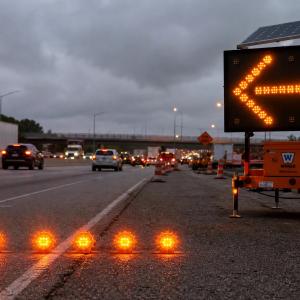
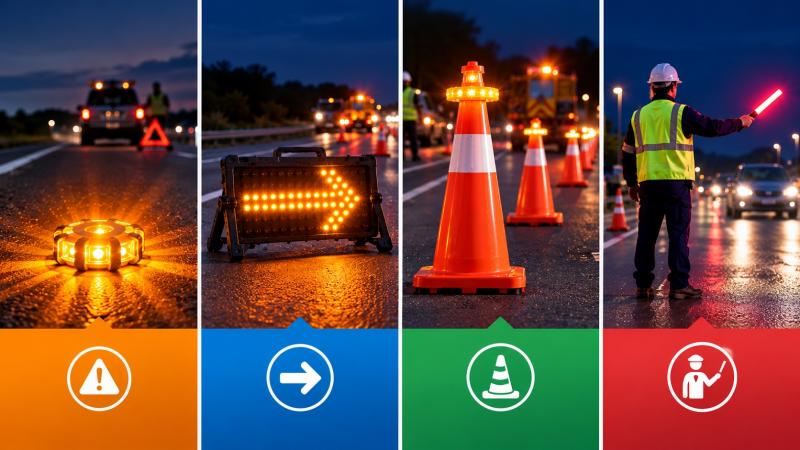
A road flare is primarily used to warn approaching drivers and mark a hazard. An arrow light provides directional information. A traffic cone light adds active visibility to a physical work-zone marker. A traffic baton gives a person a portable tool for manual signaling and traffic control.
These products are related, but they are not interchangeable.
For distributors, fleet operators, contractors, emergency equipment suppliers, and private-label brands, the right selection depends on warning function, viewing direction, deployment method, operating environment, battery requirements, and procurement needs.
Quick rule: Flares warn, arrow lights direct, cone lights enhance physical zone marking, and batons support human-controlled signaling.
Table of Contents
- How Should Road Safety Equipment Be Classified?
- Flare vs Arrow Light vs Cone Light vs Baton
- When Is a LED Road Flare the Right Choice?
- When Should Buyers Choose an Arrow Light?
- When Are Traffic Cone Lights Better?
- When Is a Traffic Baton the Better Option?
- Which Road Safety Equipment Should You Choose?
- What Should B2B Buyers Check Before Ordering?
- Frequently Asked Questions
How Should Road Safety Equipment Be Classified?
The easiest way to understand road safety equipment is to classify each product by its primary job.
| Product | Primary Function | Typical Deployment | Main Buyer Considerations |
|---|---|---|---|
| LED Road Flare | Warning and hazard marking | Ground, vehicle, roadside emergency | Visibility, battery life, mounting, durability |
| LED Arrow Light | Directional signaling | Vehicle, traffic cone, roadside work area | Arrow pattern, visibility, mounting, portability |
| LED Traffic Cone Light | Active visibility for work-zone markers | Traffic cone or metal vehicle surface | 360° visibility, synchronization, battery life |
| LED Traffic Baton | Manual visual signaling | Handheld or magnetic mounting | Brightness, grip, modes, battery, weather resistance |
The key difference is not simply how bright each product is.
It is how the warning is communicated.
A flare tells drivers:
“There is a hazard here.”
An arrow light tells drivers:
“Pay attention to this direction.”
A cone light helps make a physical work-zone marker more visible:
“This area or boundary needs your attention.”
A traffic baton allows a trained operator to communicate directly:
“Move, stop, slow down, or follow this instruction.”
This functional distinction is particularly important for B2B buyers because distributors and fleet operators often need to build a product range rather than purchase one universal warning device.
Flare vs Arrow Light vs Cone Light vs Baton
Before choosing a specific product, buyers should compare the four categories by deployment method and operating purpose.
| Selection Factor | LED Road Flare | LED Arrow Light | LED Cone Light | LED Traffic Baton |
|---|---|---|---|---|
| Main purpose | Hazard warning | Directional signaling | Work-zone visibility | Manual signaling |
| Typical placement | Ground / vehicle | Vehicle / cone / roadside | Traffic cone / vehicle | Handheld / magnetic |
| Directional information | Limited | Strong | Moderate | Operator-controlled |
| 360° visibility | Product dependent | Product dependent | Designed for 360° visibility | Product dependent |
| Best suited for | Breakdowns, emergencies | Lane guidance, road work | Construction zones, lane control | Police, security, parking, events |
| Deployment style | Fast, multi-unit | Foldable and portable | Multi-unit cone system | Handheld |
| B2B value | Emergency kits and fleets | Traffic-control equipment | Construction and road-work systems | Manual traffic-control channels |
The selection should start with the scenario, not the product specification.
For example:
- A fleet operator responding to roadside breakdowns may prioritize portable LED road flares.
- A road-maintenance contractor may need directional arrow lights.
- A construction supplier may prefer rechargeable traffic cone lights.
- A police, security, parking, or event-safety distributor may need traffic batons.
This is why comparing only lumen output or price can lead to the wrong purchasing decision.
What Should Buyers Consider?
Before placing a bulk order, evaluate:
- Visibility direction: Is the warning intended to be seen from multiple directions or mainly from one viewing angle?
- Deployment method: Will the product be placed on the ground, mounted to a vehicle, attached to a cone, or held by an operator?
- Operating time: How long does the equipment need to remain active?
- Weather resistance: Will it be used outdoors in rain or other demanding conditions?
- Mounting: Does the product require a magnetic base, cone adapter, or other mounting method?
- Charging: Is rechargeable operation more suitable than replaceable batteries?
- Storage: Can multiple units be transported and deployed efficiently?
- Procurement: Does the supplier support samples, OEM branding, packaging, and bulk production?
For professional buyers, these factors are often more useful than simply asking, “Which product is the brightest?”
The better question is: “Which product communicates the required warning or instruction most effectively in this specific situation?”
When Is a LED Road Flare the Right Choice?
LED road flares are designed primarily for hazard warning and roadside visibility.
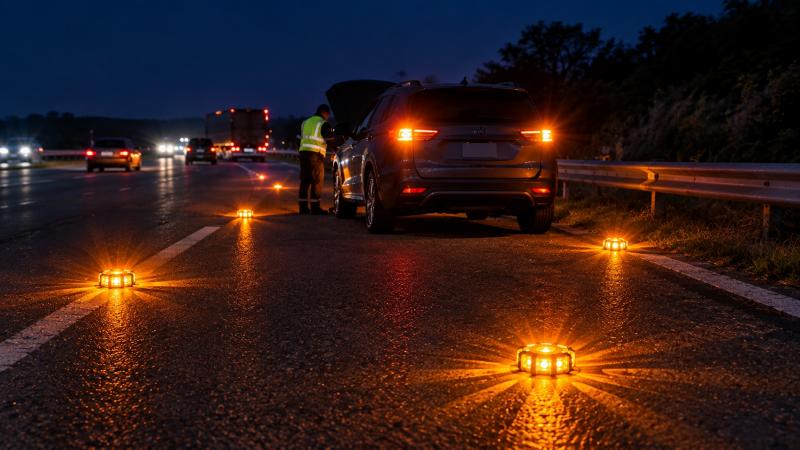
They are especially useful when a vehicle has stopped unexpectedly, when an accident or roadside hazard needs to be marked, or when emergency responders need to deploy multiple warning points quickly.
For these applications, the main advantage of a road flare is fast deployment.
Instead of requiring a person to continuously hold the warning device, portable LED flares can be placed around the hazard area or attached to suitable metal surfaces.
What Should Buyers Look for in LED Road Flares?
For professional procurement, consider:
- Battery runtime
- Flashing modes
- Visibility from different directions
- Magnetic mounting
- Waterproofing
- Impact resistance
- Charging method
- Number of units per set
- Storage and transportation
- OEM and private-label options
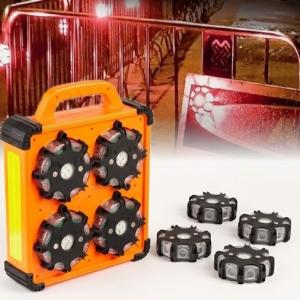
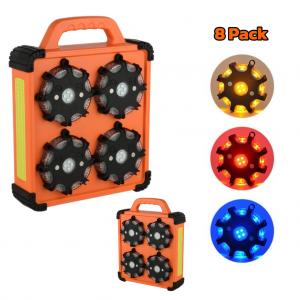
For example, Superflare's 8-pack rechargeable LED road flare system, HL75011, uses 3.7V 3000mAh lithium batteries and offers up to 60 hours of battery life depending on the operating mode. The units support six flashing modes, wireless synchronization within 10 meters, magnetic mounting, and IPX7 waterproof protection. The set includes eight LED flare discs and a rechargeable carrying case. Learn more about LED Road Flares 8-Pack
This type of multi-unit configuration can be useful for buyers who need to create a visible warning area rather than rely on a single light.
When Are Road Flares Most Useful?
Common applications include:
- Roadside vehicle breakdowns
- Emergency response
- Temporary hazard marking
- Traffic management
- Construction safety
- Police and responder operations
- Fleet emergency kits
The key value is fast, portable warning visibility.
A road flare should not automatically be treated as a replacement for every other road safety product. If the application requires clear directional instruction or a physical boundary, buyers should consider arrow lights, traffic cone lights, or other traffic-control equipment.
When Should Buyers Choose an Arrow Light?
An arrow light becomes more useful when warning alone is not enough.
If drivers need to understand where to move, merge, or pay attention, a directional arrow provides information that a conventional warning light cannot communicate as clearly.
Arrow lights are therefore suited to applications such as:
- Road construction
- Lane closures
- Temporary traffic diversion
- Vehicle breakdown assistance
- Road maintenance
- Tow trucks
- Utility vehicles
- Fleet operations
- Traffic-control operations
Why Is Directional Signaling Important?
A flashing warning light can tell a driver that something is happening.
An arrow light can provide an additional instruction about where attention or movement should be directed.
For B2B buyers, this makes the arrow pattern itself an important purchasing factor.
Consider:
- Arrow visibility
- LED arrangement
- Flashing pattern
- Mounting options
- Folding design
- Battery capacity
- Charging method
- Storage requirements
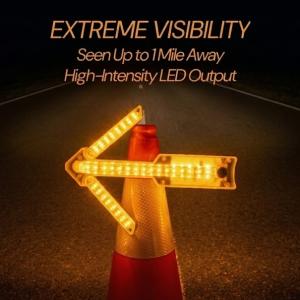
Superflare's HL76901 rechargeable LED Arrow Warning Light uses a folding design and supports magnetic and cone mounting options. The product page specifies 64 LEDs, rechargeable lithium-battery operation, USB-C charging, and multiple lighting modes including chasing, flash, slow flash, and steady operation. View the Rechargeable LED Arrow Warning Light
Its foldable structure is particularly useful for buyers who need directional signaling equipment that can be stored and transported efficiently.
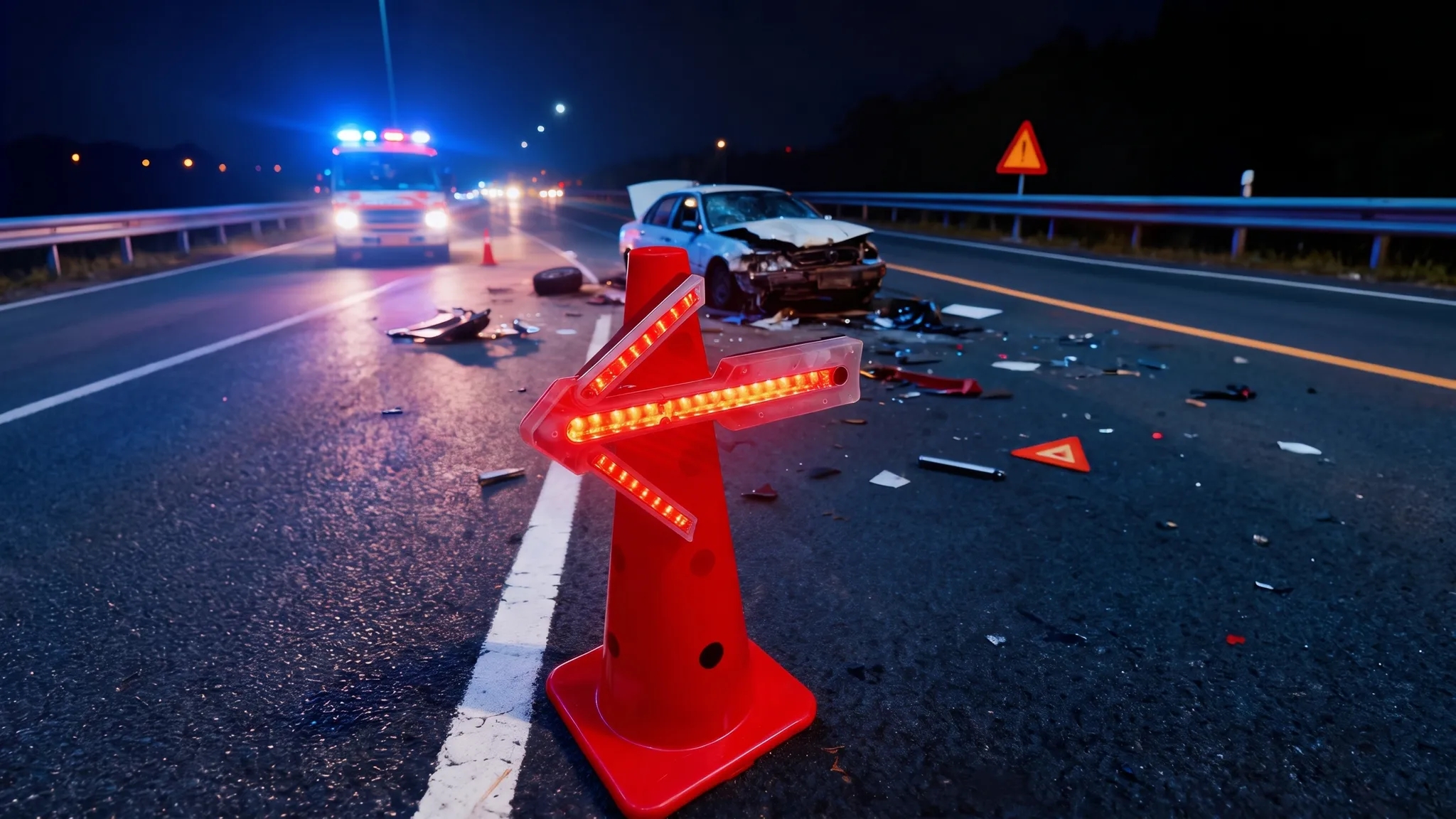
When Is an Arrow Light Better Than a Flare?
Choose an arrow light when the main requirement is directional communication.
For example:
| Application | More Suitable Option |
|---|---|
| Marking a stopped vehicle | LED Road Flare |
| Warning drivers about a roadside hazard | LED Road Flare |
| Indicating a temporary traffic direction | LED Arrow Light |
| Supporting a lane closure | LED Arrow Light |
| Guiding vehicles around maintenance work | LED Arrow Light |
| Tow-truck roadside operations | LED Arrow Light + Road Flare |
In many professional applications, the two products can complement each other rather than compete directly.
When Are Traffic Cone Lights Better?
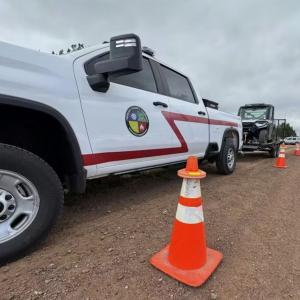
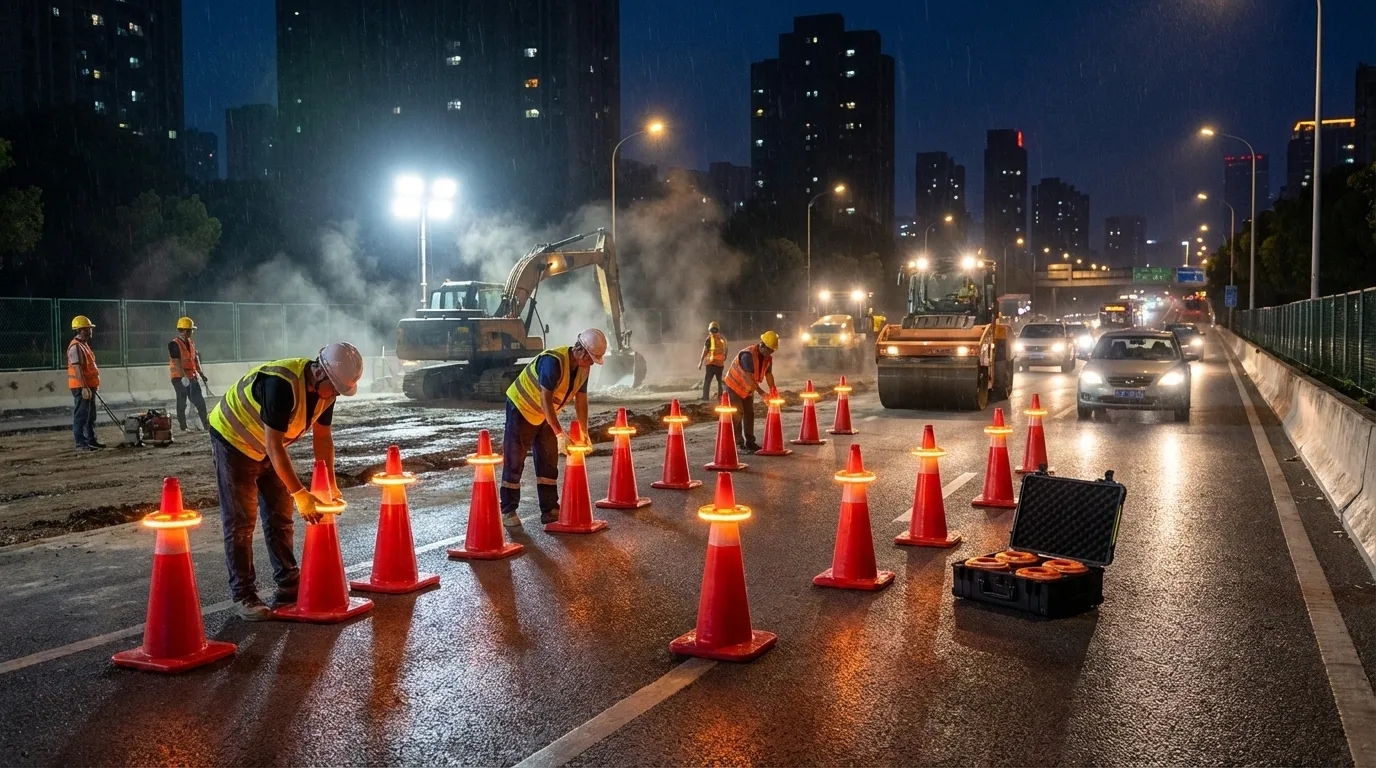
Traffic cones provide a physical visual marker for a work zone, but the cone itself may not provide enough visibility at night or in poor weather conditions.
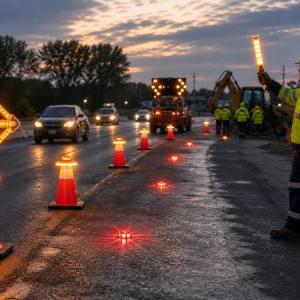
A rechargeable traffic cone light adds an active light source to the top of the cone, making the existing traffic-control setup easier to identify.
This makes cone lights particularly suitable for:
- Road construction
- Night work zones
- Temporary lane closures
- Traffic diversion
- Parking areas
- Emergency roadside operations
- Police, fire, and EMS response
- Event and crowd-control areas
Why Use a Lighted Traffic Cone?
The main advantage is the combination of:
Physical marker + active warning light
This is different from a standalone flare.
A flare can be placed on the ground or mounted to a vehicle.
A cone light is designed to work with a traffic cone, making it more suitable when the buyer already uses cones as part of a work-zone system.
Superflare's HL76907B LED Traffic Cone Light 8-Pack is designed to sit on top of traffic cones and can also be magnetically mounted to metal vehicle surfaces. Each unit uses 30 SMD LEDs and provides 360° visibility, with 5–6 flashing modes, wireless auto-sync within 10 meters, and up to 50 hours of battery life depending on the mode. View LED Traffic Cone Lights 8-Pack
The system includes eight cone ring lights and a rechargeable charging case.
What Should Buyers Check?
For bulk procurement, evaluate:
- 360° visibility
- Cone compatibility
- Battery runtime
- Charging time
- Synchronization range
- Waterproof rating
- Flashing modes
- Magnetic mounting
- Packaging
- OEM customization
For example, the HL76907B is specified with an IPX7 waterproof rating and supports OEM/ODM customization, including logo printing, light colors, flashing patterns, battery capacity, housing color, and other product-level adjustments.
This makes cone lights particularly relevant for distributors and private-label brands that want to create a differentiated traffic-safety product
 line.
line.
When Is a Traffic Baton the Better Option?
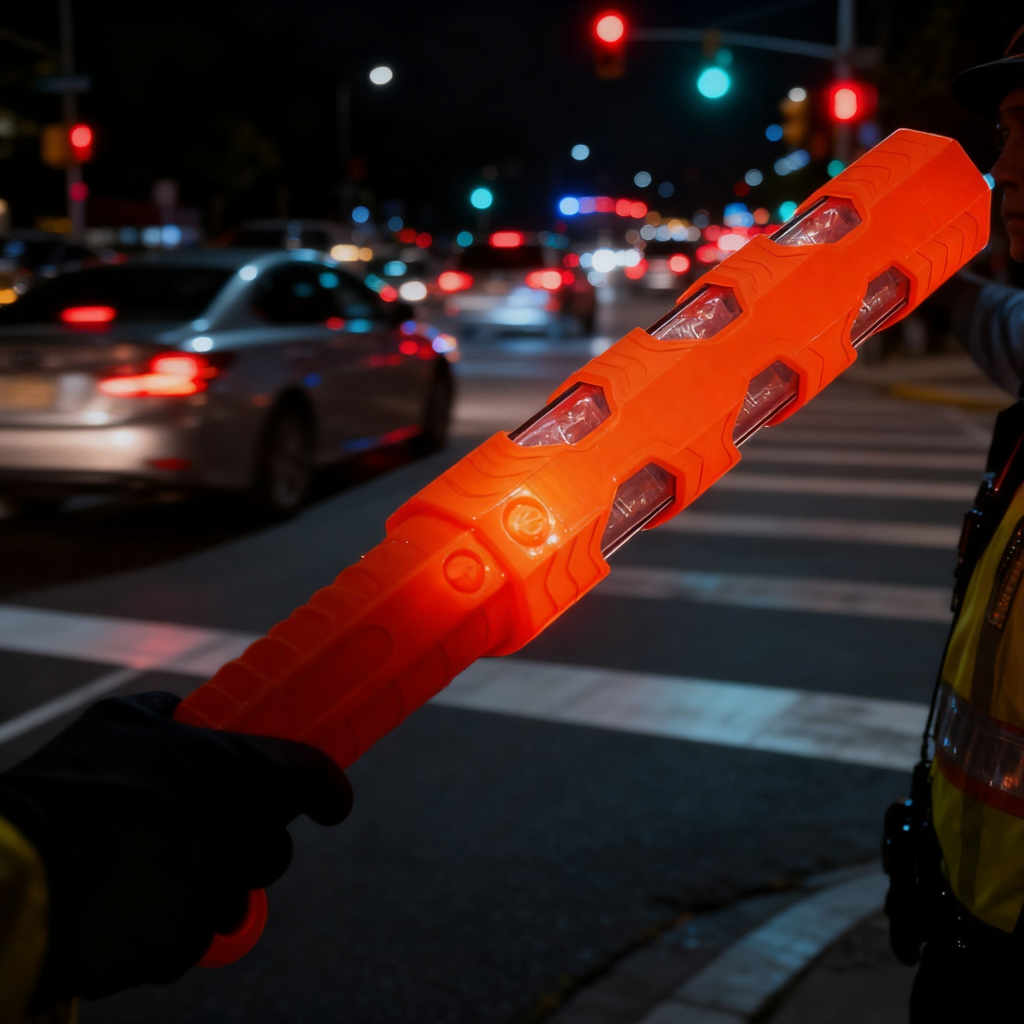
A traffic baton is different from the three products above because it is designed around human-controlled signaling.
Instead of simply marking a hazard or displaying a directional pattern, the baton gives an operator a portable light source that can be used to guide vehicles or pedestrians.
Common applications include:
- Police and security
- Parking management
- Checkpoints
- Roadside emergency response
- Construction work
- Event management
- Fleet and logistics operations
- Warehouse traffic control
What Makes a Traffic Baton Different?
The key difference is the presence of a human operator.
A flare can be placed and left in position.
A cone light can remain attached to a cone.
An arrow light can display a directional signal.
A baton, however, allows a person to actively communicate with approaching vehicles or pedestrians.
Superflare's HL7503B LED Traffic Baton uses 12 SMD LEDs plus a 3W top flashlight. The rechargeable version has a 3.7V 2200mAh battery, Type-C charging, a magnetic base, and IP65 water resistance. Runtime is listed at 2–17 hours depending on the selected mode. View LED Traffic Baton
The product supports multiple lighting modes and is positioned for traffic management, police and security, roadside emergency response, events, fleet operations, and logistics applications.
When Should Buyers Choose a Baton?
Choose a traffic baton when the application requires:
- Human-controlled signaling
- Portable operation
- Direct communication with drivers or pedestrians
- Parking or checkpoint control
- Event traffic management
- Security operations
- Temporary traffic guidance
For distributors, the baton can complement road flares and cone lights because it serves a different operational role.
Which Road Safety Equipment Should You Choose?
The best road safety equipment depends on the job the product needs to perform.
Use the following guide as a starting point:
| Situation | Recommended Equipment | Main Reason |
|---|---|---|
| Vehicle breakdown | LED Road Flare | Fast hazard warning and roadside visibility |
| Emergency roadside hazard | LED Road Flare | Portable and quick to deploy |
| Temporary lane closure | LED Arrow Light | Provides directional information |
| Traffic diversion | LED Arrow Light | Helps communicate movement direction |
| Night construction zone | LED Traffic Cone Light | Adds active visibility to physical markers |
| Work-zone boundary | LED Traffic Cone Light | Combines cone placement with active lighting |
| Police or security control | LED Traffic Baton | Enables human-controlled signaling |
| Parking management | LED Traffic Baton | Portable manual traffic guidance |
| Fleet emergency kit | Road Flare + Arrow Light | Warning plus directional signaling |
| Construction safety system | Cone Light + Arrow Light | Zone visibility plus directional guidance |
The most effective solution is not always one product.
For professional users, a combination of products can provide different layers of traffic safety:
Warning → Direction → Zone Marking → Human Control
For example:
- Road flare: marks an immediate roadside hazard.
- Arrow light: communicates a direction.
- Cone light: increases visibility around a physical work zone.
- Traffic baton: allows an operator to manually guide traffic.
What Should B2B Buyers Check Before Ordering?
Choosing the right product category is only the first step.
For distributors, fleet operators, contractors, and private-label brands, the supplier and procurement requirements are equally important.
1. Battery and Runtime
Battery performance should be evaluated according to the actual application.
Do not compare products only by the highest advertised runtime.
Ask:
- Under which lighting mode is the runtime measured?
- How long does a full charge take?
- Is the battery rechargeable?
- Is a charging case included?
- Can multiple units be charged together?
For example, the Superflare road flare system specifies up to 60 hours depending on mode, while the traffic cone light system specifies 8–50 hours depending on operating mode. The traffic baton specifies 2–17 hours depending on mode.
These numbers should therefore be evaluated together with the intended operating pattern.
2. Mounting and Deployment
The mounting method can determine whether a product works in the intended environment.
Consider whether the product will be:
- Placed on the ground
- Attached to a vehicle
- Mounted on a traffic cone
- Held by an operator
Magnetic mounting can be particularly useful for roadside and vehicle applications, while cone mounting is more suitable for fixed work-zone deployment.
3. Weather Resistance
Outdoor traffic-safety equipment may be exposed to rain, dust, impact, and other demanding conditions.
Check the actual IP rating and available documentation rather than relying only on marketing terms such as “waterproof.”
The Superflare products referenced in this guide include IPX7-rated road flare and cone light systems and an IP65-rated traffic baton.
4. Flashing Modes and Signaling Logic
More modes do not automatically mean better performance.
The important question is whether the available modes match the intended use.
For example:
- Warning applications may prioritize attention-grabbing flash patterns.
- Directional applications require clear arrow patterns.
- Manual signaling may benefit from multiple brightness and flash options.
- Multi-unit systems may benefit from synchronization.
5. OEM and Private-Label Capability
For distributors and brands, product customization can be just as important as the base specification.
Potential customization areas include:
- Logo printing
- Packaging
- LED color
- Flashing patterns
- Battery capacity
- Housing color
- Accessories
- Carrying cases
- Charging systems
Superflare's product pages indicate OEM/ODM support across the four product categories, with customization options varying by product and order quantity.
6. Sample Testing
Before a large order, buyers should evaluate samples in the actual application whenever possible.
Recommended checks include:
- Brightness
- Viewing angle
- Flash pattern
- Battery runtime
- Charging performance
- Mounting strength
- Weather resistance
- Product durability
- Packaging
- User instructions
Related News